


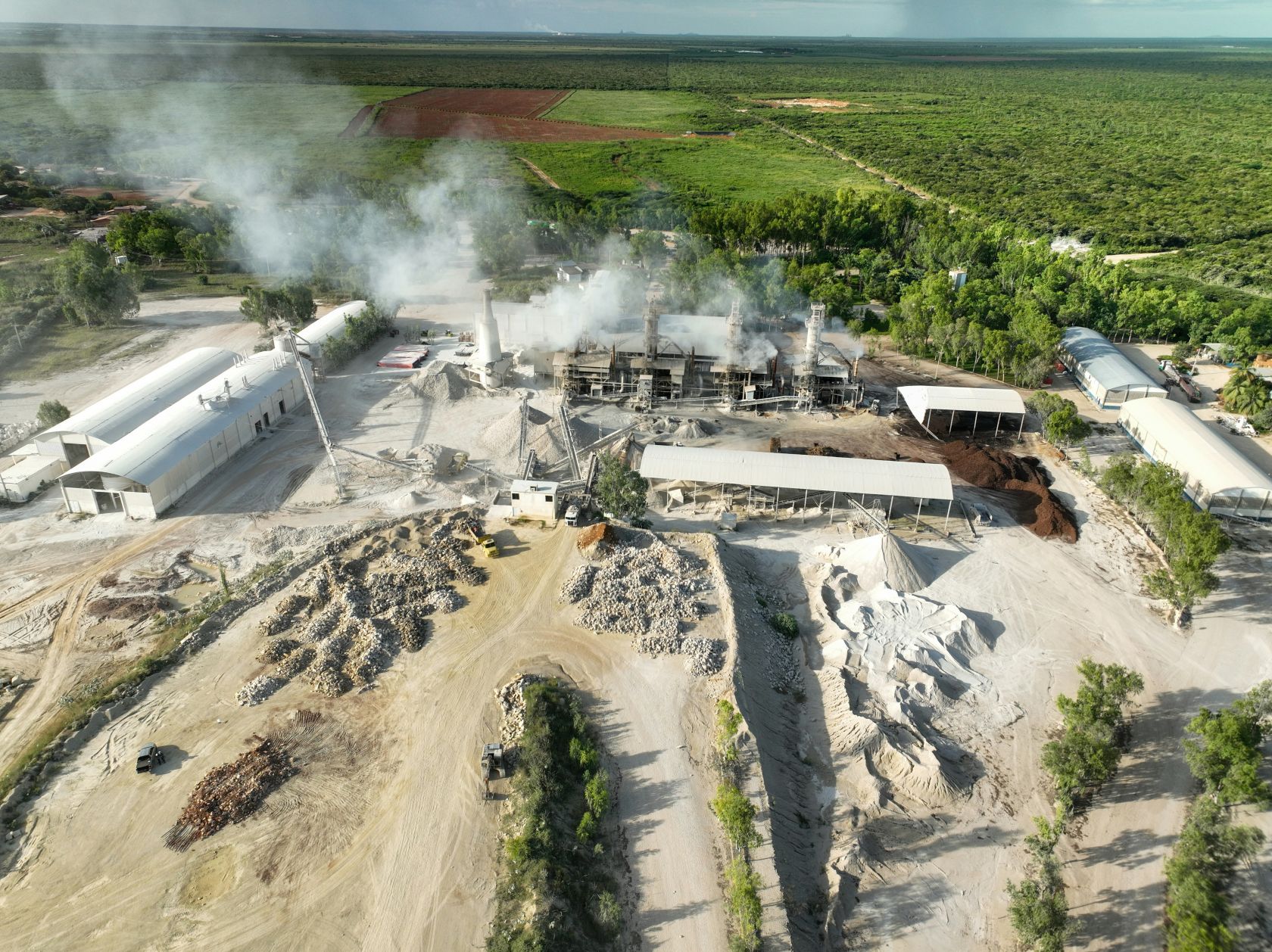
The Environmental Impact Assessment (EIA) for the “Ferreira do Alentejo Biomethane Production Facility”, reviewed by the Lusa news agency, is open for public comment until 25 November via the “Participa” portal, managed by the Portuguese Environment Agency (APA).
According to the EIA’s Non-Technical Summary (NTS), the project entails constructing and operating a biomethane production plant at the Penique Agro-industrial Park, in the parish of Odivelas, in the municipality of Ferreira do Alentejo (Beja district).
The facility, which represents an estimated investment of 20 million euros, is designed to recover and process biodegradable organic waste—specifically cattle manure, liquid effluent (slurry) resulting from the decomposition of such matter, and olive pomace.
With an expected operational lifespan of 25 years, the industrial unit, developed by FBG Ferreira do Alentejo, will process organic waste “through an anaerobic digestion process” to produce biogas, which will then be purified and liquefied into biomethane.
The developer states that the plant “will have the capacity to produce 4,892,754 Nm³ [normal cubic meters] of biomethane annually, meeting the quality standards required for injection into the National Natural Gas Distribution Network (RNDGN).”
“To achieve this, the facility is designed to receive 69,500 tonnes of organic waste, comprising livestock effluents and agro-industrial residues, per year,” the document notes. The project developer explains that, “following the anaerobic digestion of organic matter, in addition to biogas, ‘digestate’ is produced”—a by-product separated into liquid and solid fractions intended for agricultural use.
“Agricultural use will depend on compliance with applicable conditions, characterisation of the digestate, and the selection of suitable plots,” it notes, adding that “until ‘End-of-Waste’ (EoW) status can be obtained, the digestate will be sent to a duly licensed waste treatment operator.”
The facility, which covers an area of approximately 2.1 hectares, aligns with “national and European objectives regarding energy transition, the decarbonization of the economy, and the valorisation of endogenous resources,” the document states.
Regarding potential impacts, the project’s Environmental Impact Assessment (EIA) acknowledges “atmospheric emissions during operation, specifically the release of CO2 [carbon dioxide] and odours”, as well as noise from equipment operation and increased land-based traffic, among other factors.
“During operation, it is estimated that approximately 21 trucks per day will be required for the transport of raw materials, digestate, and biomethane; this figure may rise to around 33 trucks per day during the olive harvest season. In addition, there will be transport requirements for water and liquefied CO2, estimated at one truck per day for each of these streams,” the project developer reports.
Set The Portugal News as your preferred source for news on Google
 Add as a preferred source on Google


 Portugal Handbook
 English
 Nederlands
 Deutsch
 Français
 Español
 Italiano
 Svenska
 Pусский
 中文
 Türkçe
 Português
 Czech
 Hungarian
 Polski
 عربي
 Suomi
 עִברִית
 Português (Brasil)

Follow us on social media