


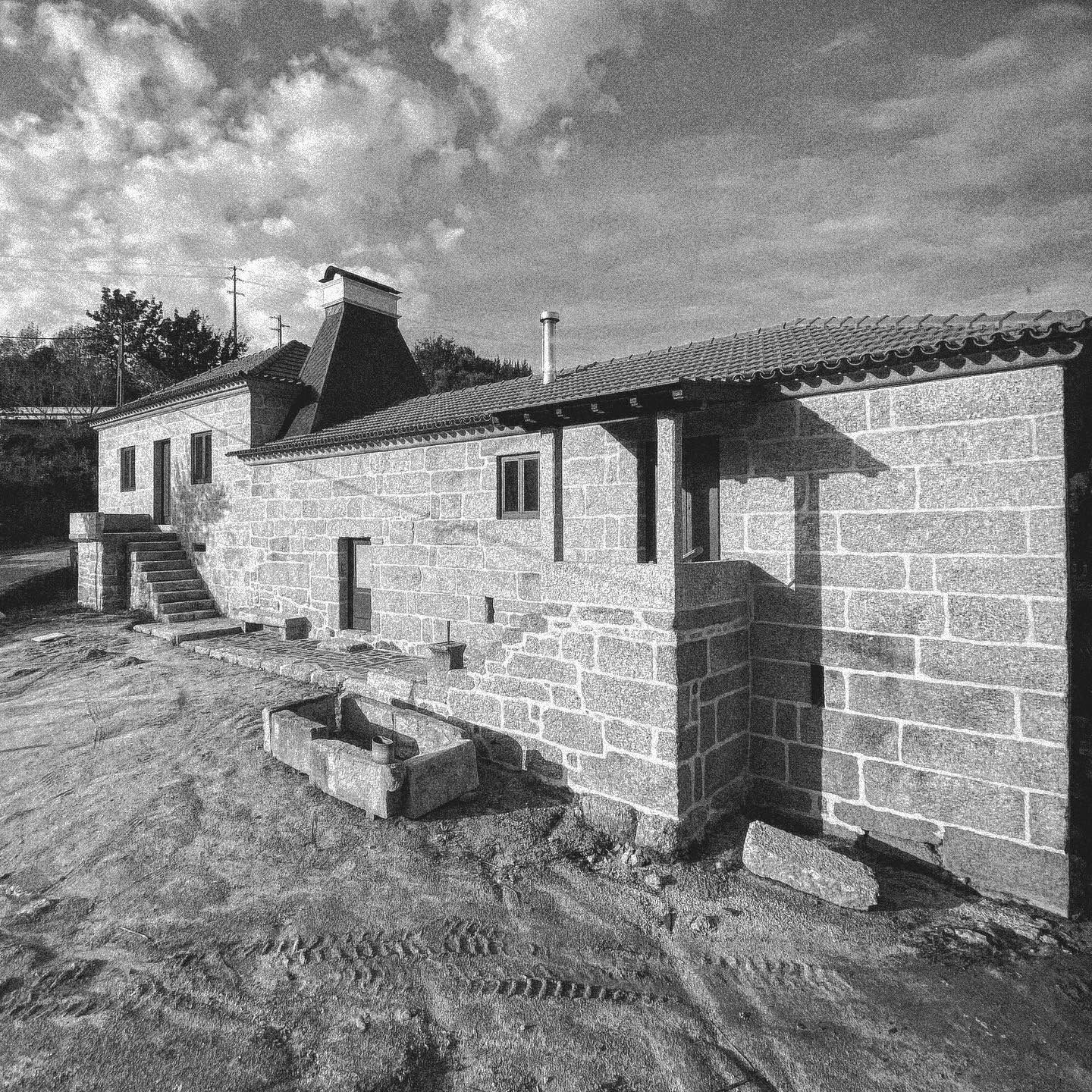
Fernando Cerqueira Barros, originally from Arcos de Valdevez in northern Portugal, has won the 2026 Rafael Manzano Prize for New Traditional Architecture, worth €50,000.
The award recognises his contribution to protecting Portugal's architectural heritage, particularly in rural areas affected by depopulation, where many traditional buildings have been left abandoned or fallen into disrepair.
Rather than allowing these buildings to disappear, the architect has focused on giving them a new purpose while preserving the materials, techniques and architectural details that make them part of Portugal's history.
The prize was announced by the Traditional Building Cultures Foundation, based in Madrid, which noted his approach to restoring historic properties and involving local communities in the process.
As reported by Alto Minho, his projects often bring together local residents and skilled craftspeople, using traditional building methods and materials associated with each region.
The idea is not simply to renovate an old property, but to respect its original character and ensure that traditional construction skills continue to be used.
One of his best-known projects is the restoration of the Monastery of São João de Cabanas, located in Afife, in the municipality of Viana do Castelo.
The historic complex, which has medieval origins, was transformed into a hotel while retaining its architectural identity.
The restoration has already been recognised (it won the 2025 National Architecture Espaço Prize), which is a testament to the fact that historic buildings can be restored and reused in a modern context without in any way losing their historic character.
His work also includes the restoration of Quinta de Fundevila in Cabeceiras de Basto, as well as traditional rural houses in Penacova, Morilhões and Santo Tirso.
Alongside smaller rural properties, he has worked on historic and urban buildings, including the Church of the Convent of Vila Cova de Alva and the Church of Pópulo.
For many villages across Portugal, abandoned houses and deteriorating historic buildings have become increasingly common as younger generations move towards larger towns and cities.
Restoring these properties can help preserve the appearance and identity of rural communities, while also creating opportunities for new uses.
An important part of Cerqueira Barros's approach is working with local craftspeople who still practise traditional construction techniques.
These skills, often passed down through generations, form an important part of Portugal's cultural heritage and can easily disappear if they are no longer used.
The architect, born in 1986, has around 15 years of professional experience and combines his architectural work with research into traditional buildings and rural landscapes.
He is also pursuing a doctorate at the Faculty of Architecture of the University of Porto, where he works as a researcher, and is involved in a UNESCO chair dedicated to heritage, cities and landscapes.
The award ceremony will take place on 12 November in Madrid, where he will officially receive the €50,000 prize.
His recognition is also a reminder of the value of Portugal's traditional architecture, particularly in smaller villages where historic buildings remain an important part of local identity.
At a time when many rural areas are facing population decline, projects like these show how preserving the past can also help create new possibilities for the future.
Set The Portugal News as your preferred source for news on Google
 Add as a preferred source on Google


 Portugal Handbook
 English
 Nederlands
 Deutsch
 Français
 Español
 Italiano
 Svenska
 Pусский
 中文
 Türkçe
 Português
 Czech
 Hungarian
 Polski
 عربي
 Suomi
 עִברִית
 Português (Brasil)

Follow us on social media