


Contemporary art is often encountered in familiar places: galleries, museums, fairs and exhibitions. But what happens when an artwork becomes the starting point for an entire evening?
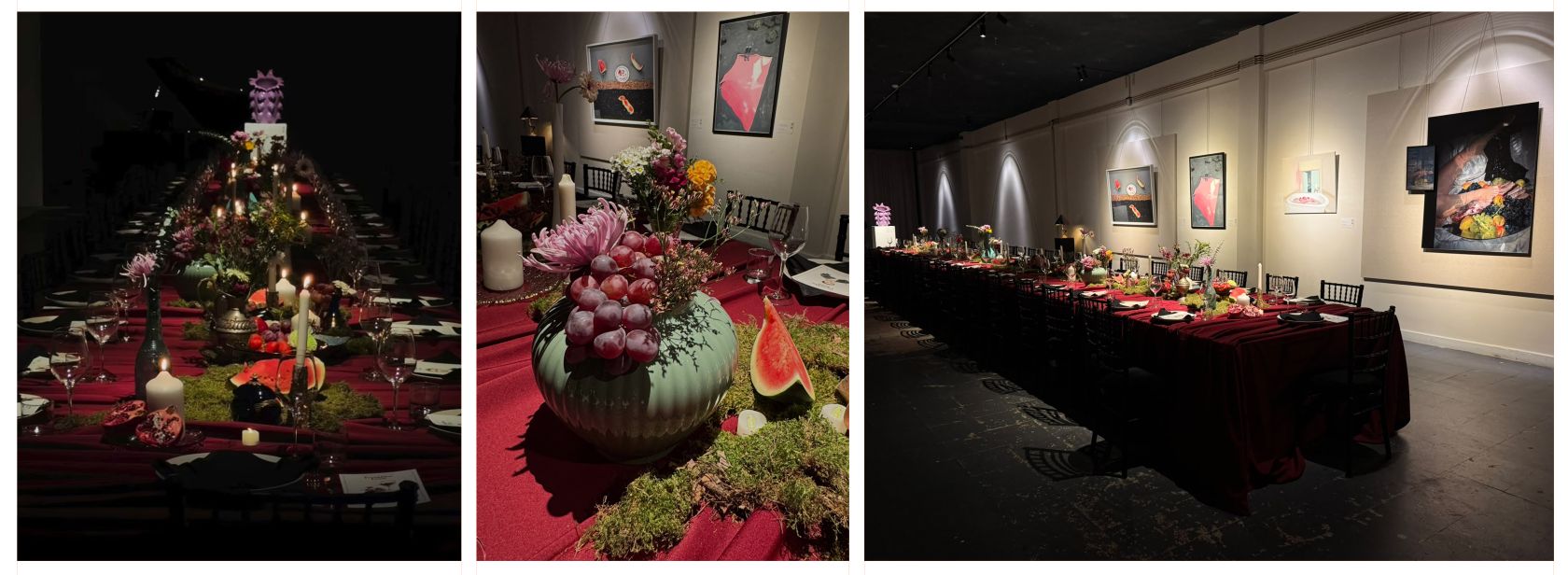
Earlier this month, the first First Editions à Mesa dinner, Forbidden Feast, brought guests together at DAM in Marvila for a sold-out evening built around works by finalists from the 2026 Sovereign Portuguese Art Prize. The artworks were not simply displayed in the room. Their ideas shaped the setting, food, dress code and conversations around the table, creating an experience in which guests could spend time with the art in a more informal and personal way.
For the Sovereign Art Foundation, that is one of the central ideas behind First Editions à Mesa: to create another route into contemporary art, one that begins with curiosity rather than expertise.
Seeing an artwork online is one thing. Encountering it in person is another. Hearing the artist speak about where an idea began, why a particular material was chosen or how the work changed during the making process can shift the experience again. Then there is the response of the people around you. One guest may notice something another has missed. A work that initially seems difficult may become more accessible through conversation, while another might provoke an immediate reaction without needing any explanation at all.
That exchange is part of what makes contemporary art interesting. There is rarely a single correct way to understand a work, and the meaning an artist brings to it does not prevent the viewer from forming their own response. The dinner format simply creates more space for those responses to be shared.
At Forbidden Feast, themes around the body, desire, intimacy, consumption and transformation influenced everything from the tablescape to the menu and dress code. Guests arrived in rich jewel tones, velvet, satin and touches of gold, entering a setting designed to feel connected to the works around them. The result was not about illustrating the art literally, but about creating an atmosphere in which the artworks, food and conversations could belong to the same world.
This week, that idea develops in two very different directions.
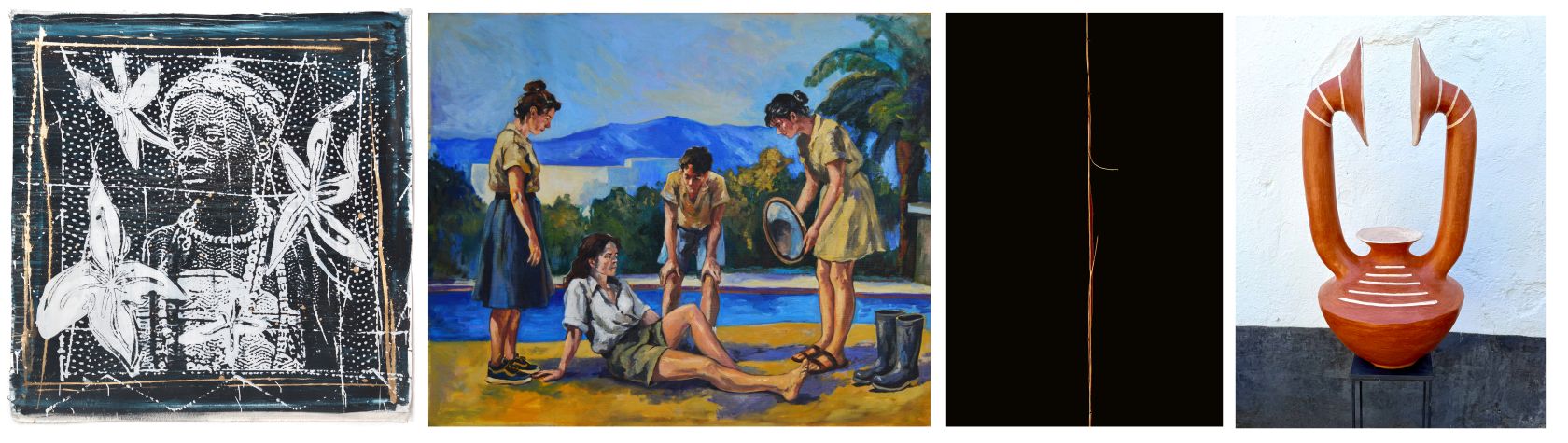
On 16 November, Beautiful Resistance moves the series to Cícero in Chiado, with an evening shaped by voice, identity, memory, attention and resilience. Gabriel Garcia’s The Art of Not Yielding brings together figures in a scene centred on care, solidarity and the possibility of moving forward, while Fidel Évora’s work explores memory and identity through imagery connected to histories of African independence.
Sónia Apolónia’s Above The Noise, India II offers a quieter interpretation of resistance, isolating an overlooked urban structure against deep black and asking the viewer to look beyond the visual noise of everyday life. Jacira da Conceição’s INTERIOR II, meanwhile, draws on Cape Verdean pottery traditions through a sculptural ceramic form that carries ideas of heritage, memory and the knowledge passed between generations.
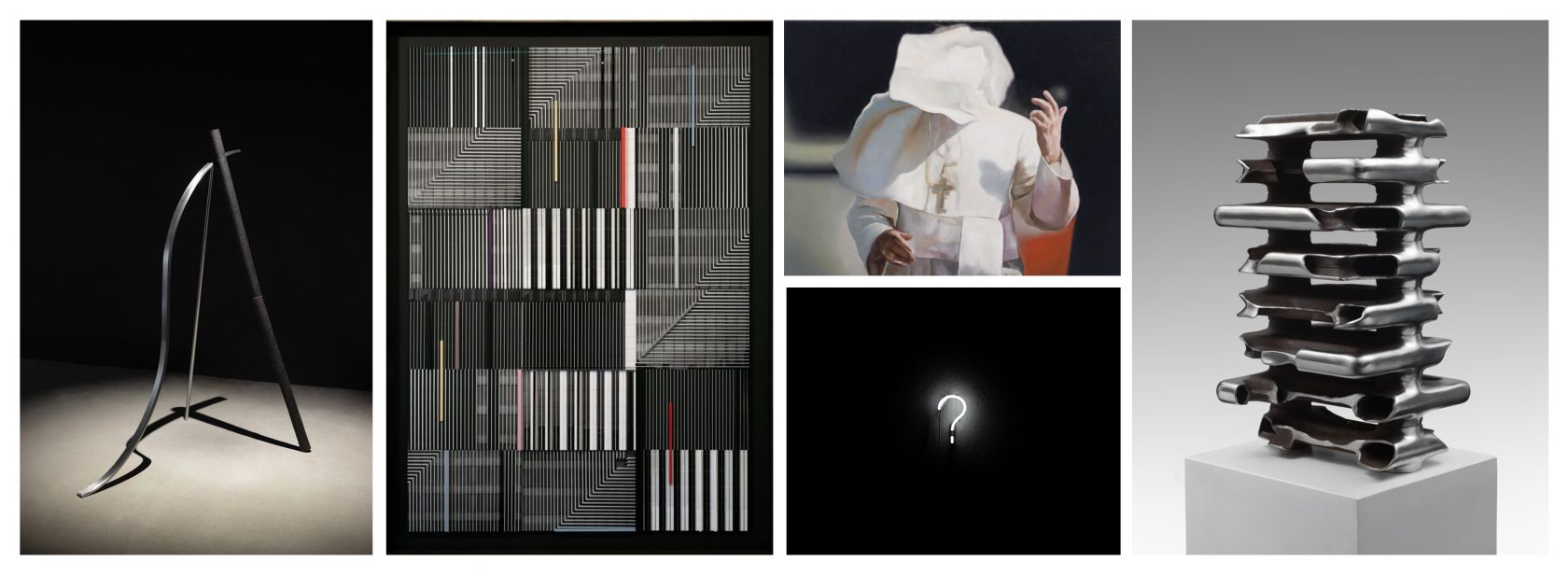
Just four days later, on 20 November, Surface Tension shifts the atmosphere again. Where Beautiful Resistance is grounded in resilience and reflection, Surface Tension begins with what is visible and what may be concealed beneath it. The evening brings together works by Max Frisinger, Luis Carballo, Fábio Colaço, Flávia Vieira and João Campolargo Teixeira, exploring transformed objects, shifting images, unexpected materials and the way appearances can change according to perspective.
For people who do not regularly visit contemporary art exhibitions, the idea of discussing art can sometimes feel more complicated than it needs to be. First Editions à Mesa is deliberately designed to remove some of that pressure. You do not need to know the language of contemporary art, and you do not need to be a collector. There is also no expectation that everyone around the table will agree. A response might begin with something very simple: a colour, a material, a question or a feeling. From there, the conversation can go in almost any direction.
That openness is also part of the wider Sovereign Portuguese Art Prize. This year’s finalist works span painting, photography, sculpture, ceramics, installation and mixed media, representing very different artistic practices and perspectives. The exhibition does not ask visitors to arrive with specialist knowledge. It asks them to look.
The First Editions à Mesa dinners take place in the final weeks before the full finalist exhibition opens at the Sociedade Nacional de Belas-Artes in Lisbon on 25 November. There, all of this year’s finalist works will finally come together in one space, and the experience will change again. A work first encountered over dinner will sit alongside the wider shortlist. A piece discovered online may reveal details, scale or material qualities that were difficult to see on a screen. Visitors will also be invited to choose their own favourite through the Public Vote Prize.
The wider purpose of the series also remains connected to the Foundation’s charitable work. Funds raised through artwork sales and First Editions à Mesa help support SAF’s therapist-led expressive arts programmes for children and young people in Portugal. That means an evening centred on professional contemporary art can ultimately help create access to creativity for children in a very different context.
The circumstances are not the same, but the underlying belief is. Art has the ability to create connection. Sometimes that connection happens between an artist and a collector. Sometimes between strangers around a dinner table. Sometimes between a child and an idea they have not yet found the words to express.
By the time the Sovereign Portuguese Art Prize exhibition opens later this month, many of this year’s finalist works will already have begun conversations far beyond the gallery.
To book a place at the dinners:
https://www.sovereignartfoundation.com/articles/first-editions-art-dinners-lisbon/
View the works in The 2026 Sovereign Portuguese Art Prize
https://www.sovereignartfoundation.com/the-sovereign-portuguese-art-prize/
Find out more about the Sovereign Art Foundation’s work in Portugal:
https://www.sovereignartfoundation.com/expressive-arts-programme-portugal/
Vote online and explore the shortlisted Student Prize artworks:
https://www.sovereignartfoundation.com/sp-portugal/
Follow SAF Portugal on Instagram:
@sovereignartfoundationportugal @sovereignportugueseartprize
Questions?
📧 Tanya@sovereignartfoundation.com
Set The Portugal News as your preferred source for news on Google
 Add as a preferred source on Google


 Portugal Handbook
 English
 Nederlands
 Deutsch
 Français
 Español
 Italiano
 Svenska
 Pусский
 中文
 Türkçe
 Português
 Czech
 Hungarian
 Polski
 عربي
 Suomi
 עִברִית
 Português (Brasil)

Follow us on social media