


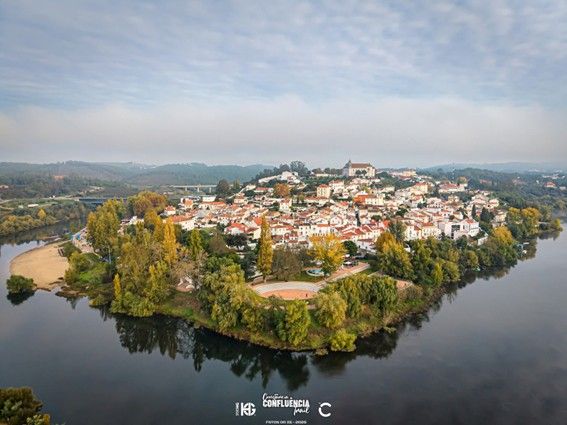
I think that Constância is one such town. It feels a world away from the grand gestures of Lisbon and Porto, or the dramatic scenery of the Algarve. Constância’s quiet beauty is so serenely poised between two rivers that it seems less built than grown. Here, the Zêzere folds into the Tagus and the beautiful Castelo de Almourol appears, perched on the water’s edge, as if admiring its own reflection.
Constância is another one of Portugal’s genuinely timeless towns. Not frozen but suspended. And the surrounding region, an unsung stretch of the Ribatejo, only amplifies the town’s timeless aura.
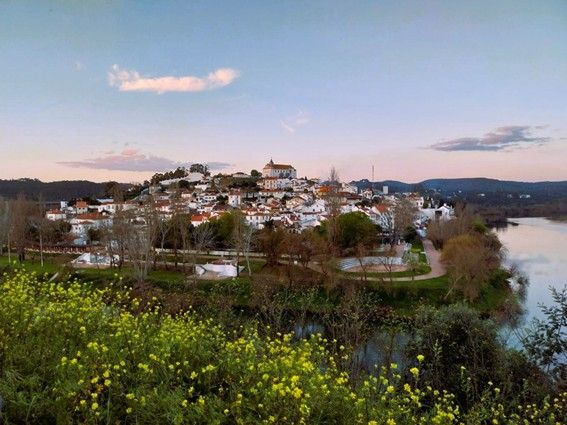
Walk along the riverside on a warm morning and the first thing you might notice is the sound of water. Not booming surf or cascading waterfalls, just the steady whisper of the rivers, the soft slap of small boats and the occasional laughter rising from the river beaches. The village curls around the meeting of the Tagus and Zêzere with whitewashed houses tumbling toward the water’s edge. Cobbled lanes wander towards the town, and terracotta roofs glow under the warm sun.
It is no exaggeration to say that Constância feels painted rather than constructed. Even Luís de Camões, Portugal’s great poet, found inspiration here. Local lore holds that he lived in the village for a while, some say in exile, whilst others simply reckon that he liked the view. Whatever the truth, Constância proudly embraces this literary link.
A village that’s great for wandering
What makes Constância so intoxicating is that it is small enough for wandering, yet rich enough in detail to reward even the slowest stroll. The historic centre is a tight cluster of gently ageing façades of blues, yellows, creams and pastels. The streets are narrow in the charmingly impractical way of many old Portuguese towns. They’re just wide enough for locals to argue cheerfully across balconies.
The Church of Nossa Senhora dos Mártires, elegant in its simplicity, stands like a white sentinel overlooking the river confluence. Close by, the Church of Misericórdia, dating from the 16th century, remains one of the prettiest examples of understated Portuguese religious architecture.
Discreet and charming
Coffee is taken slowly in Constância. Conversations last longer than the pastries that accompany them. There’s a near-medieval respect for “chill”, complete with a gentle acceptance that the day will unfold as it pleases.
Rivers and stories
The two rivers, the Tagus and the Zêzere, are the lifeblood of the region. For centuries, the area flourished as a trading stop, the rivers serving as highways for goods and gossip. Today, they are a playground for people seeking a more dignified form of leisure. From kayaking to paddleboarding, to fishing and pottering, or simply sitting under a shady parasol at a riverside cafe doing nothing in particular.
The river beach of Constância is tucked beside the lush Parque Ambiental, which is a magnet for families in summer. Clear waters, shady trees make for a perfect backdrop to enjoy a cold beer or a nicely chilled vinho branco.
Castles, forests and legends
To appreciate Constância fully, we must wander outward into the surrounding Ribatejo. This is a land of yet more stories. Some historical and some probably invented over long lunches and a few glasses of the local vinho.
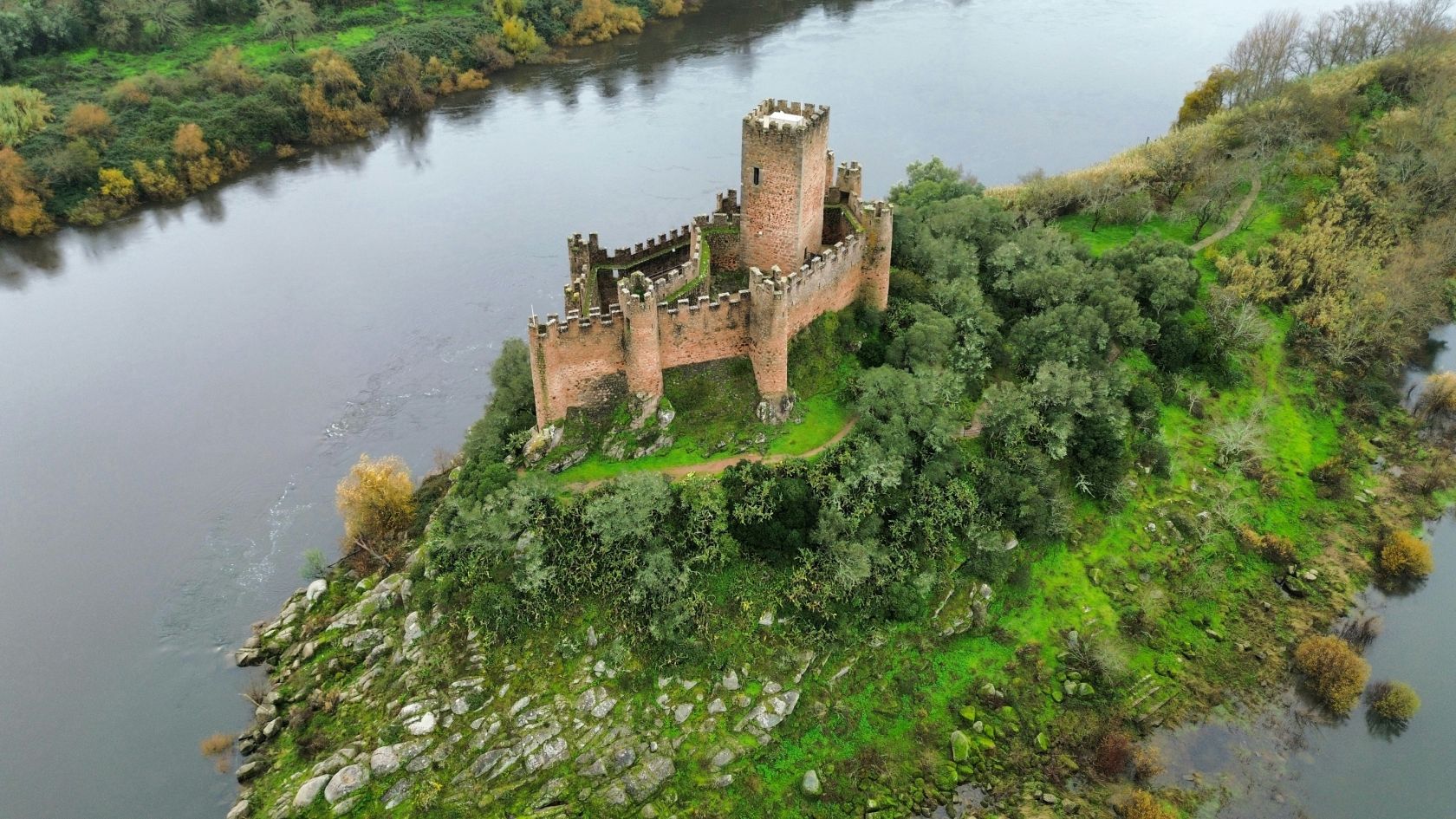
Just across the river sits one of Portugal’s most extraordinary medieval sites. Castelo de Almourol. Rising from a rocky island in the middle of the Tagus, the castle looks like something torn from the pages of legend. Built by the Knights Templar in the 12th century, Almourol is not merely picturesque; it is cinematic. The stone walls glow honey-gold at sunset, casting reflections so perfect on the water that it becomes difficult to tell where the real world ends and the upside-down dream begins.
Further north, toward Vila Nova da Barquinha, the land shifts into a patchwork of fields, olive groves and pine forests. This is agricultural Portugal, authentic and unembellished. Villages here are small but not without their charm. Here you’ll see tile-fronted houses, relaxed roadside cafés and locals who greet strangers with polite curiosity. Walking into one of these cafes almost feels like you’ve intruded into someone’s home. In many instances, you have done!
Drive a little further west, and you find Abrantes, a hilltop town with a castle that has spent the last eight centuries watching over the Tagus. Abrantes is where the river widens, carving its way through Ribatejo with a confidence that mirrors the town’s own. From the castle gardens, the view stretches across hills and plains.
To the south lies Tomar, one of Portugal’s crown jewels. The Convent of Christ, a masterpiece of the Knights Templar (later, The Order of Christ), is so complex, so layered in symbolism and style that one visit feels entirely inadequate. But Tomar, vibrant and bustling, offers a different rhythm from Constância’s. Tomar dazzles whilst Constância soothes.
A way of life
Constância is a village that doesn’t seem to embrace urgency. Locals move at a pace dictated by life. Meals happen when meals happen. Shops open when owners feel they should. A conversation in the street might delay an entire plan, and nobody seems to care much. That refusal to rush is, ironically, what draws me here. In Constância, people rediscover the art of relaxation.
And yet, Constância is not sleepy in the sense of stagnation. It is tranquil with intention. Cultural festivals, especially those celebrating poetry and river traditions, breathe bursts of energy and colour into the calendar. Various festivals transform the whole village into an explosion of flowers, processions, music and merriment.
Flavours of Ribatejo
No editorial about any region or town would be complete without looking at the gastronomic side of things. Like in many other inland regions of Portugal, Ribatejo cuisine is hearty, rustic and delightfully unpretentious. Here, the food culture was created by people who work the land and live by the seasons.
Typical dishes include Migas. A dish made with pork, which is rich and satisfying. Sopa da Pedra is a local soup with noble ambitions. Arroz de Lampreia (in season) is a deep brown coloured fish stew made from Lamprey fish. This is a dish reserved for the brave and the devoted. Personally, with this dish, I might have the devotion - but not the bravery. Shall we just say it’s probably an acquired taste?
And of course, there is the wine. Ribatejo reds are confident, warm and generous. Just like the people who make it.
Why Constância is special
Constância offers an alternative to the bustling resorts and busy cities. An alternative based on reflection, on geography and the harmonious partnership of human settlement and natural landscapes. It is a place that always reminds me that beauty needn’t be spectacular to be profound.
Constância is not a destination that demands attention. It simply waits for me, always patient and always content. It’s forever here by the water’s edge, trusting that those, like me, who seek a dash of authenticity will find it in this beautifully serene town.







 Portugal Handbook
 English
 Nederlands
 Deutsch
 Français
 Español
 Italiano
 Svenska
 Pусский
 中文
中文 Türkçe
 Português
 Czech
Czech Hungarian
 Polski
 عربي
عربي Suomi
Suomi עִברִית
 Português (Brasil)
Hi, nice article about a town I've long wanted to visit after seeing it in a list of Portugal's best small towns. An error though: "To the south lies Tomar" but Tomar is to the north!
By Peter Varley from USA on 14 Feb 2026, 16:14