



He was of a certain age and walked with the slow gait of a man who had left behind the folly of briskness. Leave all that scurrying nonsense for the young folk. Even a casual glance at his face would tell the observer that here was a man who had spent his life outdoors, and as I stole a look, I glimpsed an image of him ascending a ladder, his face half-obscured by vine leaves.
Mind you, when I looked around him, I could see that most of the other faces, young and old, were weather-beaten to a certain degree. You certainly wouldn't mistake this little crowd for office workers. This wasn't surprising. I was in the local agricultural cooperative.
Rustic nirvana
I am always amazed when we visit the shop section of the cooperative, even though we do it quite regularly. It manages to synthesise a throw-back to an old way of doing things, together with an alternative way of managing the economy. The throwback involves the old-fashioned idea of queuing twice to purchase what you want: first to get a chitty for payment, and second to actually pay. When I first came to Portugal, most shops were like that. You'd go in to buy a pair of socks and queue up at one counter to have the socks wrapped in thick brown paper and then queue again at the cashier's desk to hand over cash and get a handwritten receipt for aforementioned socks.
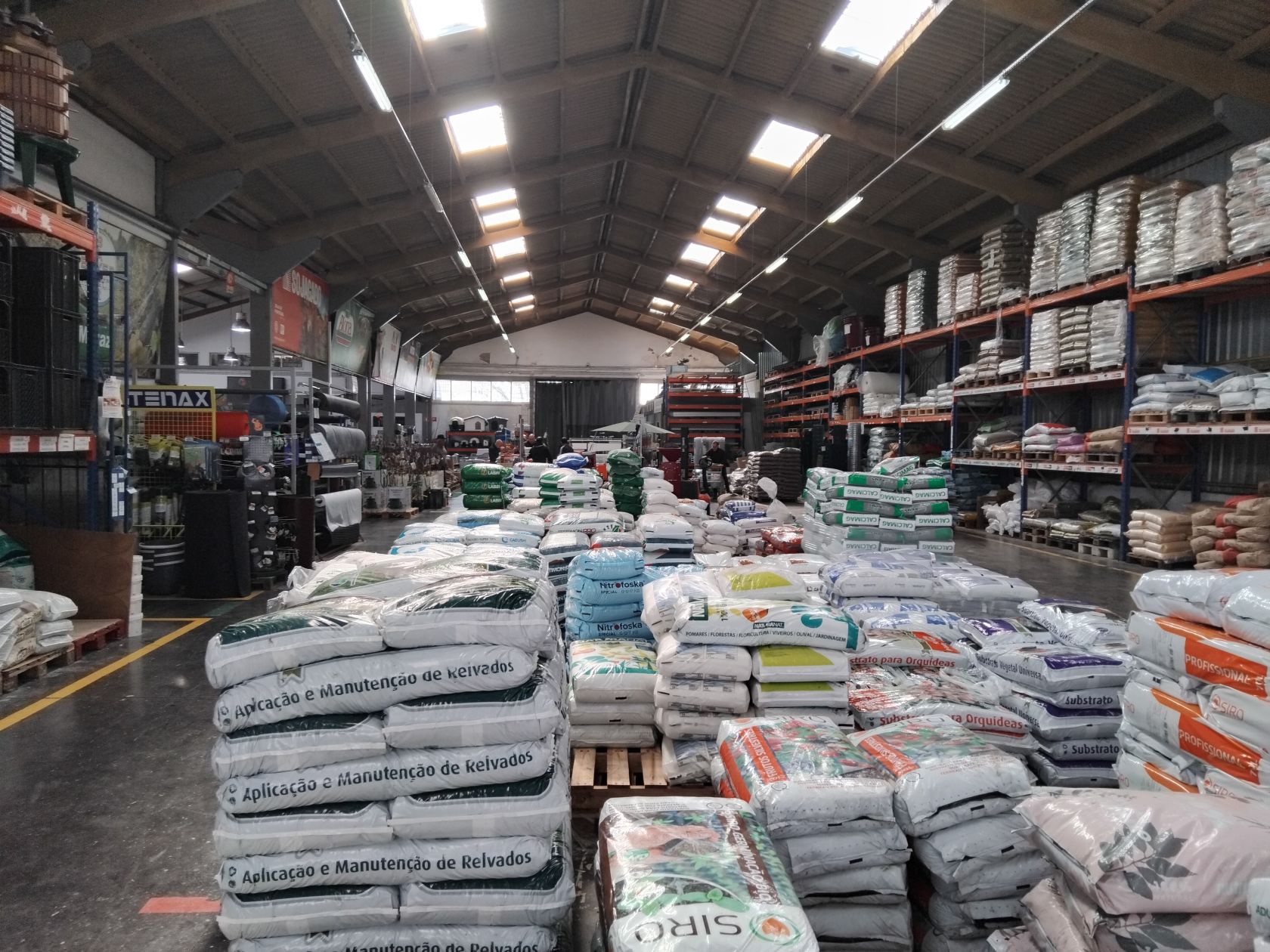
In the co-op, there is a large counter in the middle of the cavernous building where there are usually two people who will instantly recognise what it is you have in your hand and what it is used for, and what extra bits and bobs might go with it. They will rummage in a cardboard box under the counter and produce the precise flange that you need to make the gizmo effective. They will also know where to find whatever it is you are looking for if you can't find it yourself; you give them a long, rambling explanation of the function of the tool whose name escapes you, and they will immediately abandon their post and take you to the precise spot in the vast warehouse where it nestles.
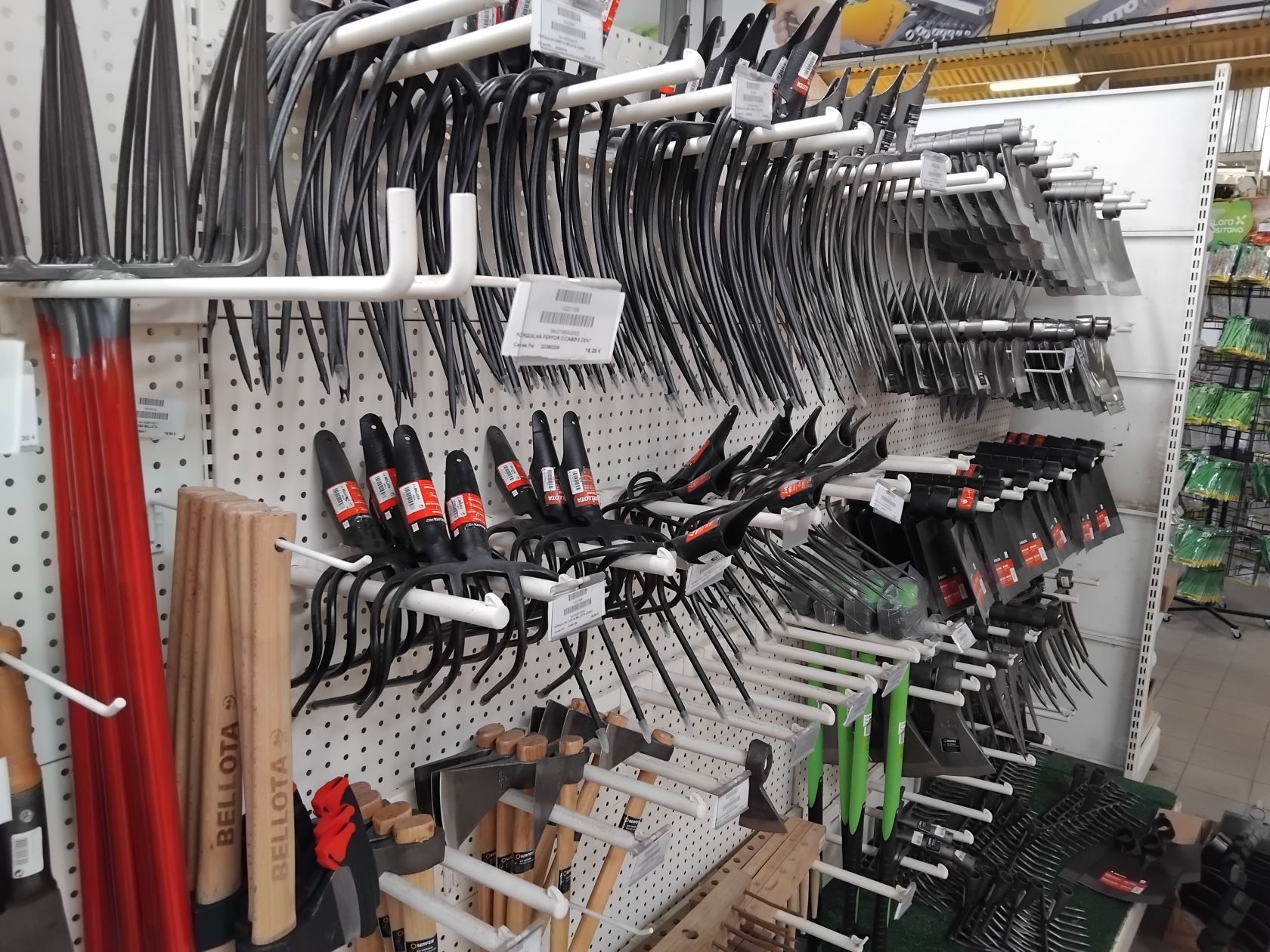
These are the moments when I realise that I don't know the name for the thing on the shelf in any language; all I know is its function. I don't actually need to buy anything to feel a sense of goodwill descending on my head. I will sometimes just wander the shelves – row after row – filled with every imaginable agricultural device known to mankind, plus a few, and feel that I have arrived in some kind of rustic nirvana.
Fundamental thinking anomaly
This cooperative was established in 1957 and was originally set up to serve the needs of the Vinho Verde vineyards of our district. It has since grown and diversified a bit, now covering a variety of farm produce. I wondered about the date of its inception, in the middle of the Salazar dictatorship, which glorified in the division between the rulers and the ruled. How come a cooperative was even tolerated, let alone supported? You'd think the fundamental thinking behind co-ops, that of a very pure form of democracy and mutual assistance, would have been anathema to the regime. To understand this apparent anomaly, we have to look back at the history of the country. We will see that the formation of community-based self-help groups was almost standard in the countryside from the earliest days. In medieval rural communities, neighbourhood councils collectively managed common lands, pastures, water sources and shared ovens. Some of these practices survived until the twentieth century in some remote villages, where much of the territory remained communal, administered by assemblies in which each family had a voice. This centuries-old collective action then provided the impetus for the first voluntary associations based on reciprocity in the eighteenth century.
Therefore, the Salazar regime had either to ban something that was deeply rooted in Portuguese society or to manage it. It chose to manage it. Cooperative associations had to accept outsiders sitting on their management boards to keep an eye on proceedings on behalf of the government, and there was a repressive system of financial control that all but strangled the sector. Of course, come the revolution in 1974, the surviving co-ops were well placed to benefit from their status as the third sector of economic growth.
Among the racks of foices, ilhós, ganchos, peneiras and ancinhos, the old man walked slowly; he was almost regal in his stately movements. He nodded his head to those who called out to him – and many did, he was so well known. Then came someone whose bearing made him stand out a bit, someone who had status within this sylvan crew; someone who greeted the old man with civil solemnity. The old man stopped and turned to face his interlocutor, his face split by a broad grin. He put his hand to his fine hat and lifted it from his head, affecting the merest trace of a bow as he did so. It was the perfect greeting, and for a moment, the decades slipped away as one gentleman hailed another with polite decorum.
 Add as a preferred source on Google







 Portugal Handbook
 English
 Nederlands
 Deutsch
 Français
 Español
 Italiano
 Svenska
 Pусский
 中文
中文 Türkçe
 Português
 Czech
Czech Hungarian
 Polski
 عربي
عربي Suomi
Suomi עִברִית
 Português (Brasil)
Follow us on social media