


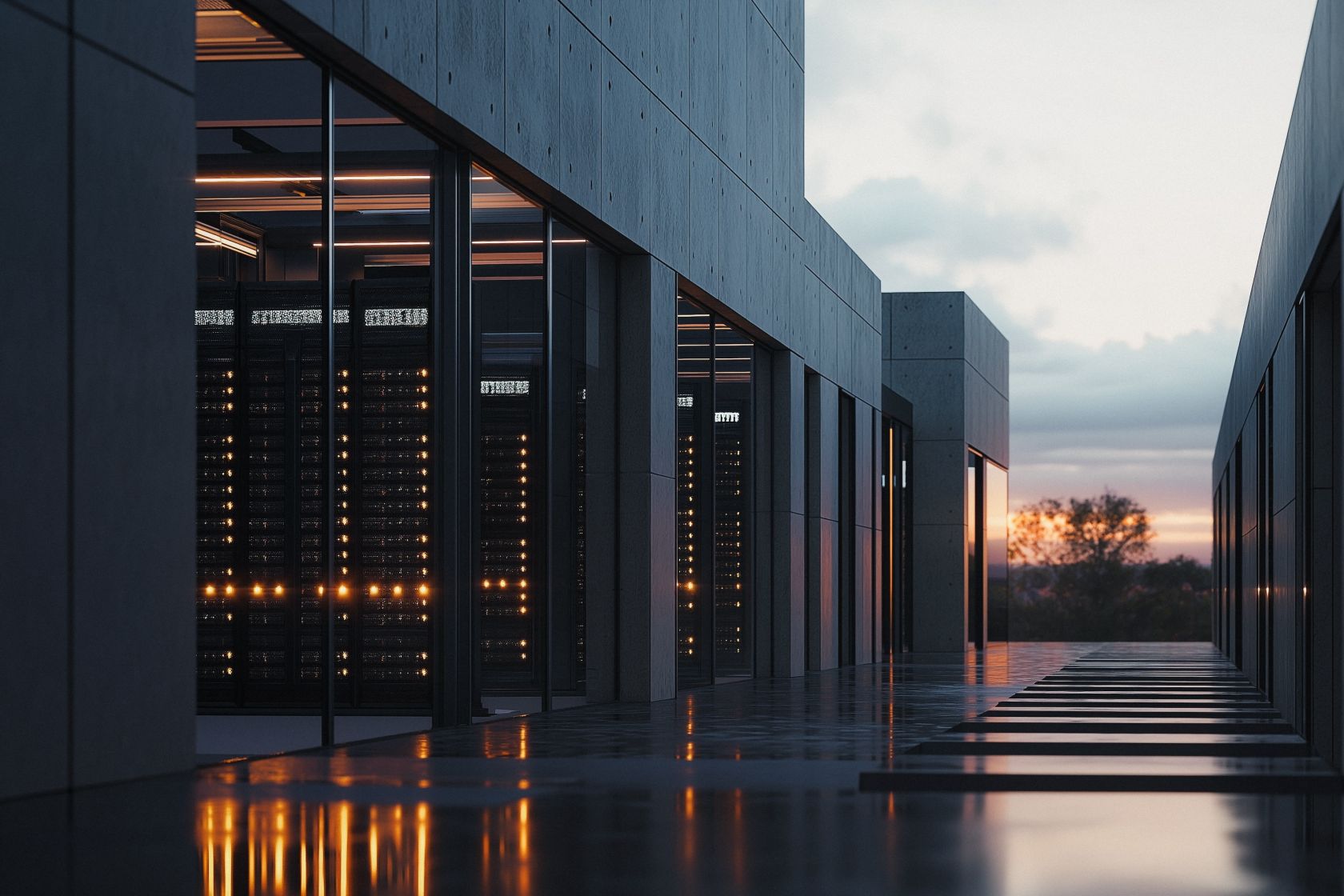
The ongoing investment in the Sines Data Campus, which could reach ten billion euros by 2031, is not just another technological project. It is a clear sign that the new digital economy starts with energy.
Microsoft will be one of the main users of the infrastructure, in an investment of unprecedented scale in Portugal. The second building is now starting with funding of two billion euros in the final stages of structuring. The goal is to build the largest data centre in Europe, with a capacity of 1.2 gigawatts. For many, it is just about technology. In reality, it is about energy, territory, and strategic vision.
In the age of artificial intelligence, data centres have become critical infrastructures. Each question asked of an AI system that requires massive computational power. And this capacity consumes electricity. Lots of electricity. Countries that fail to offer renewable, stable, and competitive energy will be left out of this new digital race.
This is where Portugal gains relevance. The country has one of the most renewable energy matrices in Europe and the capacity to continue to grow. The partnership between Start Campus and EDP demonstrates that green energy and digital infrastructure are no longer separate projects. They are developed together.
Sines is not just a deep-water port. It is also the arrival point of submarine cables that connect Europe to South America and soon, to the United States. This connectivity positions Portugal as the Atlantic gateway for European digital traffic. Renewable energy, submarine cables, and data centres form a rare strategic triangle.
But this transformation does not happen in isolation. Atlantic Convergence, which returns to Lisbon at the end of September, precisely reflects this new reality. The debate is no longer just technological. It involves investors, cable operators, energy companies, real estate developers, and public decision-makers. They are all part of the same equation.
There are also obvious challenges. Sines faces a housing shortage, pressure on infrastructure and the need to reinforce public services. Economic growth is rapid and requires balanced planning. The risk is not in the lack of investment, but in the speed of transformation.
What is at stake is bigger than a set of technological buildings. It is Portugal's positioning in the artificial intelligence economy. The new industrial revolution does not start in factories. It starts in the data centres. And data centres start with energy.
If we know how to align renewables, digital infrastructure and territorial planning, Sines can become one of the most strategic hubs in Atlantic Europe.
In the digital age, the fundamental question is no longer just who has technology.
He is the one who has the energy to feed it.








 Portugal Handbook
 English
 Nederlands
 Deutsch
 Français
 Español
 Italiano
 Svenska
 Pусский
 中文
中文 Türkçe
 Português
 Czech
Czech Hungarian
 Polski
 عربي
عربي Suomi
Suomi עִברִית
 Português (Brasil)
Follow us on social media