



Backpropagation
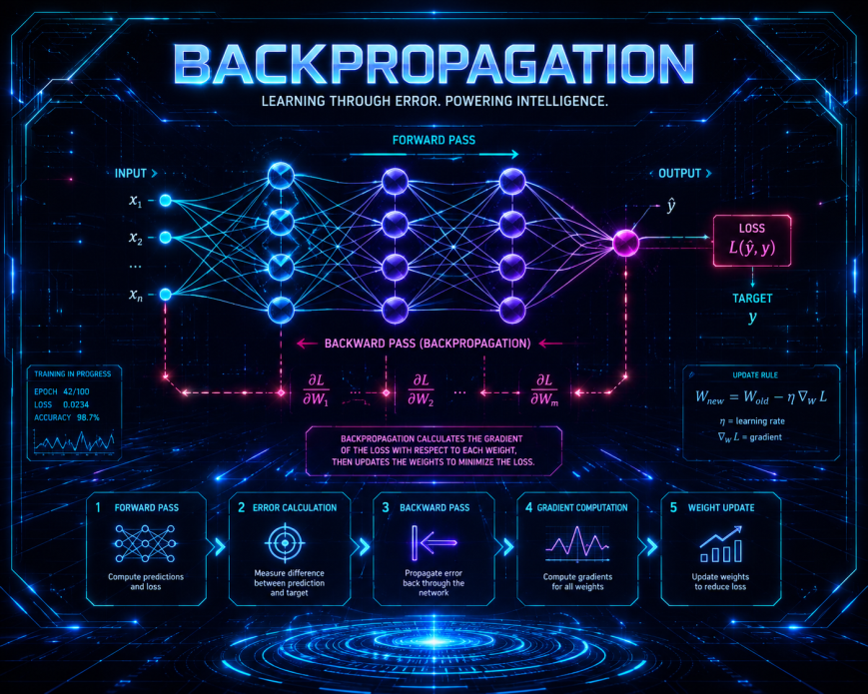
Backpropagation is a method used to train neural networks. It works by comparing the model’s output with the correct answer, calculating the error, and then sending that error backwards through the network to adjust its internal settings. Over many examples, the model gradually improves. Backpropagation is one of the key techniques behind modern deep learning.
Bag-of-Words
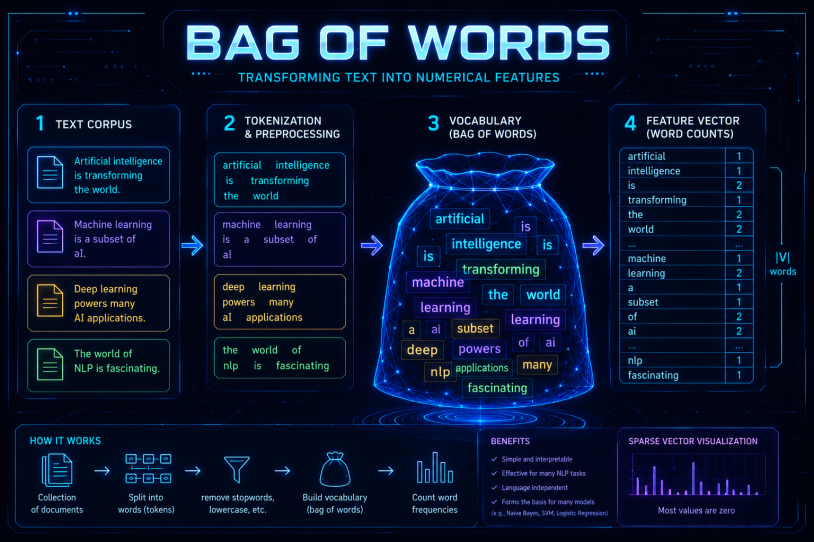
Bag-of-words is a simple way of representing text for machine learning. It ignores grammar and word order and simply counts which words appear. For example, “AI helps business” and “business helps AI” may look very similar in a bag-of-words model. It is less sophisticated than modern language models, but it is still useful in some text-classification tasks.
Base Model
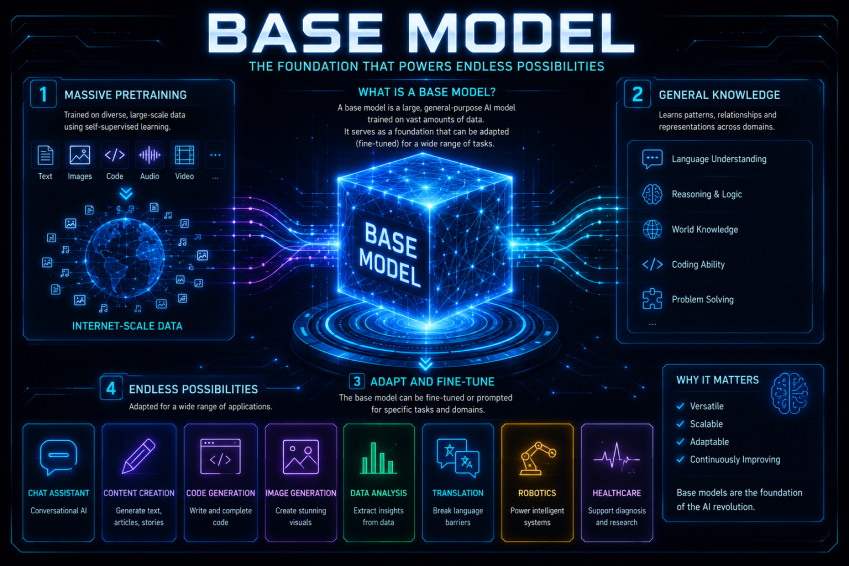
A base model is an AI model that has been trained on a broad dataset but has not yet been specialised for a particular use. For example, a general language model may be trained to predict text, then later fine-tuned to become a helpful assistant, legal summariser or coding tool. The base model is the foundation on which more specialised systems are built.
Bayesian AI
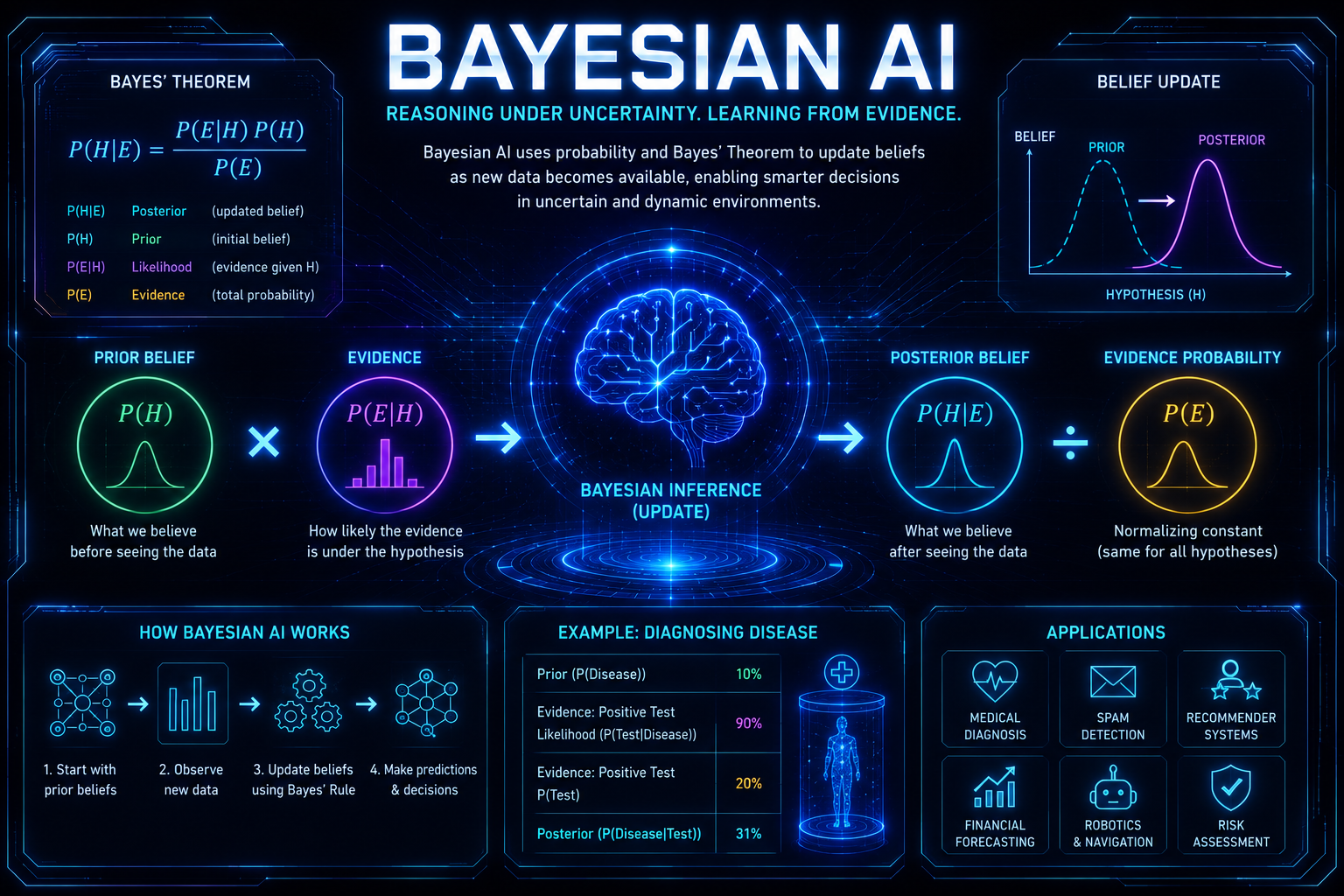
Bayesian AI uses probability to reason about uncertainty. Instead of giving only one answer, a Bayesian approach can update its beliefs as new evidence arrives. This is useful in medicine, forecasting, spam detection and risk analysis. The basic idea is familiar: when new information appears, we revise what we think is likely.
Beam Search
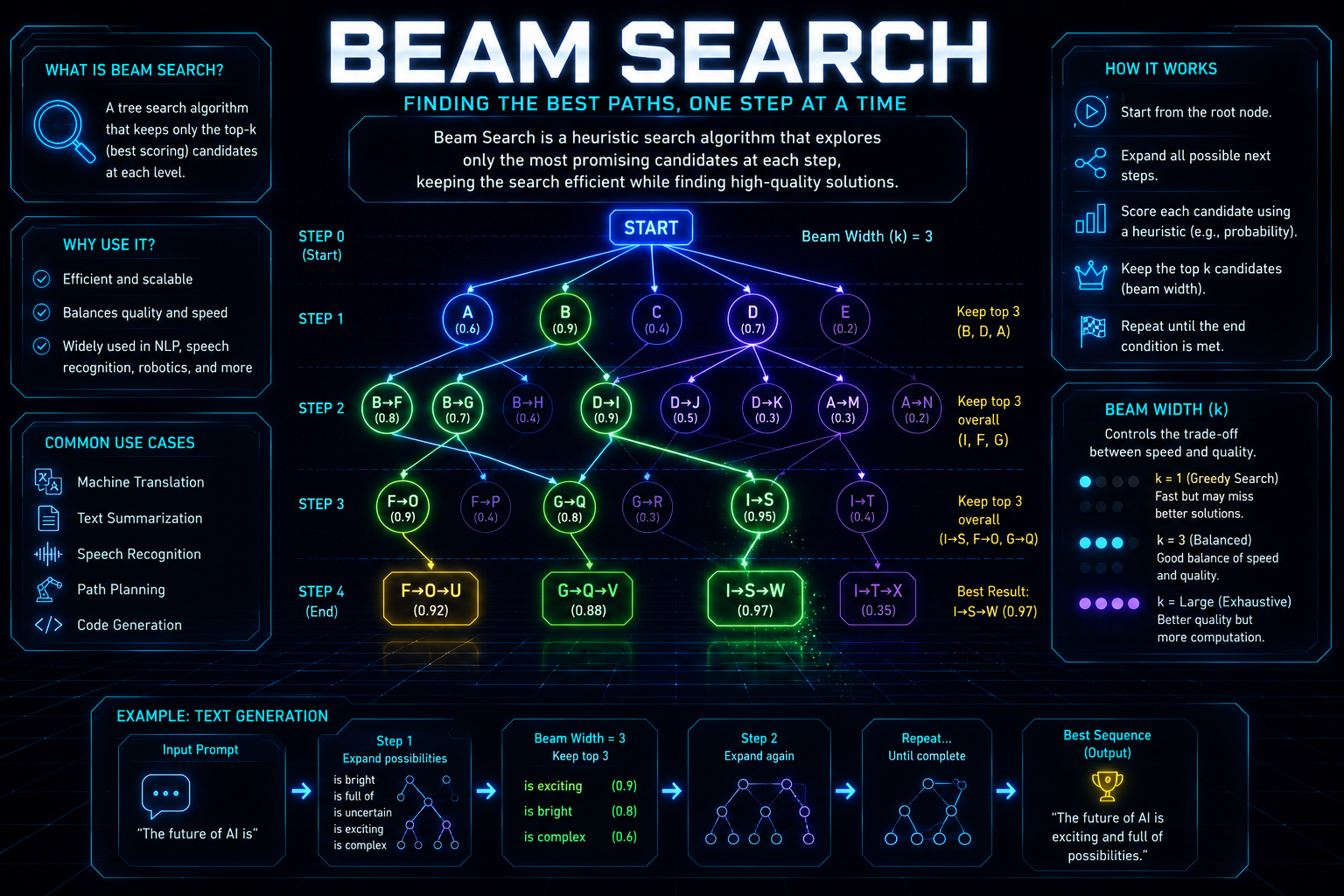
Beam search is a technique used when AI systems generate sequences, such as text or translations. Instead of choosing only the single most likely next word each time, the model keeps several possible options open and explores them. This can improve the final output. It is a bit like considering several possible routes before choosing the best journey.
BERT
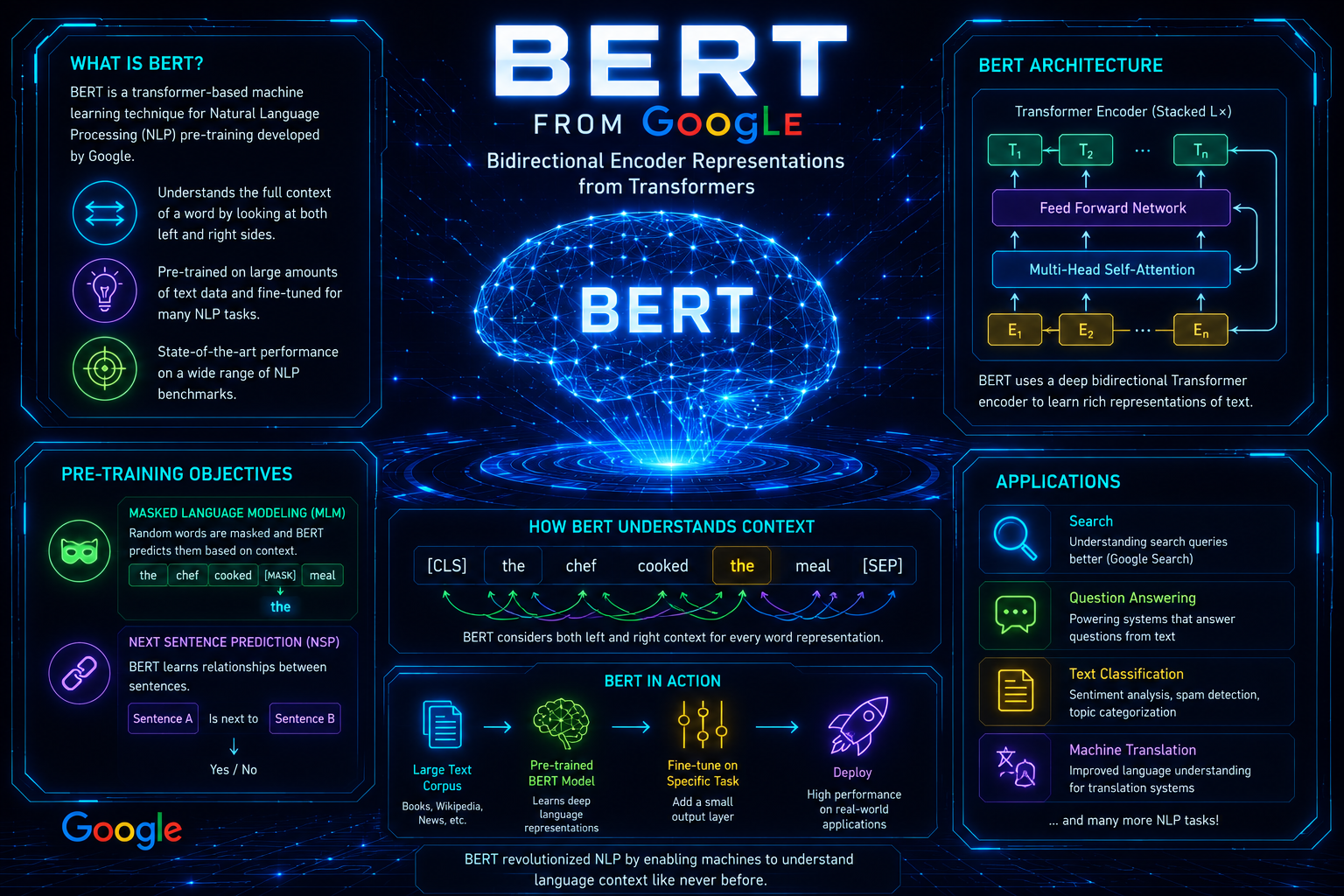
BERT is an influential language model developed before the current wave of large conversational AI tools. It helped computers understand text by looking at words in context from both directions, rather than simply reading left to right. BERT was widely used in search, classification and language-understanding tasks. It helped pave the way for more advanced language models.
Bias
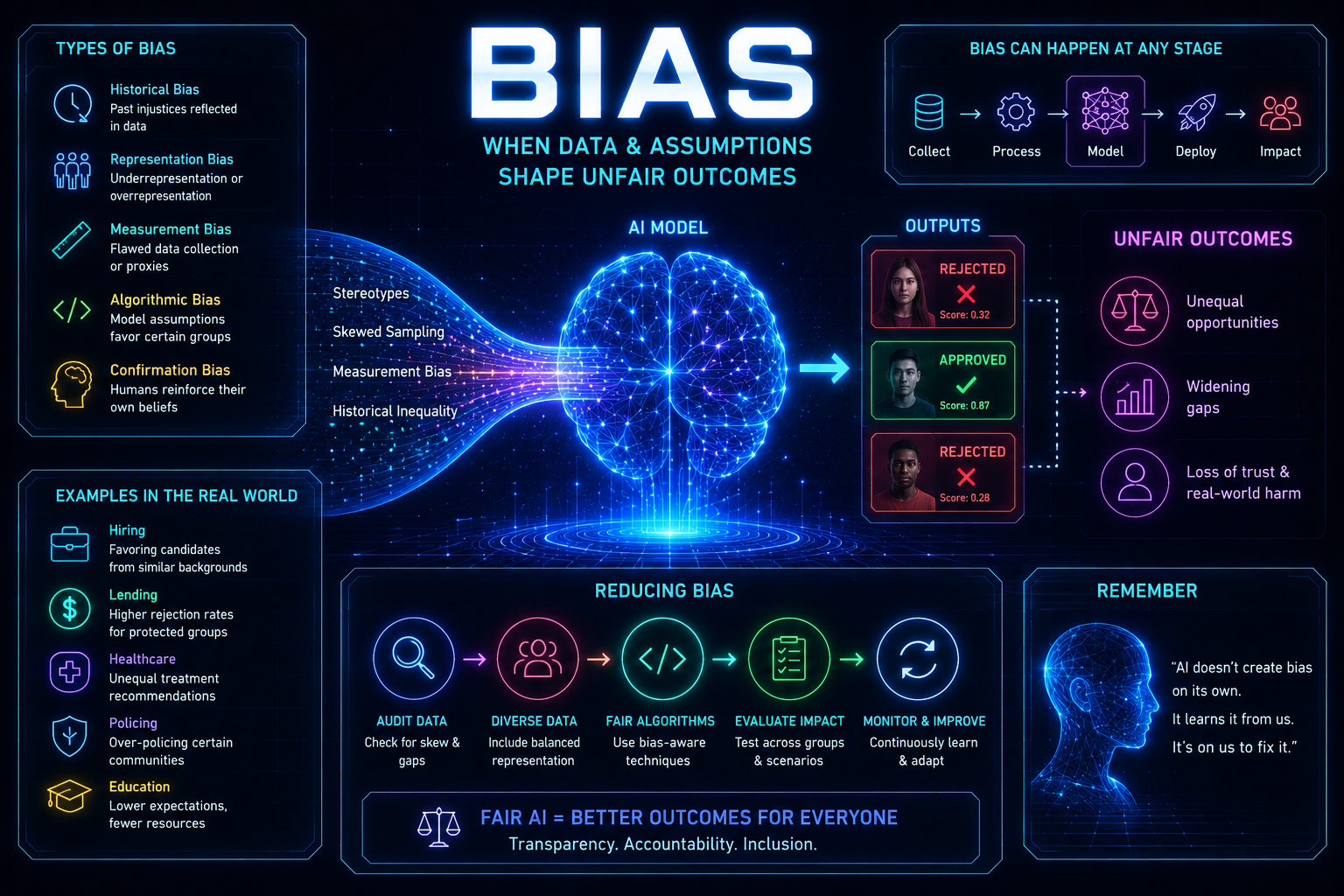
In AI, bias can mean several things. In a technical sense, it may refer to assumptions built into a model. In a social sense, it refers to unfair or skewed outcomes affecting people or groups. Both meanings matter. A useful AI system needs the right kind of technical assumptions, but it must avoid harmful social bias.
Big Data

Big data refers to extremely large, complex or fast-moving datasets that traditional methods struggle to handle. AI has benefited enormously from big data because many machine-learning systems improve when trained on more examples. However, more data is not always better. Poor-quality, biased or irrelevant data can still produce poor AI.
 Add as a preferred source on Google






 Portugal Handbook
 English
 Nederlands
 Deutsch
 Français
 Español
 Italiano
 Svenska
 Pусский
 中文
中文 Türkçe
 Português
 Czech
Czech Hungarian
 Polski
 عربي
عربي Suomi
Suomi עִברִית
 Português (Brasil)
Follow us on social media