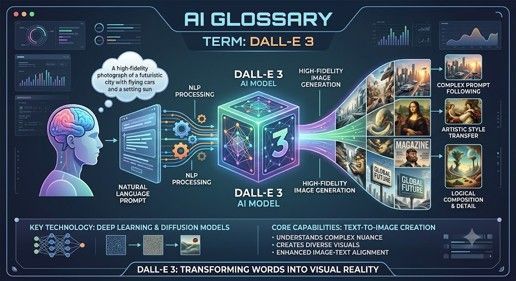
DALL-E 3 was a deep learning text-to-image model developed by OpenAI that generated detailed, high-resolution images from natural language descriptions (prompts). Released in late 2023, it represented a major iteration over previous generative visual models by significantly improving prompt adherence, image quality, and complex detail rendering.
Key Features & Capabilities
· Native Language Understanding: Built natively to understand subtle nuances, spatial relationships, and detailed context within user prompts without requiring complex "prompt engineering."
· In-Image Text Rendering: Capable of generating clear, legible text embedded directly within images (e.g., signs, labels, logos).
· ChatGPT Integration: Natively integrated into ChatGPT Plus/Enterprise, allowing users to brainstorm, refine, and iterate on visual prompts conversationally.
· Safety & Provenance: Incorporates built-in safety guardrails to prevent generating explicit content, public figure caricatures, or style imitations of living artists, and uses C2PA provenance metadata to identify AI-generated images.
N.B. DALL-E 3 is mostly no longer used as standard because OpenAI and Microsoft have officially retired and deprecated it. It has been replaced by newer native multimodal systems
Credits: Supplied Image;Author: Stephen Whitelaw;
Data
Data is the raw material used by AI systems. It may include text, images, audio, video, numbers, transactions, sensor readings or medical records. AI systems learn patterns from data. The quality, relevance and fairness of the data are crucial. Bad data can lead to bad AI, no matter how advanced the model appears.
Credits: Supplied Image;Author: Stephen Whitelaw;
Data Augmentation
Data augmentation means creating modified versions of existing training examples to improve a model. For images, this might include rotating, cropping or changing brightness. For text, it might involve paraphrasing. The goal is to make the model more robust by exposing it to variation. Data augmentation is especially useful when the original dataset is limited.
Credits: Supplied Image;Author: Stephen Whitelaw; Data Bias
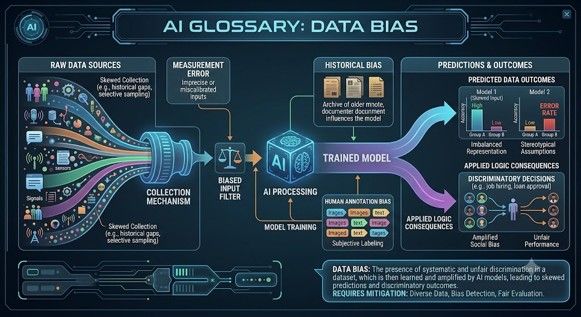
Data bias occurs when the data used to train or test an AI system is unrepresentative, incomplete or skewed. For example, a facial-recognition system trained mostly on one demographic group may perform worse on others. Data bias is one of the main causes of unfair or unreliable AI behaviour.
Credits: Supplied Image;Author: Stephen Whitelaw;
Data Cleaning
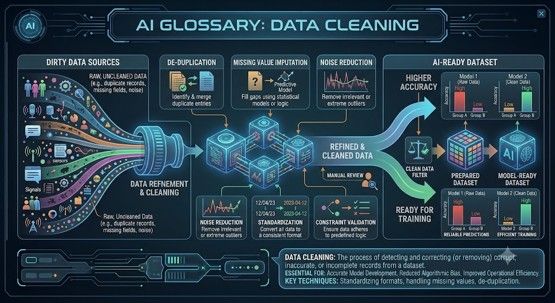
Data cleaning is the process of correcting, removing or organising messy data before it is used. Real-world data often contains duplicates, missing values, spelling errors, outdated entries or inconsistent formats. AI systems depend heavily on clean data. In many projects, data cleaning takes more time than building the model.
Credits: Supplied Image;Author: Stephen Whitelaw; Data Labelling
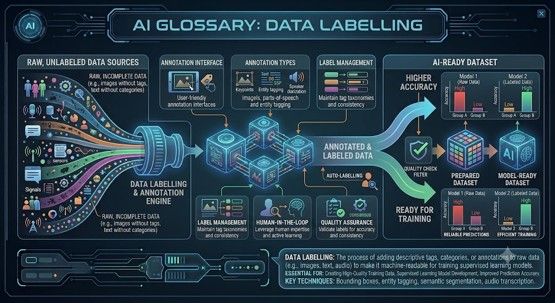
Data labelling is the process of adding meaningful tags to data so an AI system can learn from it. For example, labelling emails as “spam” or “not spam” helps train a spam filter. Labelling medical images can help train diagnostic tools. Good labelling requires clear rules and quality control, especially when expert judgement is needed.
Credits: Supplied Image;Author: Stephen Whitelaw;
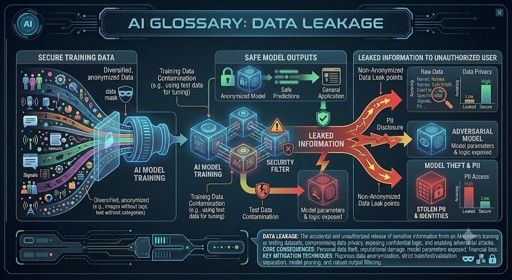
Data Leakage
Data leakage happens when information from the test data accidentally influences the training process. This makes the model look better than it really is. For example, if a model is trained using information that would not be available in real life, its performance estimate becomes unreliable. Data leakage is a common but serious mistake in machine-learning projects.
Credits: Supplied Image;Author: Stephen Whitelaw;
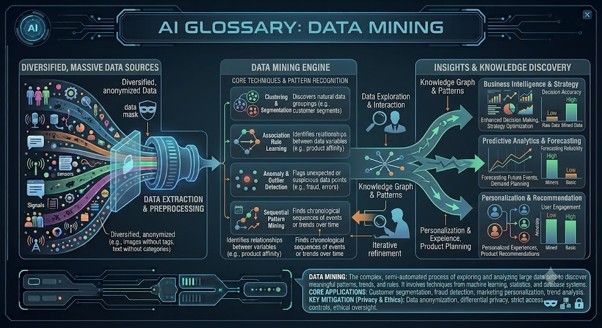
Data Mining
Data mining is the process of finding patterns, relationships or useful information in large datasets. It existed before modern AI but overlaps with machine learning. Businesses use data mining to understand customers, detect fraud, forecast demand and improve operations. The risk is that patterns may be misinterpreted or used without proper privacy safeguards.
Credits: Supplied Image;Author: Stephen Whitelaw;
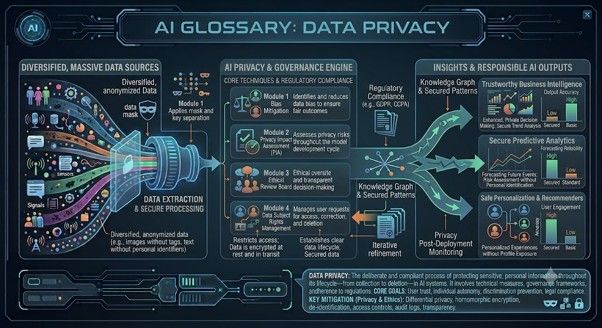
Data Privacy
Data privacy concerns how personal information is collected, used, stored and shared. AI creates new privacy concerns because models may be trained on large datasets, including sensitive information. Organisations using AI need to consider consent, security, anonymisation, retention and legal compliance. Privacy is not just a technical issue; it is a trust issue.
Credits: Supplied Image;Author: Stephen Whitelaw;
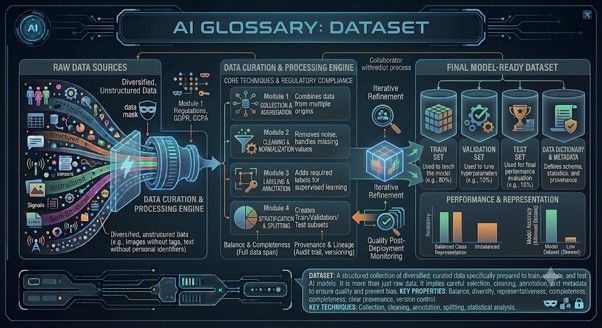
Dataset
A dataset is a structured collection of data used for training, testing or analysing an AI system. A dataset might contain customer records, medical images, product reviews, financial transactions or labelled photographs. The dataset’s size, quality and representativeness strongly influence the model’s performance.
Credits: Supplied Image;Author: Stephen Whitelaw;
Decision Tree
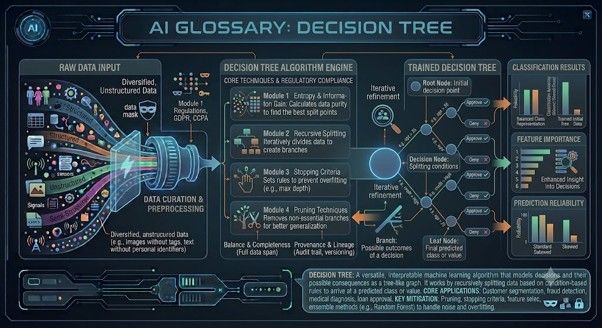
A decision tree is a machine-learning model that makes decisions through a sequence of questions. For example: Is the customer over 18? Has the payment failed before? Is the transaction unusually large? Decision trees are popular because they are easier to understand than many black-box models. They are often used in risk scoring, classification and business rules.
Credits: Supplied Image;Author: Stephen Whitelaw;
Deepfake
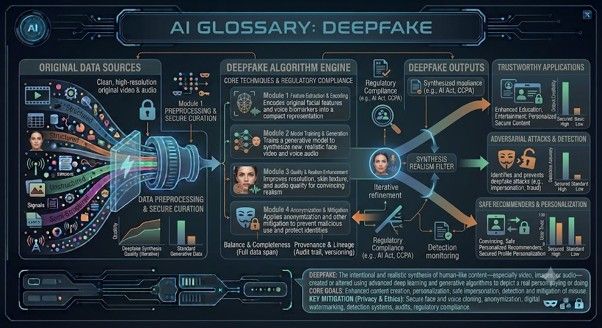
A deepfake is AI-generated or AI-manipulated media that makes someone appear to say or do something they did not say or do. Deepfakes can be used for entertainment, but also for fraud, harassment, misinformation and political manipulation. As deepfakes become more realistic, media literacy and verification become increasingly important.
Set The Portugal News as your preferred source for news on Google
Stephen Whitelaw is an international AI speaker, educator and digital strategist, helping businesses and individuals understand, adopt and benefit from artificial intelligence through practical insight and over 30 years’ experience.
We are proud to provide our readers from around the world with independent, honest and unbiased news for free – both online and in print.
Our dedicated team supports the local community, foreign residents and visitors of all nationalities through our newspaper, website, social media and our newsletter.
We appreciate that not everyone can afford to pay for our services but if you are able to, we ask you to support The Portugal News by making a contribution – no matter how small.





 Add as a preferred source on Google


 Portugal Handbook
 English
 Nederlands
 Deutsch
 Français
 Español
 Italiano
 Svenska
 Pусский
 中文
 Türkçe
 Português
 Czech
 Hungarian
 Polski
 عربي
 Suomi
 עִברִית
 Português (Brasil)

Follow us on social media