Credits: Supplied Image; Author: Stephen Whitelaw;
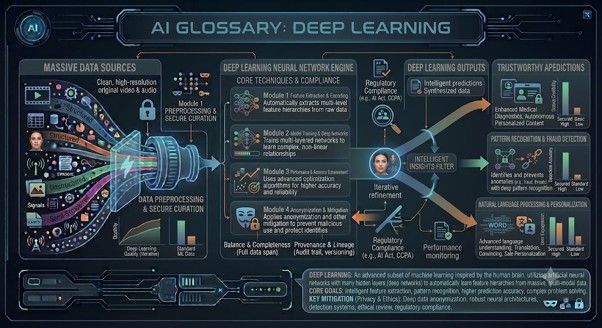
Deep Learning
Deep learning is a type of machine learning based on neural networks with many layers. These systems can learn complex patterns in images, text, audio and video. Deep learning powers many modern AI breakthroughs, including speech recognition, image generation, translation and large language models. It often requires large amounts of data and computing power.
Credits: Supplied Image; Author: Stephen Whitelaw;
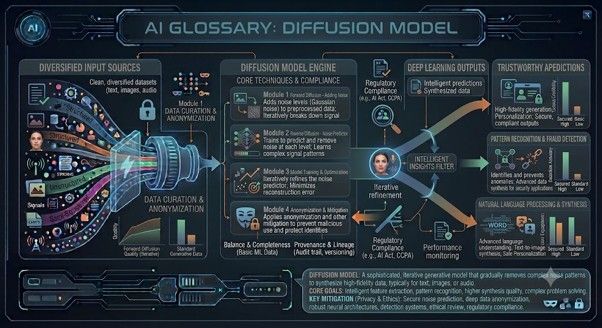
Diffusion Model
A diffusion model is a type of generative AI often used to create images. It learns to generate data by starting with noise and gradually refining it into a coherent image or output. Many modern image-generation tools use diffusion techniques. The result can be highly realistic or artistic, depending on the prompt and model.
Credits: Supplied Image; Author: Stephen Whitelaw;
Digital Twin
A digital twin is a virtual model of a real-world object, system or process. For example, a factory might have a digital twin that simulates machines, energy use and production flow. AI can make digital twins more powerful by predicting problems and testing changes before they happen in the real world. Digital twins are used in engineering, healthcare, transport and smart cities.
Credits: Supplied Image; Author: Stephen Whitelaw;
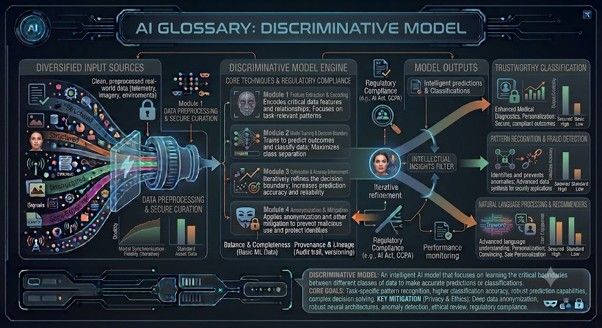
Discriminative Model
A discriminative model learns to distinguish between categories. For example, it might decide whether an email is spam or not spam, or whether a tumour image appears benign or malignant. Discriminative models are different from generative models, which create new content. In simple terms, discriminative models classify; generative models produce.
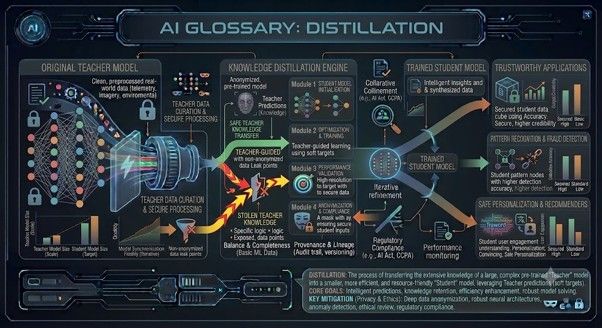
Credits: Supplied Image; Author: Stephen Whitelaw; Distillation
AI distillation is training a small, fast AI model to copy the knowledge and behavior of a large, smart AI model.Think of it as a master chef (the large model) teaching an apprentice (the small model) all their secret recipes and techniques so the apprentice can cook the same quality food, just much faster and with fewer kitchen tools.Why It Is UsedSaves space: It shrinks massive AI systems so they can fit on a smartphone or laptop.Saves money: It costs significantly less computer power to run the smaller model.Saves time: The smaller model gives answers much faster than the giant one.
Credits: Supplied Image; Author: Stephen Whitelaw;
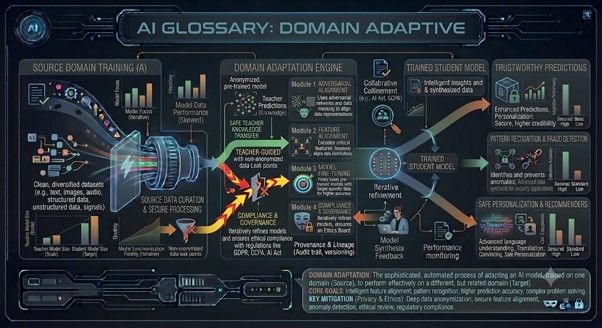
Domain adaptation
Domain adaptation is the process of making an AI model work well in a new but related setting. For example, a model trained on hospital data from one country may not work equally well in another country because equipment, patients or procedures differ. Domain adaptation helps models transfer knowledge while adjusting to local conditions.
Credits: Supplied Image; Author: Stephen Whitelaw;
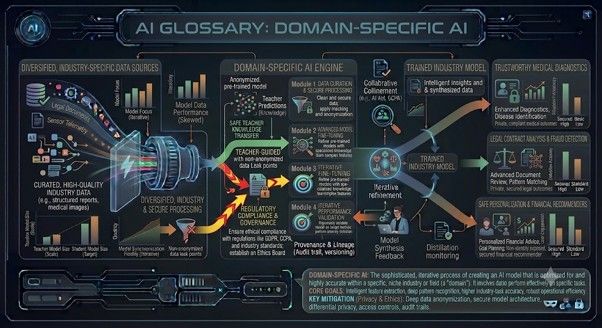
Domain-Specific AI
Domain-specific AI is AI designed for a particular field, such as healthcare, law, finance, education, farming or manufacturing. These systems may be more accurate and useful than general tools because they are built around specialist knowledge and workflows. However, domain-specific AI needs expert oversight because mistakes can carry serious consequences.
Credits: Supplied Image; Author: Stephen Whitelaw;
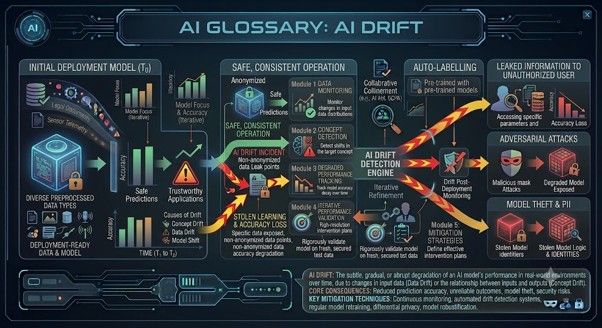
Drift
Drift occurs when an AI model’s performance changes over time because the real world changes. For example, customer behaviour, fraud tactics, medical practice or language use may evolve. A model that worked well last year may become less reliable today. Monitoring for drift is essential in any AI system used over time.
Credits: Supplied Image; Author: Stephen Whitelaw;
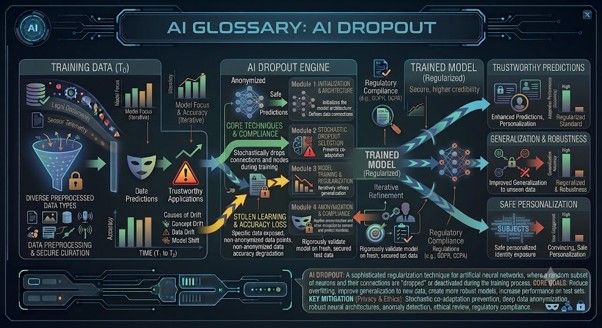
Dropout
Dropout is a training technique used in neural networks to reduce overfitting. During training, some connections are randomly ignored, forcing the model not to rely too heavily on any one pathway. This helps the model generalise better to new data. It is similar to training a team so that the whole group performs well, rather than depending on one star player.
Credits: Supplied Image;Author: Stephen Whitelaw;
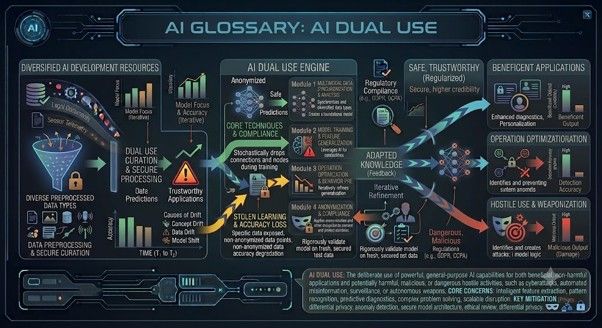
Dual Use
Dual use means a technology can be used for both helpful and harmful purposes. AI is a classic dual-use technology. The same tool that helps write educational material could also help write phishing emails. The same image-generation system that helps artists could create fake evidence. Responsible AI requires thinking about misuse as well as intended use.
Set The Portugal News as your preferred source for news on Google
Stephen Whitelaw is an international AI speaker, educator and digital strategist, helping businesses and individuals understand, adopt and benefit from artificial intelligence through practical insight and over 30 years’ experience.
We are proud to provide our readers from around the world with independent, honest and unbiased news for free – both online and in print.
Our dedicated team supports the local community, foreign residents and visitors of all nationalities through our newspaper, website, social media and our newsletter.
We appreciate that not everyone can afford to pay for our services but if you are able to, we ask you to support The Portugal News by making a contribution – no matter how small.


 Add as a preferred source on Google


 Portugal Handbook
 English
 Nederlands
 Deutsch
 Français
 Español
 Italiano
 Svenska
 Pусский
 中文
 Türkçe
 Português
 Czech
 Hungarian
 Polski
 عربي
 Suomi
 עִברִית
 Português (Brasil)

Follow us on social media