


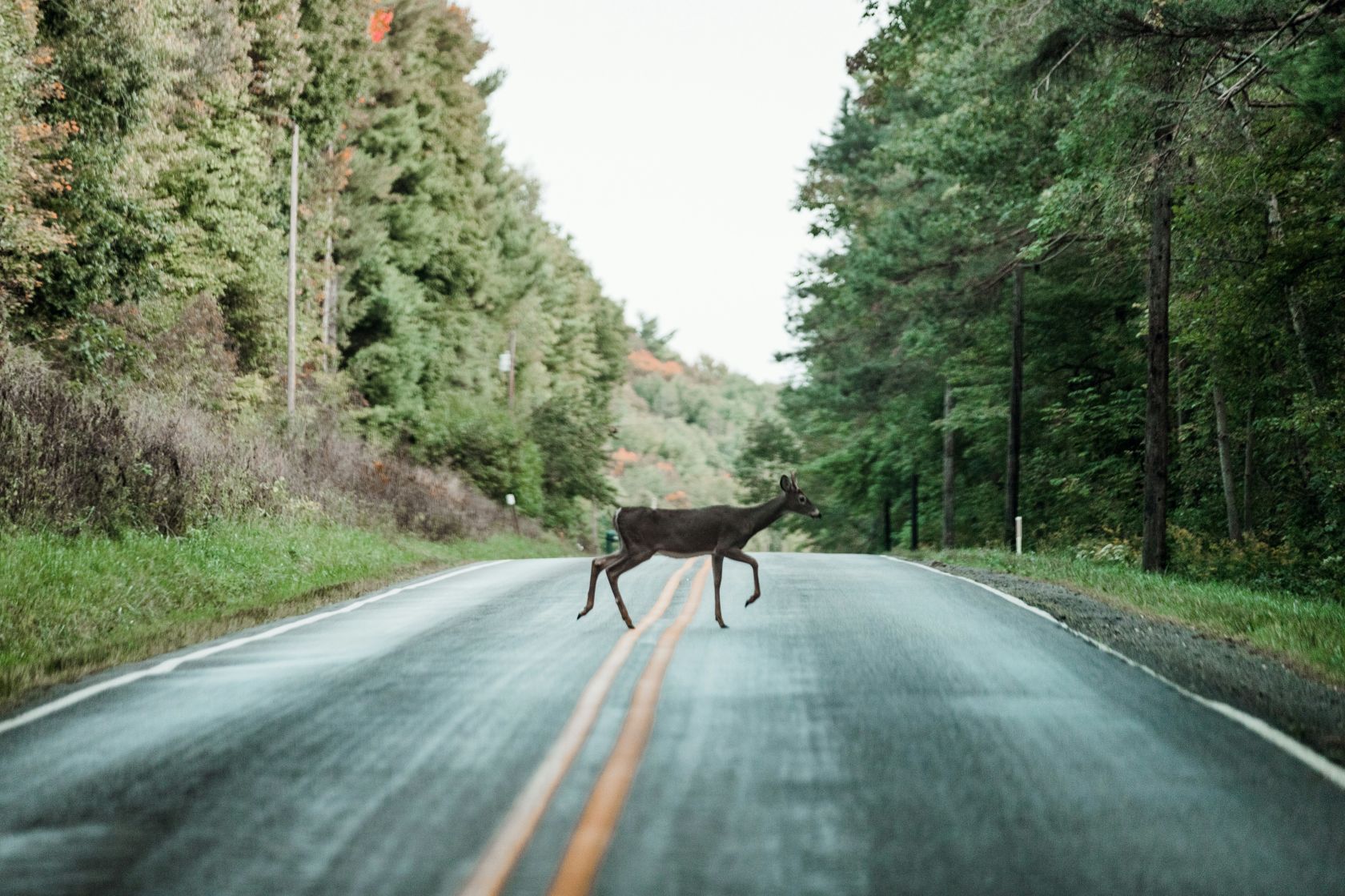
IP has been monitoring road collisions involving ungulates (wild boars, roe deer, red deer, and others) since 2010, and the figure has risen almost uninterruptedly over the 15 years of tracking, stated Graça Garcia, a biologist at Infraestruturas de Portugal. She was speaking in Lousã during the first seminar titled “Impacto – Towards Mitigating the Impacts of Wild Ungulates in Portugal.”
The chart presented states that while fewer than 20 collisions per year were recorded up to 2015, the number exceeded 140 in 2025.
Graça Garcia noted that, since 2010, there have been a total of 856 road collisions on roads under IP’s jurisdiction, the vast majority involving wild boars (762).
Species expansion
In the biologist’s view, this exponential increase is due not only to the rapid expansion of wild boar populations across the territory but also to an increase in the information being reported.
However, the figure is much higher when accidents on roads not managed by IP are included.
A project led by the University of Aveiro and promoted by the Institute for Nature Conservation and Forests (ICNF) recorded over 500 accidents involving wild boars annually between 2019 and 2020, covering all types of roads.
Constant increase
Carlos Fonseca, who coordinated that project and is also leading the “Impacto” project, attended the seminar and told the Lusa news agency that the number of accidents has been increasing year by year—now exceeding one thousand annual collisions—with regions such as Coimbra and Viseu being particularly critical areas. “There are hotspots for road accidents that are strongly associated with a greater abundance of this species,” he noted.
The project presented today, which builds on previous work, seeks to define strategies to understand better ungulate population trends and ways to mitigate their impacts—whether regarding road collisions or agriculture.
“Without baseline data or knowledge of population densities, we lack the information needed to define adaptation measures for better managing these populations,” stated Carlos Fonseca. He coordinates a plan that aims not only to gather more information but also to develop and test tools to reduce the impact of these wild animals, ultimately providing a set of guidelines for those affected by the rise of these species across the country.
Commissioned by the Government and implemented by the ICNF (Institute for Nature Conservation and Forests), the project’s scientific work is being led by the Centre for Environmental and Marine Studies (CESAM) at the University of Aveiro.
New measures
The initiative will also evaluate measures established by the ICNF to reduce the wild boar population, determining whether or not they are affecting the species.
During the seminar, Lousã Mayor Victor Carvalho highlighted the importance of striking a balance between the presence of animals like deer and wild boar, which attract tourists and generate economic opportunities, and the pressure they place on agricultural systems, particularly family farming.
In the mayor’s view, it is possible to reconcile nature conservation goals with the protection of agriculture.
Meanwhile, the Secretary of State for Forests, Rui Ladeira, expressed concern over the declining number of active hunters, who could play a key role in controlling ungulate populations. He noted the economic impact of wild boars on road safety and agriculture, citing estimated losses of over eight million euros annually in corn crops alone.
The official announced that a call for applications is expected to be launched in the fourth quarter to support and protect crops affected by these animals.
 Add as a preferred source on Google





 Portugal Handbook
 English
 Nederlands
 Deutsch
 Français
 Español
 Italiano
 Svenska
 Pусский
 中文
中文 Türkçe
 Português
 Czech
Czech Hungarian
 Polski
 عربي
عربي Suomi
Suomi עִברִית
 Português (Brasil)
Follow us on social media