


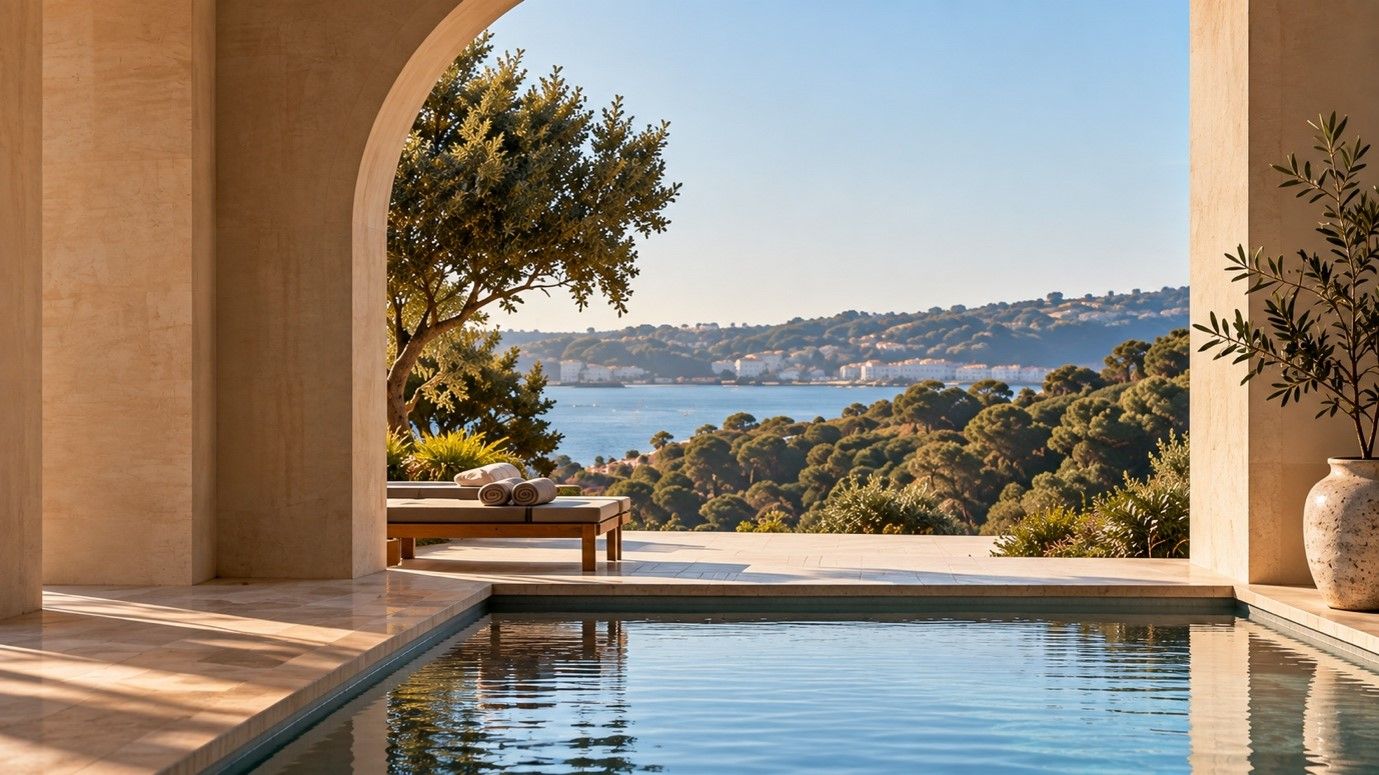
The overlooked relationship between design, human behaviour, and long-term real estate value.
Real estate is an industry built around numbers: price per square metre. Yield. Occupancy. Construction cost. Rental growth. Supply. Demand. All are essential. Yet there is another factor that is much harder to capture in a spreadsheet.
How a place makes us feel.
Walk through a beautiful neighbourhood, enter a thoughtfully designed hotel, sit in a well-landscaped public square, or spend time in a building filled with natural light, and our response is almost instinctive. We want to stay. We want to return. Sometimes, we are willing to pay more to be there.
That raises an interesting question for investors and developers: Can beauty actually influence real estate performance?
We already put a price on beautiful places
Beauty is subjective. But many of the characteristics that contribute to our perception of a beautiful place are not.
Architecture. Green space. Natural light. Views. Walkability. Materials. Landscape. Proportion. Public realm. A connection to local culture.
A study published in Ecological Economics, analysing more than 35,000 residential transactions in Amsterdam, found that homes within 250 metres of attractive green space were associated with estimated price premiums of between 7.1% and 9.3%. The effect declined as distance increased.
Research from the University of Cambridge provides another interesting example. Analysing architectural form and residential transactions in Rotterdam, the study found an approximately 3.5% price premium for row houses within highly architecturally coherent ensembles compared with those facing more heterogeneous surroundings.
Neither study tells us that adding attractive landscaping or designing a beautiful façade automatically increases an asset's value by a predetermined percentage. But they demonstrate something important: features associated with the quality and attractiveness of our surroundings can become capitalised into property values.
From aesthetics to economics
The relationship becomes easier to understand when we stop thinking about beauty as decoration.
Good places influence behaviour.
A place that people enjoy can encourage them to stay longer. A neighbourhood people value can create greater residential demand. A memorable hotel can encourage guests to return. A welcoming public realm can generate activity and footfall. And those behaviours have economic consequences.
JLL's 2025 Global Consumer Experience Survey, based on 12,000 people across 19 markets and 64 cities, found that 69% of consumers were willing to pay a premium for high-quality experiences. Perhaps even more revealingly, 74% said cities need to offer new experiences to remain relevant.
This represents an important shift for real estate.
People increasingly expect buildings and destinations to do more than fulfil a function. They expect them to enhance the time they spend there. The experience of a place is becoming part of its value proposition.

Beautiful does not mean expensive
Beautiful real estate is not necessarily extravagant real estate. Beauty does not require excessive marble, expensive finishes or spectacular architecture.
Some of the most successful places are remarkably simple.
They work because the proportions feel right. Because there is natural light. Because the landscaping has been considered from the beginning rather than added at the end. Because materials age well. Because buildings respond to their surroundings. Most importantly, they feel authentic.
This matters because design that exists primarily to impress can become dated remarkably quickly. Places with a genuine identity tend to age differently.
The building is no longer the entire product
This is particularly relevant as real estate, hospitality and lifestyle increasingly converge.
Consider a mixed-use destination incorporating residences, hospitality, restaurants, wellness, workspaces and landscaped public areas. Individually, each component has a function. Together, they create an experience.
The hotel brings service. Restaurants generate activity. Landscaping creates spaces where people want to spend time. Wellness supports quality of life. Public areas create opportunities for interaction.
The value of the destination therefore becomes more than the sum of its buildings.
JLL's research suggests that mixed-use developments are now competing on experience as well as location and specification.
For investors, that changes the conversation: we are no longer evaluating only what is being built. We also need to understand what kind of life will happen there once it is built.
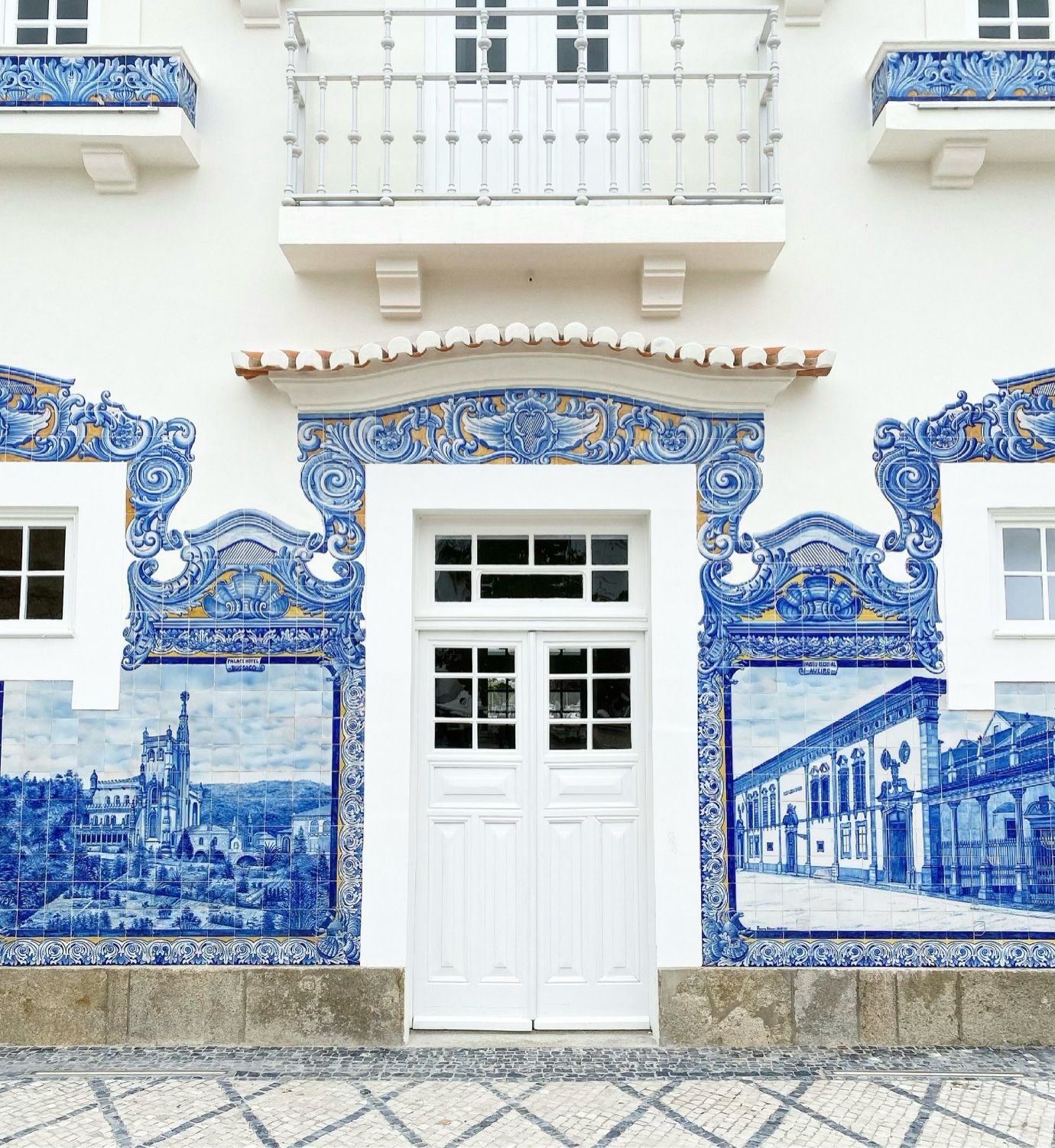
Portugal understands the power of place
Portugal provides an interesting example. Its appeal cannot be explained by a single economic indicator. Lisbon's streets and light. Porto's relationship with the Douro. The landscape of the Alentejo. The coastline of the Algarve. The character of smaller towns and villages.
Architecture, climate, food, culture, landscape and human scale combine to create something more difficult to quantify: a sense of place.
Beauty can also be a form of resilience
Perhaps the most interesting relationship between design and performance is not the premium a beautiful asset might command today. It is whether people will still want to be there tomorrow.
JLL increasingly describes experience as a value driver in real estate, while warning of the emergence of "experience obsolescence": the risk that assets which no longer meet people's expectations become less competitive.
Buildings have always faced physical obsolescence. They can now face experiential obsolescence too. A technically functional building may still lose relevance if people consistently prefer somewhere else.
Conversely, architecture with character, adaptable spaces, thoughtful landscaping, strong operations and a genuine connection to its surroundings can create something difficult for a competitor to reproduce overnight:
emotional attachment.
So, do beautiful places perform better?
Beauty alone is not an investment strategy.
Location matters. Entry price matters. Accessibility matters. Operations matter. Supply and demand matter. Management, construction quality and market timing all matter.
But dismissing beauty because it is difficult to quantify misses something fundamental about real estate. Ultimately, buildings exist for people. And people make decisions based not only on utility, but on experience.
We choose the neighbourhoods where we want to live. The hotels we want to revisit. The restaurants where we stay for another drink. The offices where we enjoy spending time. The streets we choose to walk down.When those individual preferences aggregate, they become demand.
And demand becomes economics. One of the most important questions when evaluating a new real estate project is not only:
What will this asset yield?
But also:
Will people still want to be here in ten or twenty years?
Because the places that create lasting value are often the places people value in the first place.
Sources & further reading: JLL, Global Consumer Experience Survey 2025 / Experience Matters 2025; Daams, Sijtsma & Veneri, Ecological Economics (2019), “Mixed monetary and non-monetary valuation of attractive urban green space”; Lindenthal, Real Estate Economics (2020), “Beauty in the Eye of the Home-Owner: Aesthetic Zoning and Residential Property Values”.
 Add as a preferred source on Google





 Portugal Handbook
 English
 Nederlands
 Deutsch
 Français
 Español
 Italiano
 Svenska
 Pусский
 中文
中文 Türkçe
 Português
 Czech
Czech Hungarian
 Polski
 عربي
عربي Suomi
Suomi עִברִית
 Português (Brasil)
Follow us on social media