


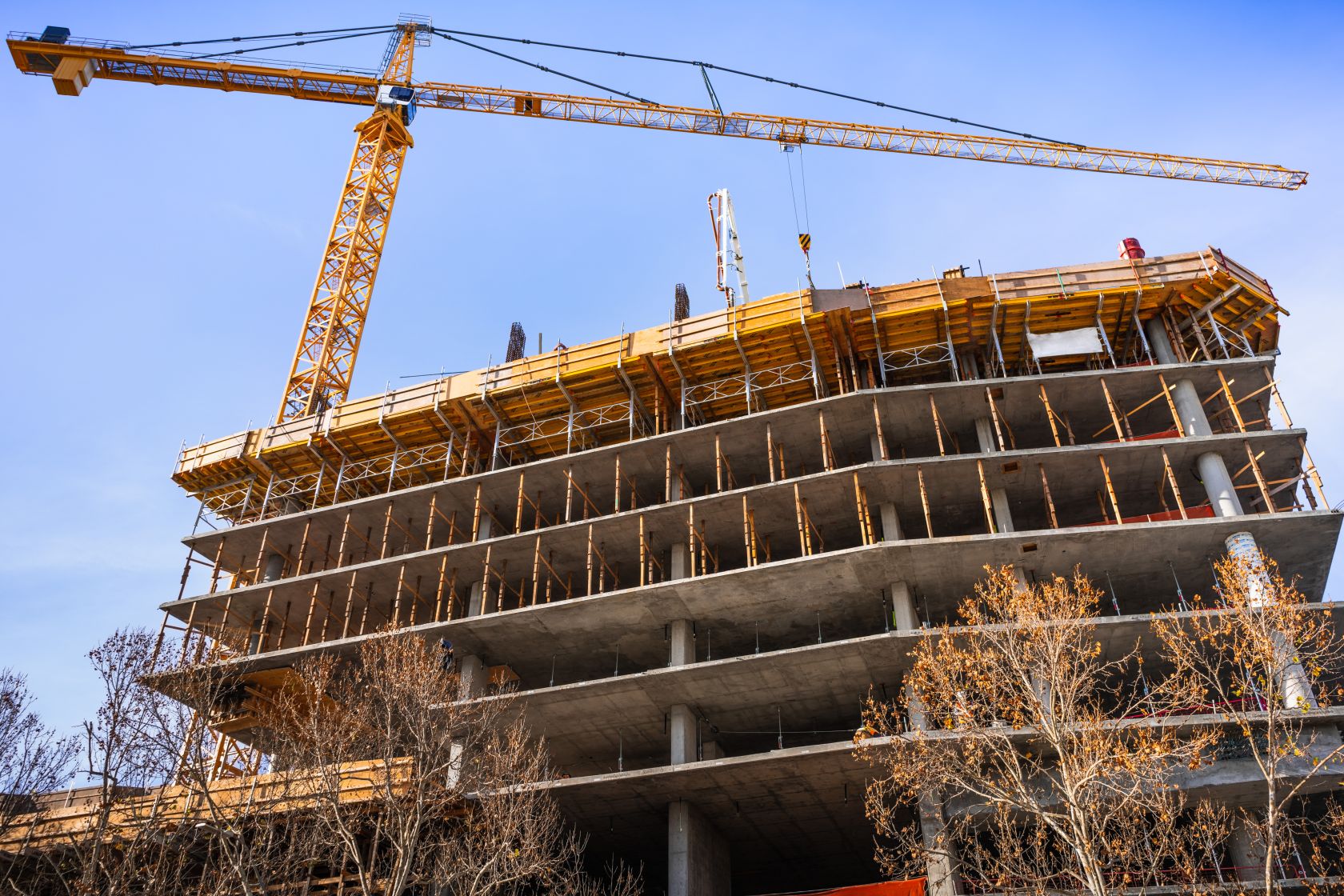
In Portugal, building a new home became considerably more expensive in August, as rising material prices and labour costs pushed the annual increase in residential construction costs to 7.5 percent.
As reported by the National Statistics Institute (INE), the year-on-year rise was one percentage point higher than the 6.5 percent recorded in July, reflecting faster growth across both main components of the construction cost index.
Meanwhile, labour costs increased by 8 percent compared with August 2025, up from 6.8 percent in the previous month, as construction materials became 7.1 percent more expensive, accelerating from the 6.3 percent annual increase registered in July.
Both factors contributed almost equally to the overall rise, with materials accounting for 3.8 percentage points and labour adding 3.7 percentage points.
Biggest increases
Several construction materials recorded particularly sharp price rises over the 12-month period.
The price of diesel and bare or coated copper wire rose by around 30 percent from August last year, as PVC pipes became approximately 20 percent more expensive, while ceramic tiles and mosaics, external thermal insulation composite systems, steel and cast iron pipes, and plumbing fittings all recorded increases of around 15 percent.
According to the INE, none of the materials included in its index registered an annual price reduction during the period.
These increases add to financial pressure on construction projects, alongside rising labour costs.
Monthly charge
The latest figures also show construction costs rose from the previous month, reversing the decline in July.
The index rose 0.5 percent in August, after a 0.2 percent decline in July, as labour costs surged by 0.6 percent over the month, while material prices increased by 0.4 percent.
Labour accounted for 0.3 percentage points of the monthly increase, with materials contributing the remaining 0.2 percentage points.
These figures point to renewed upward pressure on the cost of building residential properties in Portugal, with both workforce expenses and material prices contributing to the trend.
However, the construction cost index measures changes in the expenses of building new residential properties and does not directly reflect changes in the prices at which homes are sold.
Set The Portugal News as your preferred source for news on Google
 Add as a preferred source on Google


 Portugal Handbook
 English
 Nederlands
 Deutsch
 Français
 Español
 Italiano
 Svenska
 Pусский
 中文
 Türkçe
 Português
 Czech
 Hungarian
 Polski
 عربي
 Suomi
 עִברִית
 Português (Brasil)

Follow us on social media