


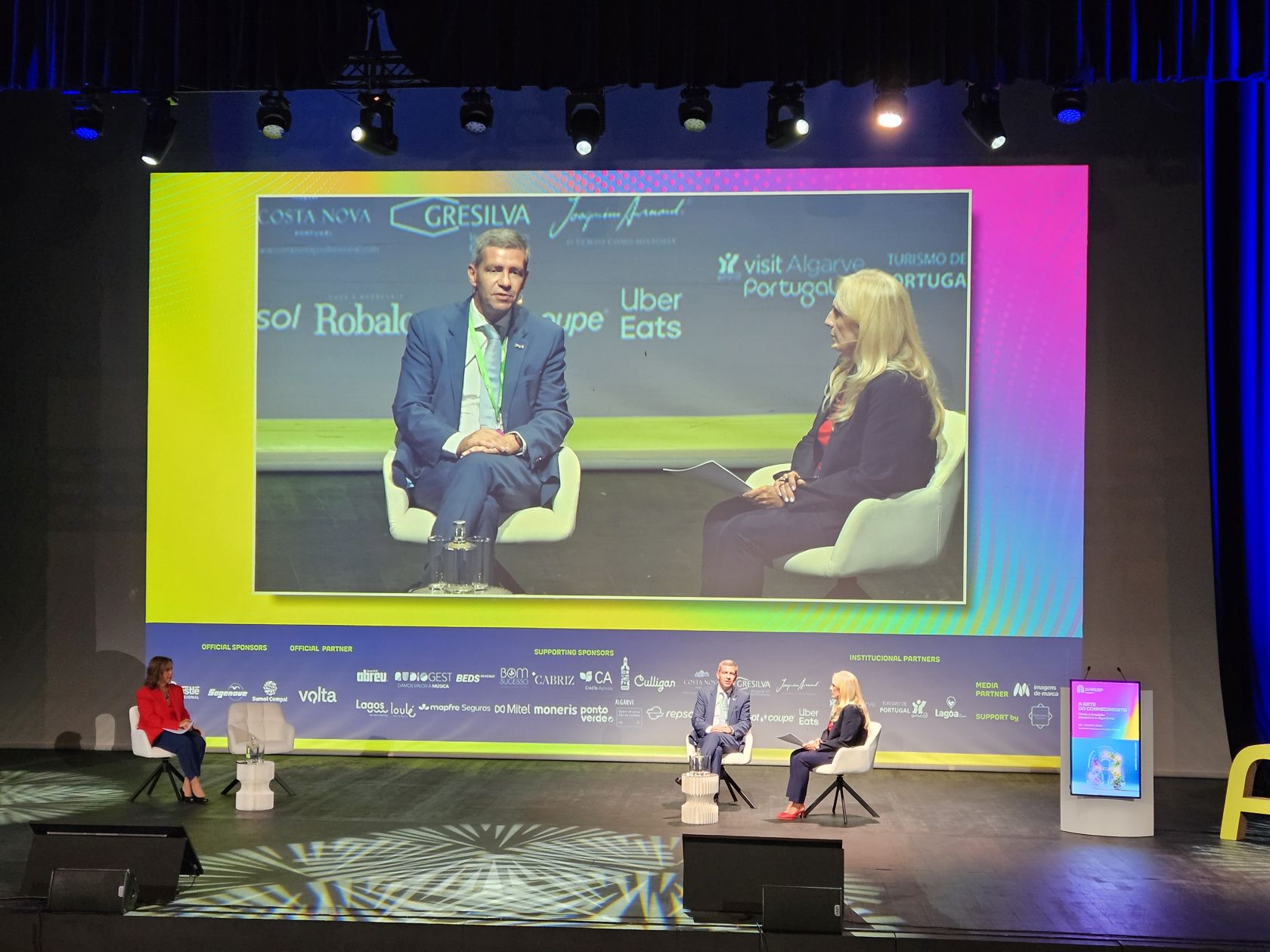
This concern was present at the AHRESP National Congress, held in the Algarve, and I believe that it deserves a reflection that goes far beyond the borders of tourism. As vice-president of APEMIP, I have been following the challenges of the Portuguese housing market and I am increasingly convinced that the lack of affordable housing has also become a problem of economic competitiveness.
For many years, we have become accustomed to discussing housing mainly as a social issue. And it is, of course, one of the most important. But we need to recognise that the difficulty of finding a house at prices compatible with income has direct consequences on the ability of companies to hire, on the mobility of workers and on the development of regions.
The Algarve represents a particularly evident example. The region has an internationally recognised tourist activity, with companies looking to improve their services and offer quality experiences. However, many of these companies face difficulties in attracting and retaining professionals, especially when housing costs make it economically unfeasible to accept a job opportunity.
It is not enough to create jobs if there are no conditions for people to live close to them.
During the congress, a question was asked that I consider especially relevant: when planning a new hotel unit, shouldn't there also be a concern with the housing needed for the workers that this unit will employ?

This reflection points to an important change in the way we think about economic development. Tourism investment, urban planning and housing policy cannot continue to function as independent realities.
We need to increase the housing supply, simplify licensing processes and create conditions so that private investment can contribute to meeting the needs of the populations. At the same time, it is essential that municipalities have planning instruments capable of anticipating the growth of economic activity and the respective housing needs.
The problem is also not solved only with temporary accommodation for seasonal workers. A region that wants to reduce seasonality, improve the quality of employment and retain talent needs to offer prospects of stability to families.
This reality also poses challenges to national productivity. When a worker is unable to move to another region to accept a better-paid professional opportunity, the entire economy loses its ability to adapt. Housing is thus no longer just an individual need and becomes a determining factor for the functioning of the labour market.
Portuguese tourism needs qualified, motivated and available professionals to build careers in the sector. But this ambition requires concrete conditions to live, raise a family and develop a life project.
If we want to continue to build hotels, restaurants and tourist experiences of excellence, we also need to build the houses that make it possible for these activities to operate.
Because there will be no truly sustainable tourism until those who welcome visitors can find a place to live.
Set The Portugal News as your preferred source for news on Google
 Add as a preferred source on Google


 Portugal Handbook
 English
 Nederlands
 Deutsch
 Français
 Español
 Italiano
 Svenska
 Pусский
 中文
 Türkçe
 Português
 Czech
 Hungarian
 Polski
 عربي
 Suomi
 עִברִית
 Português (Brasil)

Follow us on social media