


Congratulations to those involved in the repopulation of the Iberian Lynx in the region, and despite still being rare, it has seen a population increase in recent years, moving from ‘Endangered’ to ‘Vulnerable’, on the IUCN list - the result of a collaborative effort between various parties.
There are several other rarely seen or endangered animals inhabiting Portugal, ranging from elusive mountain creatures to specialised coastal species, with unusual traits, and here are two of them.
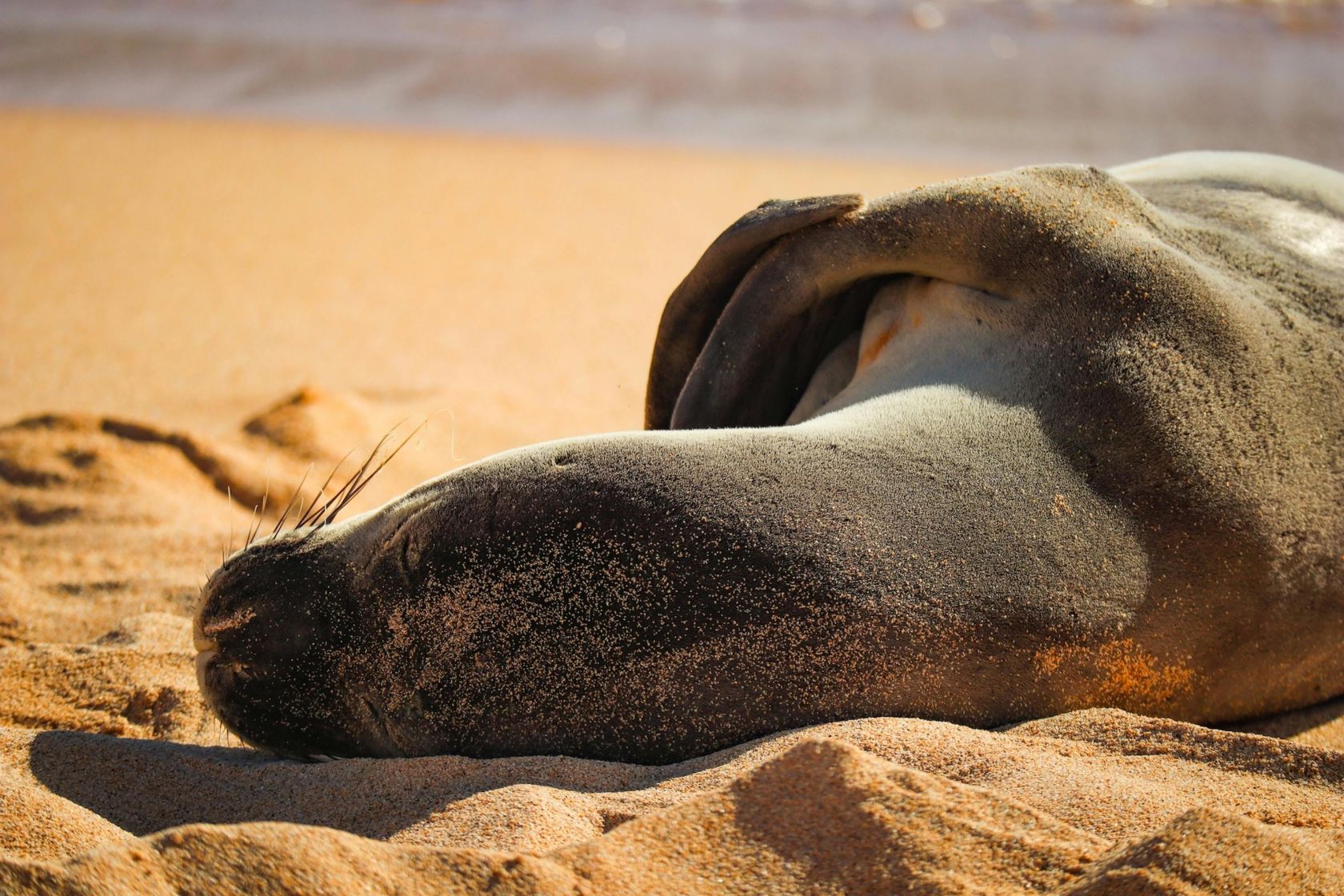
Monk Seal in Madeira
The critically rare Mediterranean Monk Seal (Monachus monachus) has only around 440-540 mature specimens left, but we have a small colony around the Desertas Islands in Madeira. These are considered one of the rarest seal species in the world, being extremely shy and rarely seen on beaches, preferring to hide in caves. Monk seals are characterised by their lack of external ears, the inability to rotate the hind flippers under the body, and they shed their hair and the outer layer of their skin in an annual moult. This moult removes all their old fur and the top layer of their skin, clearing away parasites, algae buildup, and sun-damaged tissue. Unlike other mammals that shed gradually, theirs is a fast, intense process (taking 7–10 days), allowing them to grow a fresh coat that aids warmth and efficient swimming.
So how do they hear? You might ask. Apparently, it’s through bone conduction: sound waves travel through the water and pass directly into the seal’s skull and head tissues, vibrating the inner ear (cochlea) directly, and have specialised, thickened ear bones (bulla) that help amplify sound underwater. On land, the small ear holes allow sound to reach the middle ear, though their hearing is generally less sensitive in air than underwater.

Wild horses
While Wild Garrano Horses are not threatened, they are rarely seen, and just catching a glimpse of these purebred horses is rare, as only a few hundred remain in the northern mountain regions. These noble steeds have been around for some 20,000 years and were traditionally used in agriculture and as pack animals, whereas today they are more used as riding horses.
These horses are called Passo Travado (meaning ‘trapped or locked step’ or ‘restrained step’) because of a unique, specialised, and natural four-beat ambling gait they perform, which differs from the standard walk, trot, and gallop. This is a comfortable gait for a rider, halfway between a trot and a gallop, but produces very little vertical movement, allowing speed and comfort over long distances without tiring. The gait is a result of their adaptation to steep, rocky mountain landscapes as sturdy and efficient pack animals. While not all Garranos display this gait, those that do are highly valued for this distinct, smooth way of walking. They are relatively small, around 5’ feet high, but are sure-footed and strong climbers.
The Passo Travado is popular in local horse races and equestrian tourism, particularly in the Trás-os-Montes and Minho regions of Portugal, where these endangered horses are native.
Threatened Species
The fact that even just these two creatures are rare is all our fault. Urbanisation, agriculture, and resource extraction drive species toward extinction. We should be responsible for educating others about the importance of biodiversity. We should stop letting rubbish enter our seas, for starters, as over 1 million pieces of trash per square kilometre are in the sea, 62% of which is plastic. So, when you leave the beach, take your rubbish with you, don’t bury it in the hope nobody will see it. It will resurface for sure.
 Add as a preferred source on Google







 Portugal Handbook
 English
 Nederlands
 Deutsch
 Français
 Español
 Italiano
 Svenska
 Pусский
 中文
中文 Türkçe
 Português
 Czech
Czech Hungarian
 Polski
 عربي
عربي Suomi
Suomi עִברִית
 Português (Brasil)
Follow us on social media