


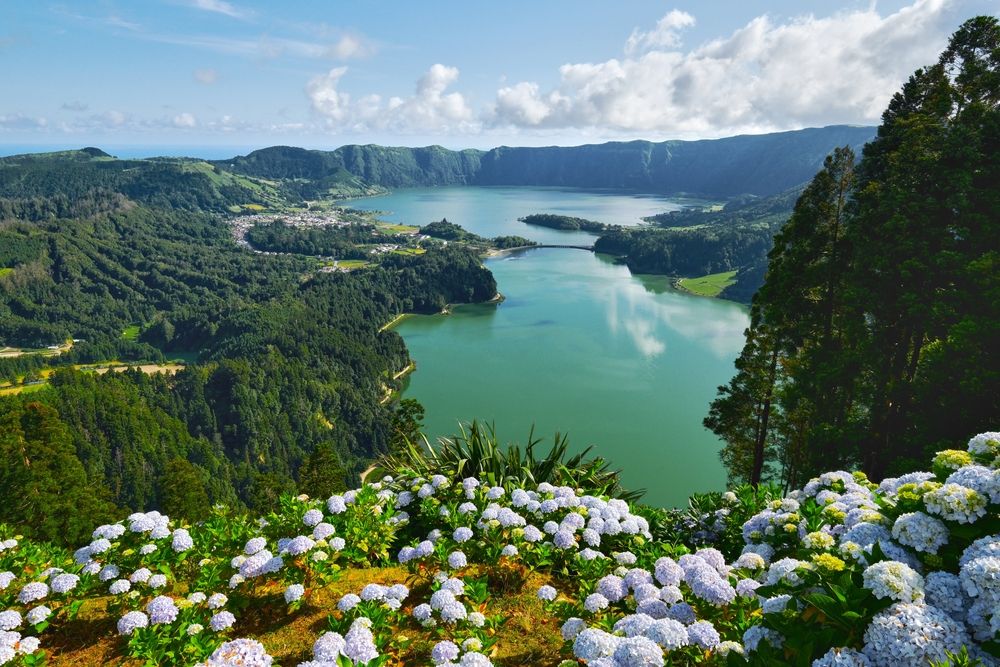
These plans, covering the islands of Corvo, Flores, Graciosa, Santa Maria, São Jorge and Terceira, were approved by the Regional Government Council on 13 May and have now been published.
As reported by Publituris, they complete a further stage in the regional authorities’ efforts to establish updated management instruments across the Azores’ protected areas. The management plans for São Miguel, Pico and Faial had already been approved and are being implemented.
Protected areas
The Azores Regional Government said the new plans are designed to balance environmental protection with sustainable human activity, while improving the way protected areas are monitored and managed.
These plans include regulations governing how the terrestrial areas of each island’s Natural Park can be used, zoning and restriction maps, technical reports setting out conservation objectives and management measures, as well as monitoring programmes designed to assess the condition of ecosystems and their implementation.
Alonso Miguel, Regional Secretary of the Environment and Climate Action, stated that the island Natural Parks provide the main operational structure for managing the region’s protected areas, and by bringing together different categories of terrestrial and marine protected areas, they allow conservation policies to be adapted to the particular characteristics of each island.
Environmental threats
The new framework forms part of the Azores Regional Network of Protected Areas, which currently comprises 124 protected areas across the archipelago’s nine Island Natural Parks.
Together, these cover around 56,066 hectares of land, equivalent to approximately a quarter of the Azores’ emerged territory.
The Government says the plans are particularly important for safeguarding endemic species, habitats and landscapes, as well as geological and biological features that distinguish the volcanic archipelago. They also cover sites included in the Natura 2000 network and are intended to work alongside wider territorial planning instruments.
This new approach, prioritising climate change and natural hazards, will support greater ecosystem resilience, adaptation to climate change and the sustainable use of natural resources, while providing a framework for identifying, monitoring and mitigating environmental threats.
Ecosystem conservation
The plans follow the same overall structure as those already approved for São Miguel, Pico and Faial, but introduce additional mechanisms designed to improve the relationship between conservation and recreational activities.
As an example, their coordination with Nature Sports Maps, which are nearing completion, could help establish a more consistent approach to recreational use of protected landscapes, allowing visitors to enjoy the island’s natural areas while limiting pressure on sensitive ecosystems.
The Regional Government has also identified determining the carrying capacity of protected areas experiencing high levels of tourism as part of its wider environmental objectives. Its plans include measures aimed at monitoring the natural heritage of the Azores, addressing invasive species and continuing conservation projects under the LIFE programme.
Alonso Miguel added that the updated plans represent a move towards a more science-based environmental policy, with the long-term objective of ensuring that the Azores’ natural resources remain protected and available for future generations.
The Government argues that effective conservation will require continuous monitoring and management, rather than simply designating areas as protected. These new plans are therefore intended to provide the practical framework for combining biodiversity conservation, sustainable tourism and other human activities with the long-term resilience of the archipelago’s ecosystems.
Set The Portugal News as your preferred source for news on Google
 Add as a preferred source on Google








 Portugal Handbook
 English
 Nederlands
 Deutsch
 Français
 Español
 Italiano
 Svenska
 Pусский
 中文
中文 Türkçe
 Português
 Czech
Czech Hungarian
 Polski
 عربي
عربي Suomi
Suomi עִברִית
 Português (Brasil)
Follow us on social media