


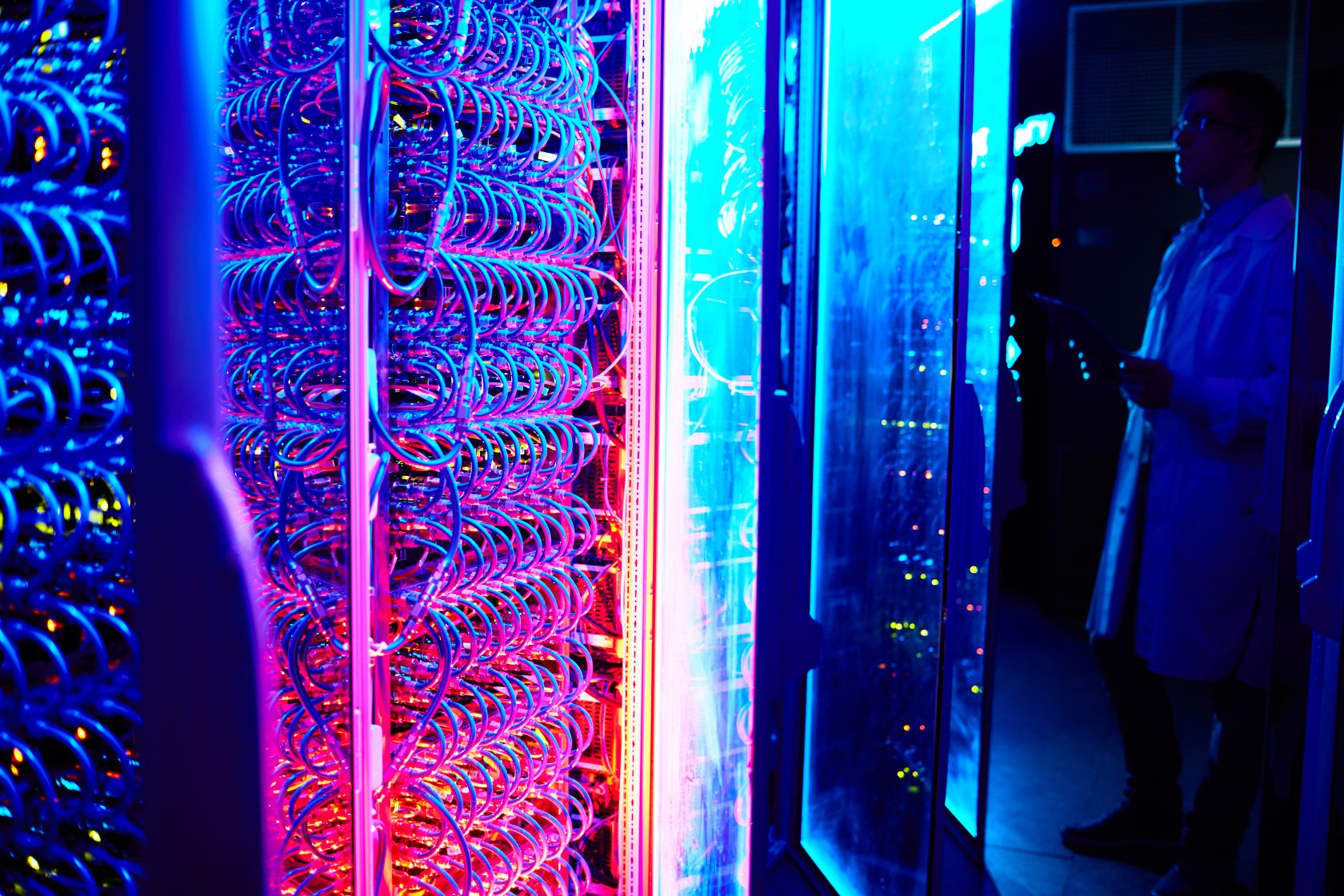
The large investments announced, the arrival of international operators, the submarine cables that connect Sines to the rest of the world and the growing interest of large technology companies have finally put the country on the European map of the digital economy. This is excellent news. But perhaps it is time for us to start discussing an even more important issue.
Portugal's true success will not be measured by the number of data centres it can attract. It will be measured by the value you can create around you.
A recent article by the World Economic Forum recalls that data centres are now critical infrastructures for the development of artificial intelligence, cloud computing and the digital economy. But it also warns of an essential point: the future does not belong to the countries that build more data centres. It belongs to those who can make them more efficient, more sustainable and better integrated into their energy and economic systems. This reflection is particularly relevant for Portugal.
The country brings together advantages that few can offer simultaneously. It has a strategic location between continents, one of the largest renewable energy availability in Europe, a growing network of submarine cables, political stability and an increasingly attractive technological ecosystem for international companies. In recent months, we have seen investments in artificial intelligence, cloud computing, digital infrastructure and technological services. Everything indicates that Portugal is well positioned to play an important role in the new digital economy.
But there is a risk. Confusing investment with strategy.
A data centre should not be seen as just a building full of servers. It should be seen as a strategic infrastructure, comparable to a port, an airport or a large railway network. Its true importance is not only in the construction or the initial investment. It lies in the ability to generate an innovation ecosystem, attract talent, boost technology companies, stimulate scientific research and create new value chains. This is precisely where Portugal can make a difference.
The World Economic Forum argues that the next generation of data centres will have to consume less energy, use water more efficiently, integrate with smart grids, harness waste heat and work in close articulation with renewable sources. In other words, competitiveness will no longer depend only on installed capacity and will depend on the intelligence with which these infrastructures are designed and operated.
Portugal has the conditions to precisely lead this new generation.
It has sun, wind, growing renewable production capacity, engineering talent, internationally recognised universities, and a privileged geographical position. If it manages to integrate these factors into a coherent strategy, it will be able to assert itself not only as a destination for technological investment, but as a European reference in sustainable digital infrastructure.
The opportunity is real. But the real challenge is no longer to attract more investment.
It is to ensure that each new data centre reinforces the competitiveness of the Portuguese economy, accelerates innovation and creates value for the coming decades.
Because data centres can transform Portugal. But it will be the strategy that will determine the size of this transformation.
Set The Portugal News as your preferred source for news on Google
 Add as a preferred source on Google








 Portugal Handbook
 English
 Nederlands
 Deutsch
 Français
 Español
 Italiano
 Svenska
 Pусский
 中文
中文 Türkçe
 Português
 Czech
Czech Hungarian
 Polski
 عربي
عربي Suomi
Suomi עִברִית
 Português (Brasil)
Follow us on social media