


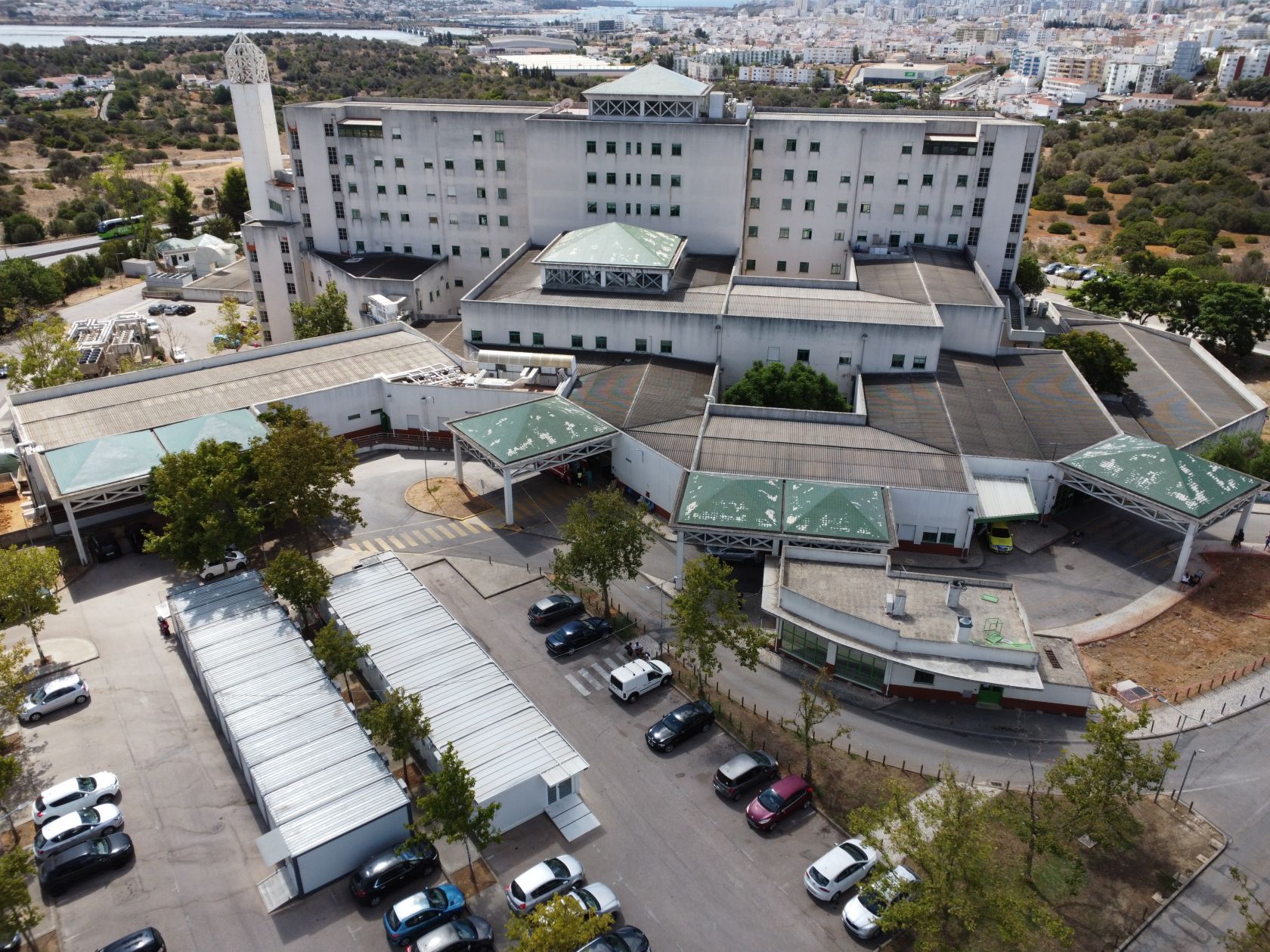
The president of the Algarve’s regional health board, Tiago Botelho, said the recent spike in waiting times published on the SNS Portal for Faro and Portimão was caused by errors in the Alert system and therefore did not accurately show the real waiting times, Algarve Daily News reports.
The data published by the National Health Service (SNS) portal is fed by the Alert system, which calculates average waiting times based on only a few hours of activity, Botelho said.
“In the case of last night (Friday and Saturday morning), we had errors in the Alert system,” Botelho said. As a result, the figures published by the portal were “not accurately reflecting” the situation in the emergency departments in Faro and Portimão.
This method of calculating waiting times makes the figures “sensitive to small numbers where there may have been a real or administrative problem.”
As an example, Botelho points to Portimão, where the system at one point showed a 17-hour wait for a patient classified as “very urgent”. Once the error was corrected, the average waiting time “abruptly went from 13 hours to four hours, within minutes”, a change he described as “obviously mathematically impossible”.
At 2.50pm, the SNS Portal showed a 41-minute waiting time in Faro for urgent patients, a figure Botelho said was “close to reality”.
An improvement
Health Minister Ana Paula Martins has previously commented on the waiting time of emergency departments, calling them “significantly better” than they were two years ago, despite great delays during periods of peak demand, particularly in the Algarve.
Martins said that emergency departments across Portugal’s National Health Service have improved their response, noting that over the past couple of years there had been situations where emergency departments were closed, which is no longer occurring.
This improvement is due to several measures aimed at reorganising services, including better patient referral and directing non-urgent cases to primary healthcare, Martins said.
Martins also said the reorganisation of the emergency care network is expected to lead to the creation of metropolitan and regional emergency departments.
The changes require an “alteration in practices and behaviour, which could take years”, but the Government “will not back down from the reorganisation currently under way”, she said.
New infrastructure
The Health Minister was speaking at the signing of an addendum to a cooperation agreement between the Central Administration of the Health System (ACSS), the Algarve Local Health Unit, and the municipalities of Loulé and Faro, concerning infrastructure access for the new Central Algarve Hospital, which is due to be completed in 2031.
Under the addendum, the councils of Faro and Loulé have agreed to contribute 1 million euros towards the construction of access and exit infrastructure connecting the hospital to the public road network, as well as sewerage, water, and electricity connections.
Set The Portugal News as your preferred source for news on Google
 Add as a preferred source on Google








 Portugal Handbook
 English
 Nederlands
 Deutsch
 Français
 Español
 Italiano
 Svenska
 Pусский
 中文
中文 Türkçe
 Português
 Czech
Czech Hungarian
 Polski
 عربي
عربي Suomi
Suomi עִברִית
 Português (Brasil)
Follow us on social media