


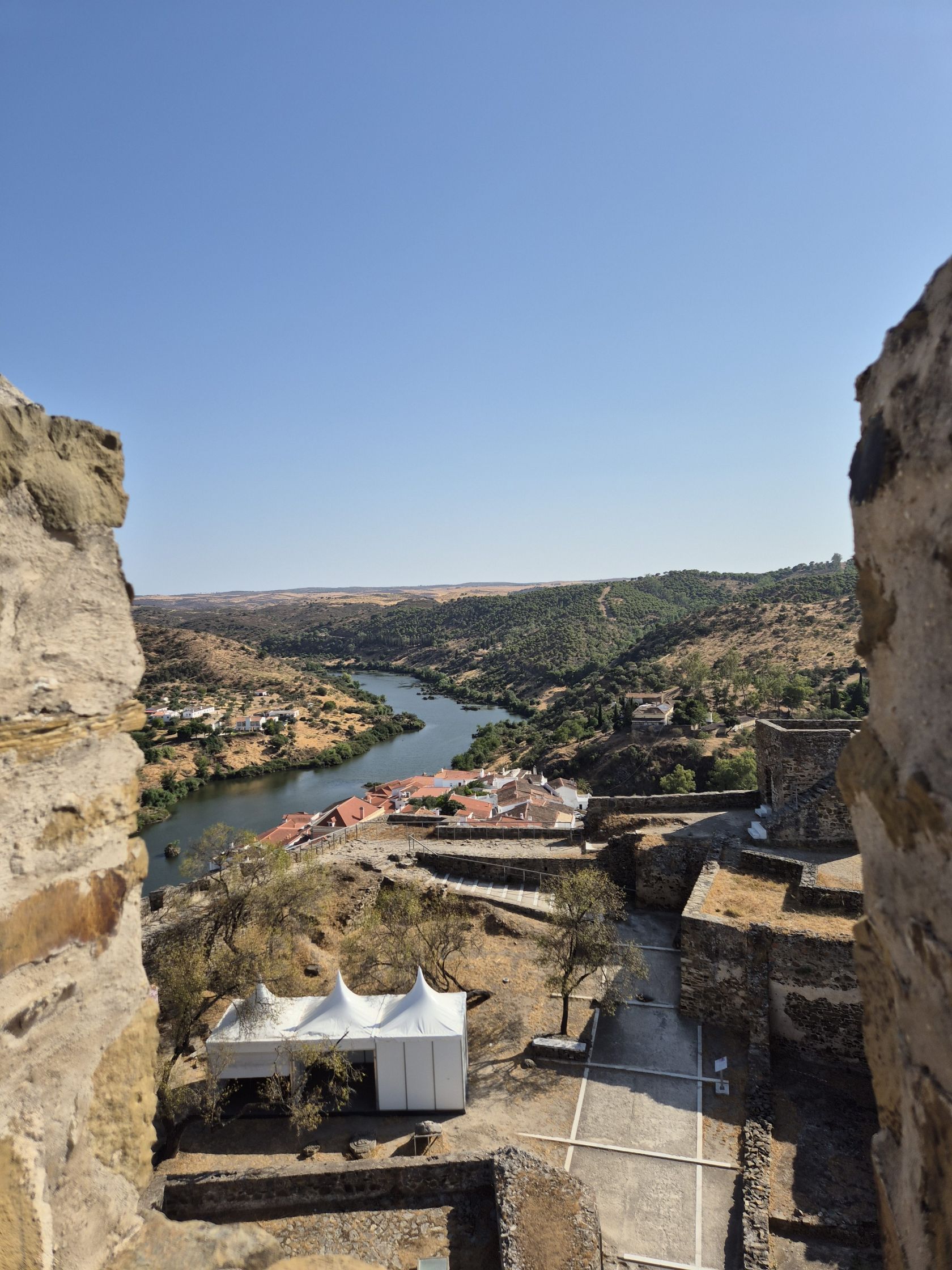
Seven of the refuges are in Almodôvar, seven are in Cuba, and Mourão has two, while Arronches and Castelo de Vide each have one.
They are the first areas to have acquired certification under the scheme, which was launched in June in Monsaraz, and their positions are available on the project's official website.
Technical support
The ERT intends to extend the scheme to other municipalities in Alentejo and Ribatejo, providing technical support to local authorities in preparing applications and registering designated refuge points.
José Santos, who heads the organisation, stressed the importance of the measure for the inland areas in countering periods of intense heat, ensuring protection and well-being for both residents and tourists.
Climate refuges can be public or private and can be situated indoors or outdoors, and they must offer free access, drinking water, seating, suitable signage, as well as thermal comfort, especially between 11:00am and 5:00pm.
Indoor areas must have ventilation or climate control, and outdoor areas must provide shade and cooling measures, for example through vegetation or water-based systems.
National grant
The sites are financed by a national grant of one million euros from Turismo de Portugal as part of the “Crescer com o Turismo” (Growing with Tourism) program.
This grant scheme offers unreimbursed funding to cover 80 per cent of the eligible expenses for municipalities and parish councils, with a cap of 75,000 euros per application.
These incentives aim to help finance projects such as creating green spaces and shaded areas in towns, as well as installing ventilation systems, misting systems, water stations, furniture, and accessibility improvements.
Set The Portugal News as your preferred source for news on Google
 Add as a preferred source on Google








 Portugal Handbook
 English
 Nederlands
 Deutsch
 Français
 Español
 Italiano
 Svenska
 Pусский
 中文
中文 Türkçe
 Português
 Czech
Czech Hungarian
 Polski
 عربي
عربي Suomi
Suomi עִברִית
 Português (Brasil)
Follow us on social media