


What is perhaps less well known is just how old it is.
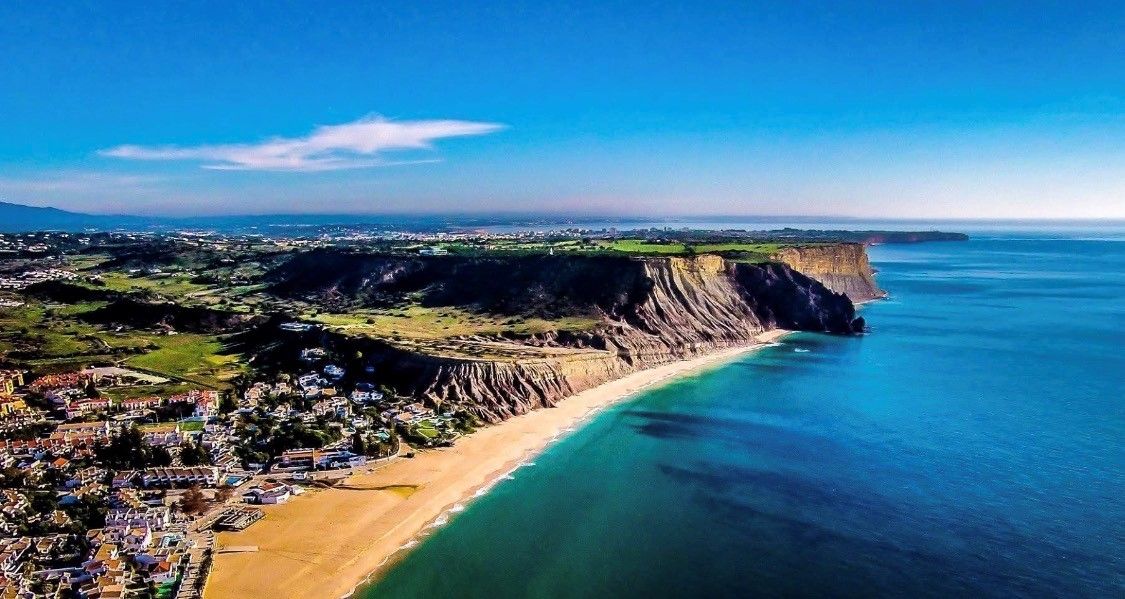
Known as Rocha Negra, the distinctive formation is evidence of volcanic activity in the Algarve more than 70 million years ago.
According to the Municipal Photographic Archive of Lagos, Rocha Negra is the remnant of an ancient volcanic chimney, formed when molten rock pushed its way into the surrounding rock.
Millions of years of erosion have left the dark formation exposed, creating the striking contrast that can still be seen from Praia da Luz today.
There is no reason for beachgoers to worry about an eruption. The volcanic activity responsible for the formation took place tens of millions of years ago, and the volcano is considered extinct.
A very different Algarve
The rock is a reminder that the Algarve we see today is the product of an extraordinary geological history.
Rocha Negra stands out particularly clearly because much of the surrounding cliff is made up of much lighter limestone and marl.
The contrast between the two makes the volcanic rock look almost as though it has been dropped into the middle of the cliff.
The formation has become such a recognisable feature of Luz that it is even represented in the local parish’s official identity and logo.
But Rocha Negra isn’t the only glimpse into the distant past waiting on the beach.
At the western end of Praia da Luz, the sea has exposed a large rocky platform where marine fossils can be found. Anemones, limpets, whelks and colourful algae can also be spotted among the rocks and tidal pools.
The cliffs around the beach preserve geological layers stretching back well over 100 million years, offering clues to periods when the coastline and sea looked very different from today.
Praia da Luz itself is now better known for rather more modern attractions.
The former fishing village has developed into one of the western Algarve’s popular seaside destinations, with its long beach, promenade and restaurants drawing visitors throughout the year.
Yet one of its most distinctive sights has been there considerably longer than any of them.
Rocha Negra has survived more than 70 million years of geological change and remains one of the Algarve coast’s most visible reminders of its volcanic past.
Set The Portugal News as your preferred source for news on Google
 Add as a preferred source on Google








 Portugal Handbook
 English
 Nederlands
 Deutsch
 Français
 Español
 Italiano
 Svenska
 Pусский
 中文
中文 Türkçe
 Português
 Czech
Czech Hungarian
 Polski
 عربي
عربي Suomi
Suomi עִברִית
 Português (Brasil)
Follow us on social media