


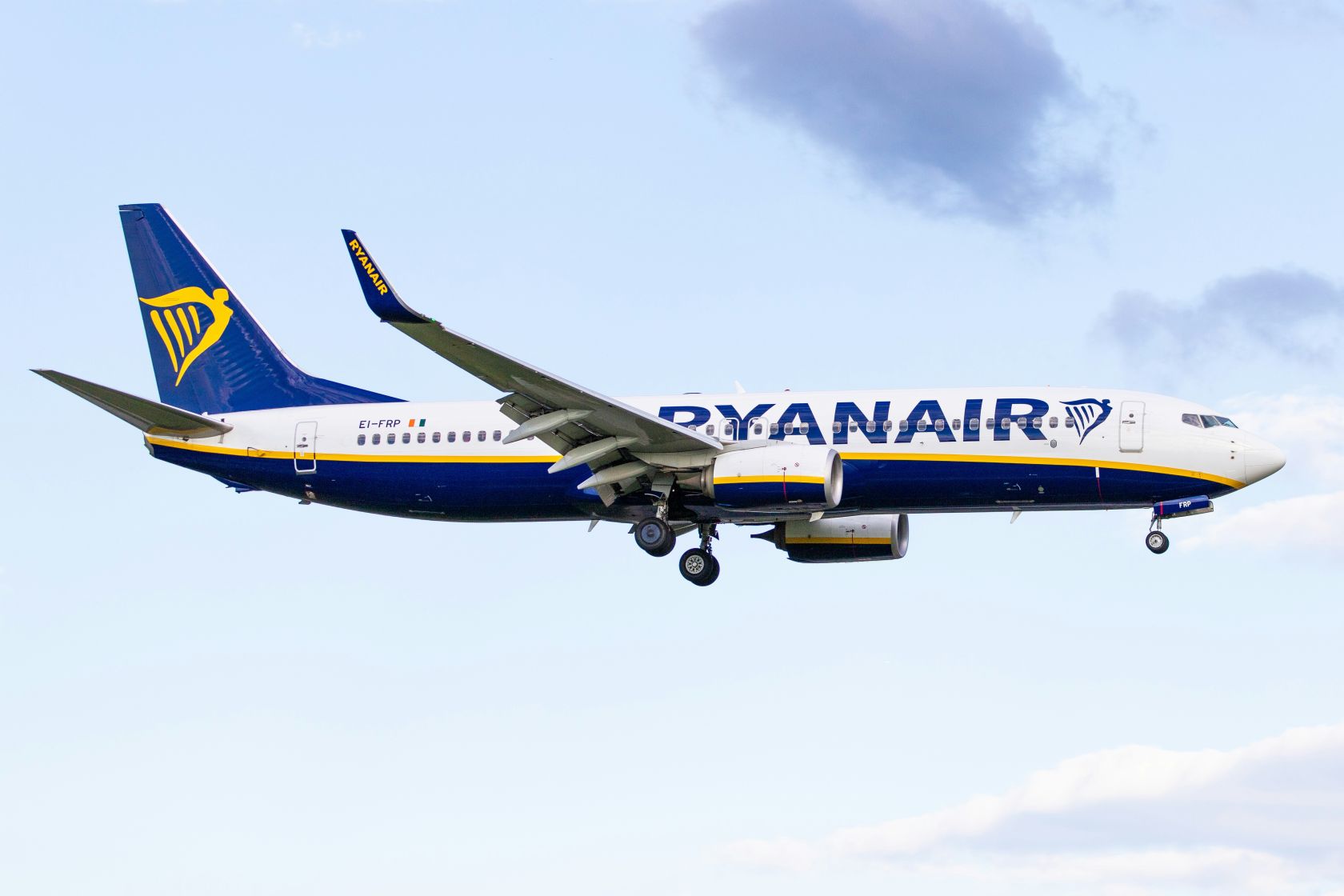
Ryanair announced it would end operations in the Azores on 29 March, but the final flight took place on the 28th.
The airline, which had been flying to the Azores since 2015, cited airport fees and European environmental taxation as the reasons for its decision.
Since April, air links between the archipelago and mainland Portugal have been provided solely by TAP and Azores Airlines (part of the SATA Group).
According to the latest data released by the Regional Statistics Service of the Azores (SREA), 1,206,055 passengers disembarked at the region’s airports between April and August, down 103,766 (7.9%) from the same period in 2023.
The drop in airport traffic led to fewer overnight stays in tourist accommodations.
Data for August has not yet been released, but based on provisional figures for April through June and preliminary figures for July, the reduction exceeded 70,000 overnight stays.
Between April and July, hotels, local accommodation, and rural tourism establishments recorded 1,967,881 overnight stays, 71,627 fewer than in the same period in 2023, a year-on-year decline of about 3.5%.
Although the Azores secured flight connections from 16 airlines this summer, only two operated flights between the islands and the rest of the country.
Between April and July alone, tourist accommodations in the region recorded 62,000 fewer overnight stays by tourists from Portugal than in the same period in 2025.
Tourism in the region has shown signs of slowing since October 2025, with overnight stays down compared with the same period the previous year.
The low-cost airline’s departure at the end of March heightened concerns among business owners.
A study by EY-Parthenon, commissioned by the Ponta Delgada Chamber of Commerce and Industry (CCIPD), estimated that Ryanair’s departure would result in an annual loss of “between 339,000 and 391,000 overnight stays,” based on a scenario where the airline transports between 102,886 and 118,561 tourists to the Azores annually.
According to the study, this reduction, in a sector that accounts for approximately 20% of the region’s Gross Domestic Product (GDP), could lead to a 1.5% to 1.7% drop in the region’s GDP for 2026, equivalent to an annual loss of between €90.1 million and €104.5 million.
The Irish airline, which connected the islands of São Miguel and Terceira to Lisbon and Porto, had already announced in November 2025 its intention to abandon routes to the Azores and confirmed the move in January 2026.
Although the Azorean government stated at the time of confirmation that talks were still ongoing, Ryanair CEO Michael O’Leary ruled out any possibility of reversing the decision.
In late February, the Azores’ Regional Secretary for Tourism stated that the regional government was working with TAP and SATA to address the gap left by Ryanair’s departure.
Berta Cabral also revealed that the government was taking steps to bring other airlines to the region in the “medium term.” However, she noted that a new airline flying between the region and the mainland might only potentially appear “from the summer of 2027 onwards.”
Following Ryanair’s departure, the Azores Local Accommodation Association, the Chamber of Commerce and Industry, the Agricultural Federation, and the Portuguese Hotel Association issued a joint statement calling for the creation of a Route Development Fund and an immediate increase in the tourism promotion budget to 20 million euros.
The Azorean parliament approved the creation of the Air Route Development Fund in May.
In August, responding to criticism from the PS, which had demanded the “rapid implementation” of the fund, the Azores’ tourism chief stated that the government was “working in a serious, competent, and well-founded manner to build an instrument that is effective, legally robust, and fully compatible with the European legal framework.”
Set The Portugal News as your preferred source for news on Google
 Add as a preferred source on Google






 Portugal Handbook
 English
 Nederlands
 Deutsch
 Français
 Español
 Italiano
 Svenska
 Pусский
 中文
中文 Türkçe
 Português
 Czech
Czech Hungarian
 Polski
 عربي
عربي Suomi
Suomi עִברִית
 Português (Brasil)
Follow us on social media