


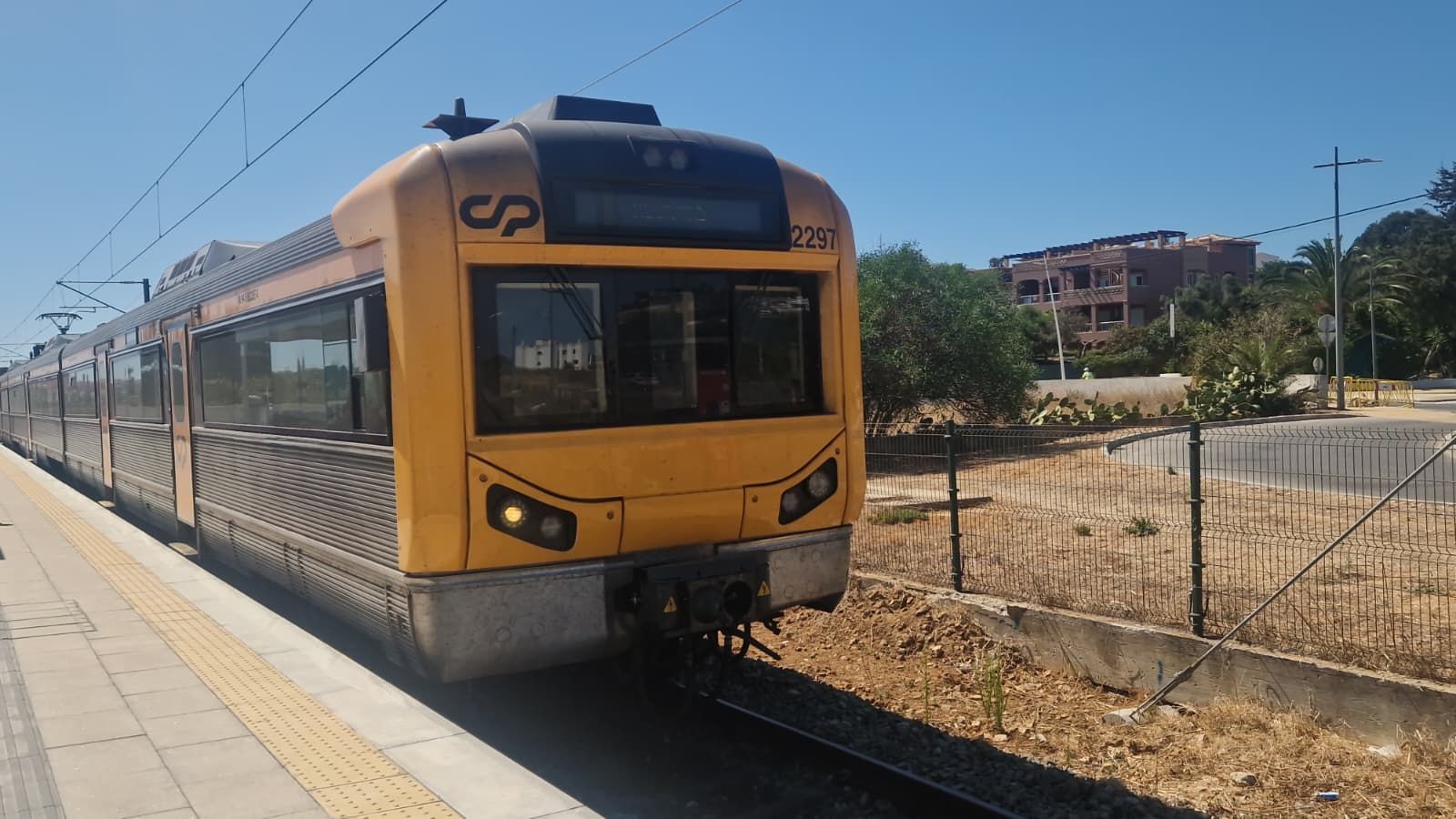
On 28 October 1856, Portugal’s first railway connection was inaugurated between Lisbon and Carregado, ushering in a new era of mobility in the country. As well as bringing people closer together, the railway contributed to socioeconomic development and territorial cohesion.
To commemorate this milestone, Infraestruturas de Portugal will organise a special train journey between Lisbon and Carregado on 28 October. The journey will depart from Santa Apolónia Station and take place aboard a steam locomotive.
Railways in Portugal
Since the introduction of the railway in Portugal, the network has become an integral part of the country’s history and one of the main drivers of its transformation. Over generations, Portugal’s landscape has evolved alongside the railway, with the construction of new lines, stations, bridges and tunnels. Infraestruturas de Portugal says the railway has boosted tourism and driven the growth of cities, transforming the way people travel and connect across the country.
Today, the railway continues to evolve in response to mobility and sustainability challenges. Portugal is increasingly investing in more sustainable rail transport, as demonstrated by the introduction of electric trains on the Algarve Line, as previously reported by The Portugal News. The country is also preparing for the arrival of high-speed rail, which will connect different parts of Portugal more quickly while supporting sustainability goals.
Infraestruturas de Portugal sees the 170th anniversary of the railway as an opportunity to “celebrate railway heritage” and pay tribute to those who have contributed to its history.
170 years of railways
Under the slogan “A History in Motion”, the celebrations will run for a year as part of a diverse programme designed to reach different audiences through events held across the country.
Infraestruturas de Portugal will organise “exhibitions, conferences and seminars, visits to railway sites, publications, competitions, artistic initiatives and heritage preservation activities”.
The main celebrations will begin on 28 October with a re-enactment of Portugal’s inaugural railway journey between Lisbon and Carregado. The train will depart from Lisbon’s Santa Apolónia Station, with the journey taking place aboard a historic train that will “symbolically commemorate the connection which, in 1856, marked the beginning of Portugal’s railway history”.
Portugal’s railway network today
Portugal currently has approximately 3,600 kilometres of railway lines and branches, 71% of which are operated by CP and Fertagus. According to CP data, more than 415,000 trains operated across Portugal in 2024 under the public railway operator.
In 2025, CP carried 208.2 million passengers, with Regional and InterRegional services accounting for 31.7 million journeys. This was partly attributed to the Green Rail Pass, which allows passengers to travel on these services and Intercidades trains for just €20 per month. The pass has since been extended to urban rail services.
The second most-used train service was Porto's urban network, which carried 27.6 million passengers in 2025, followed by Intercidades services, which transported 5.4 million passengers. All these services recorded an increase in passenger numbers compared with the previous year.
The Northern Line remains Portugal’s busiest railway route, connecting Lisbon and Porto in both directions and serving other major cities, including Coimbra and Aveiro.
Set The Portugal News as your preferred source for news on Google
 Add as a preferred source on Google


 Portugal Handbook
 English
 Nederlands
 Deutsch
 Français
 Español
 Italiano
 Svenska
 Pусский
 中文
 Türkçe
 Português
 Czech
 Hungarian
 Polski
 عربي
 Suomi
 עִברִית
 Português (Brasil)

Follow us on social media