


First, there’s the “brochure” Ireland; all fiddles and foaming pints, mist rolling romantically over postcard-perfect lakes while a fiery, red-locked child chases a lamb in slow motion. And then there’s the other Ireland. The damp, twitching, slightly unnerving one that exists in hedgerows, bogs and stone walls. An Ireland that peers back at us from the undergrowth with bright, suspicious eyes. It’s this Ireland, the secretive, muscular, unsentimental one that I recently went looking for.
The trouble with Irish wildlife is that it doesn’t queue up for selfies. It doesn’t leap obligingly onto viewing platforms like a performing dolphin at a Florida theme park. Ireland’s creatures are introverts. Suspicious. They’ve had centuries of humans either chasing them, shooting them, mythologising them or turning them into stew.
So, if we want to see the real Ireland, we must go quietly.
The ghost in the bog
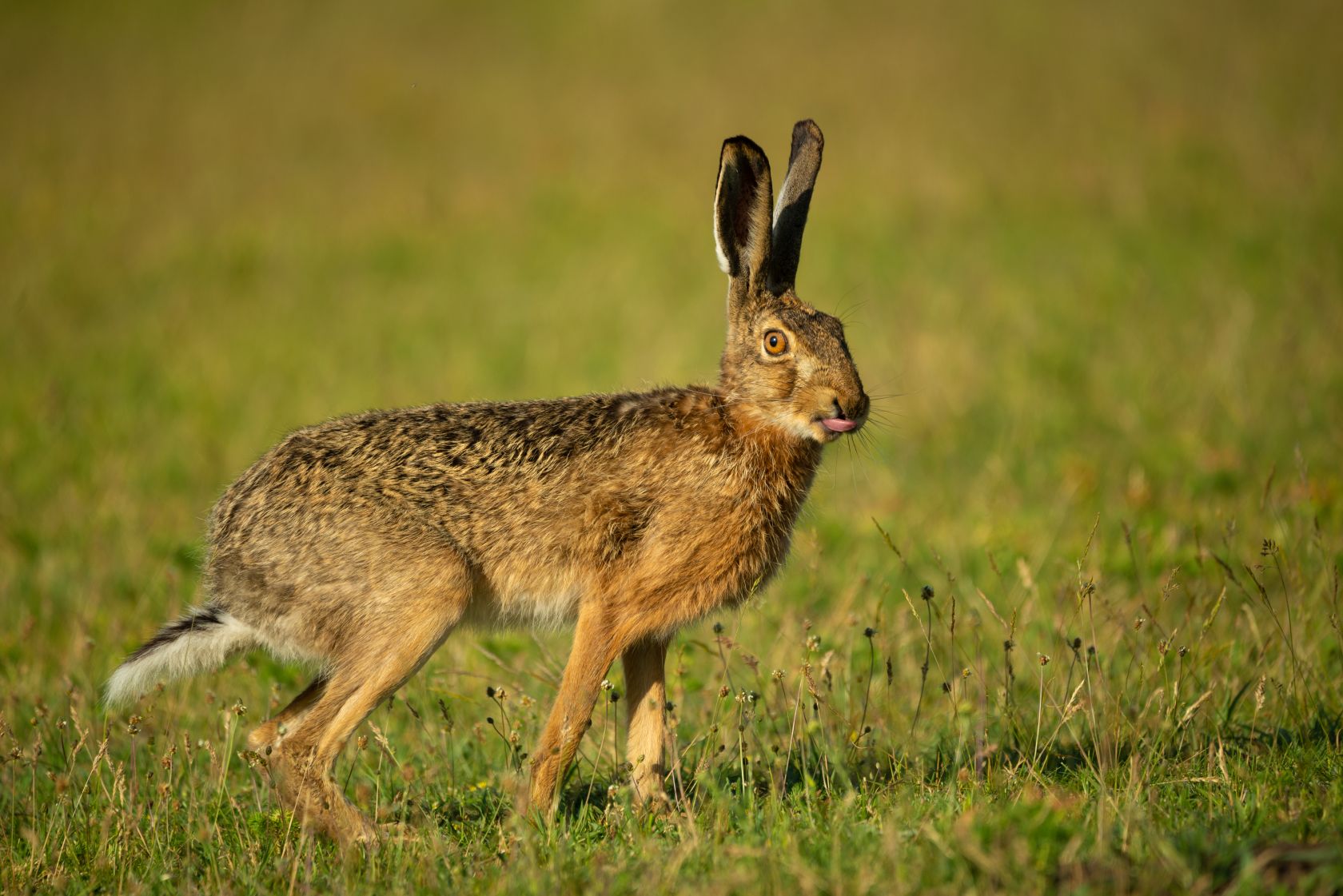
The west of Ireland has bogland that seems to swallow sound. Walk out there, and the world becomes woollen. Footsteps are muffled, even our own breathing feels impertinent. It’s here, supposedly, that the Irish hare, that nimble, amber-eyed athlete, conducts its business.
The Irish hare isn’t merely a local variant; it’s a subspecies found only in Ireland. A creature that has endured ice ages, landlords, shotguns and Celtic mythology. You don’t see it at first. What you’ll see is absolutely nothing. Vast acreages of nothing. Then, suddenly, “nothing” erupts into motion. A streak of russet muscle zigzagging with such flamboyant unpredictability that you’ll wonder if it’s actually mocking you. And then, it’s gone again. There’s something distinctly Irish about that. A flash of brilliance and a refusal to be pinned down.
The Pine Marten: The comeback kid
For years, the pine marten was sliding quietly towards the same oblivion that consumed the wolf and the bear. Poisoned, trapped, edged out by the tidy certainties of agriculture.
But Ireland, in its contrary wisdom, allowed this whiskered acrobat to cling on. Now, the pine marten is staging what can only be described as a triumphant, slightly anarchic return. It prowls woodland edges with the confidence of a creature that knows it has outwitted extinction. And here’s the twist, its resurgence has helped control invasive grey squirrels, indirectly allowing the native red squirrels to recover in certain areas.
This is the part of the conversation that doesn’t make it into tourism leaflets. The complex, almost Shakespearean dramas are playing out in the trees. Predator and prey locked in a choreography that makes our political squabbles look faintly ridiculous. If ever you stand in an Irish woodland at dusk, you’ll feel it. That sense of something moving just beyond the last usable light. But the pine marten will not pose for you because it doesn’t care about your camera. That’s because it survived. That’s enough.
The ocean’s quiet aristocracy
If Ireland’s land mammals are shy, its marine wildlife is positively clandestine.
Off the west coast, beyond the last defiant cottages of Connemara and the stone ribs of the Burren, the Atlantic heaves with life. Not obvious life, not performative life, but subtle life.
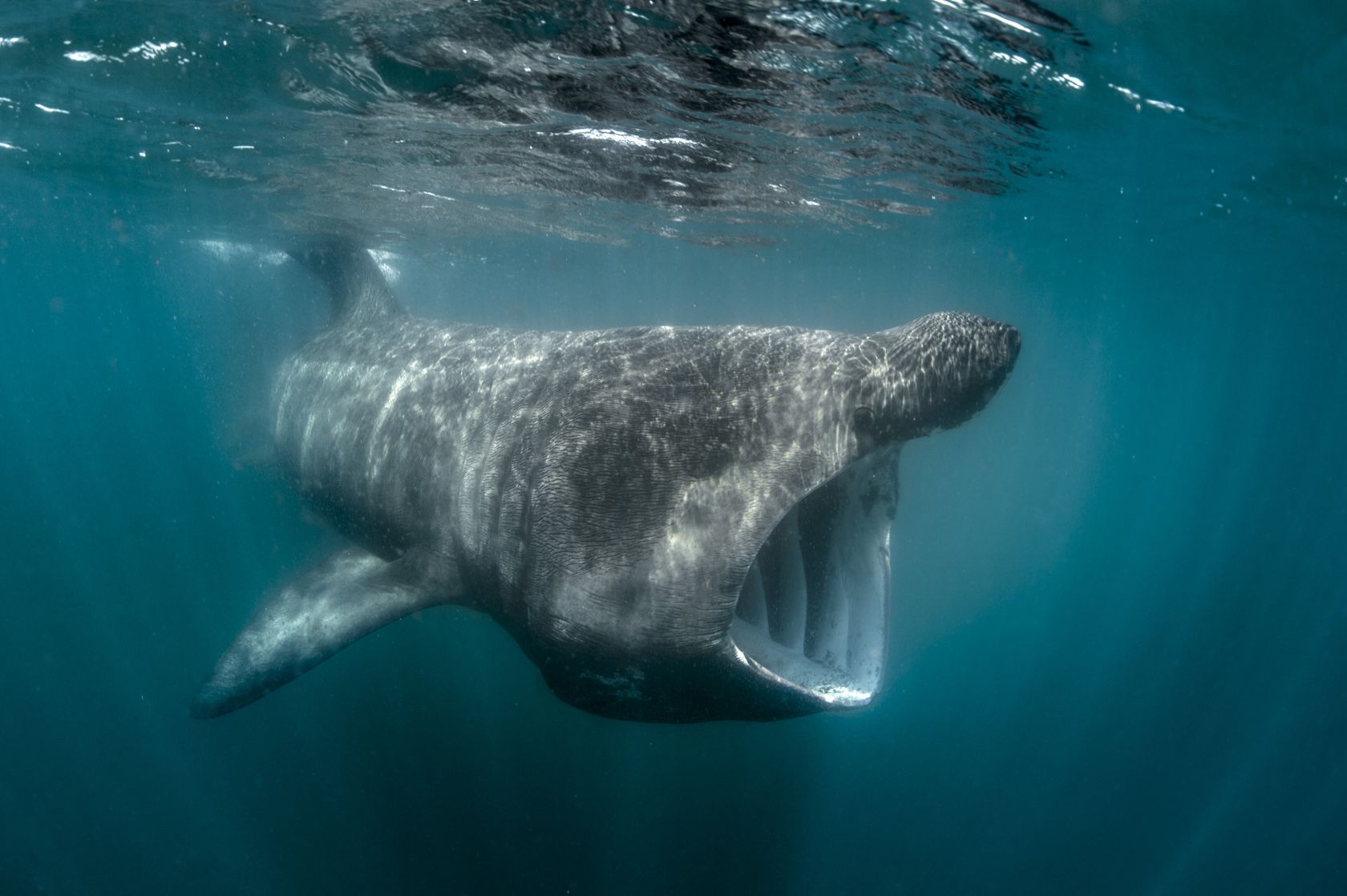
Basking sharks cruise these waters. It’s the second-largest fish on Earth, mouths agape in gentle, plankton-sifting serenity. You’d expect something that size to announce itself with fanfare. Instead, it just drifts like a lost submarine.
Then there are the dolphins, particularly common dolphins. They sometimes choose to escort fishing boats with joyful, muscular arcs. But even they feel less like entertainers and more like visiting dignitaries, merely tolerating our presence.
Of course, we have the seals, both the grey and the common. They seem to regard us from rocky outcrops, with expressions suggesting they know just how ridiculous we look in waterproofs.
Ireland’s coastline isn’t dramatic merely because of cliffs and crashing waves. It’s dramatic because it teams with life that simply refuses to audition.
The birds that own the skies
You cannot talk about Irish wildlife without looking upward. Because of the overhead, the sky belongs to the birds.
The white-tailed eagle, once eradicated, now wheels again above certain western loughs. Vast wings catching thermals like some prehistoric relic refusing to remain extinct. It looks improbable, excessive, but nevertheless magnificent.
Meanwhile, the red kite, forked tail twitching, glides over farmland that once silenced it. The red kites reintroduced to Ireland, particularly in the early stages of the program (starting in 2007–2008), were brought from Wales. The Welsh Kite Trust, along with the Golden Eagle Trust and National Parks & Wildlife Service, helped relocate Welsh kites (Y Barcud) to County Wicklow in order to restore the species after a 200-year hiatus.
On Ireland’s remote sea cliffs, gannets hurl themselves into the wild Atlantic with ballistic precision, folding wings at the very last moment.
Spend an hour watching them, and you’ll realise something slightly sobering. These birds have more command of this place than humans ever will.
The myth of emptiness
People often describe parts of Ireland as “empty”. They’re mistaken. Walk by a hedgerow in County Clare, and you’re moving through a densely populated metropolis of beetles, stoats, wrens and a plethora of things that wriggle. The stone walls are apartment blocks, the bog pools are nurseries.
The lost and the possible
Of course, there are ghosts. The wolf once loped through Irish forests; the Eurasian lynx once padded silently between oak trunks. They’re all gone, dispatched by fear, farming and the stubborn belief that wilderness must always give way to “progress”.
But now, there are murmurings about rewilding. About restoring native woodlands, about allowing rivers to meander instead of marching obediently through concrete channels. It’s a delicate conversation in a country where land is not an abstract concept but an inheritance, a livelihood, and an identity.
Yet, the pine marten’s return offers a lesson. If we ease our human grip just slightly, nature will do the rest, without much help.
Why it matters
Chasing Ireland’s secretive wildlife isn’t about ticking species off a list. It’s about recalibrating our sense of scale. I arrived thinking I was the protagonist and left understanding that I was merely a guest.
The beautiful Irish hare will sprint whether you or I are watching or not. The eagle will rise on thermals quite regardless of our opinion. The Atlantic will continue its patient, muscular churn long after our waterproofs have disintegrated. For me, there is something profoundly reassuring about that.
In a world increasingly obsessed with visibility, posting and announcing, Ireland’s wildlife operates on the opposite principle. Survival through discretion. Presence without performance.
Perhaps that’s why it feels so compelling. To find it, we must simply slow down, get wet, and stand still longer than feels practical. We may see nothing for hours, but then, if we’re very lucky, the bog will erupt into sudden motion. A fin will slice the sea; a mysterious shadow might cross the lough. We won’t own the moment; we may not even fully capture it. But we’ll know, in that instant, in the rain, in the stillness and the silence, that Ireland’s beautiful wild heart was never really absent. It was merely waiting for us to stop talking.
 Add as a preferred source on Google






 Portugal Handbook
 English
 Nederlands
 Deutsch
 Français
 Español
 Italiano
 Svenska
 Pусский
 中文
中文 Türkçe
 Português
 Czech
Czech Hungarian
 Polski
 عربي
عربي Suomi
Suomi עִברִית
 Português (Brasil)
Follow us on social media