


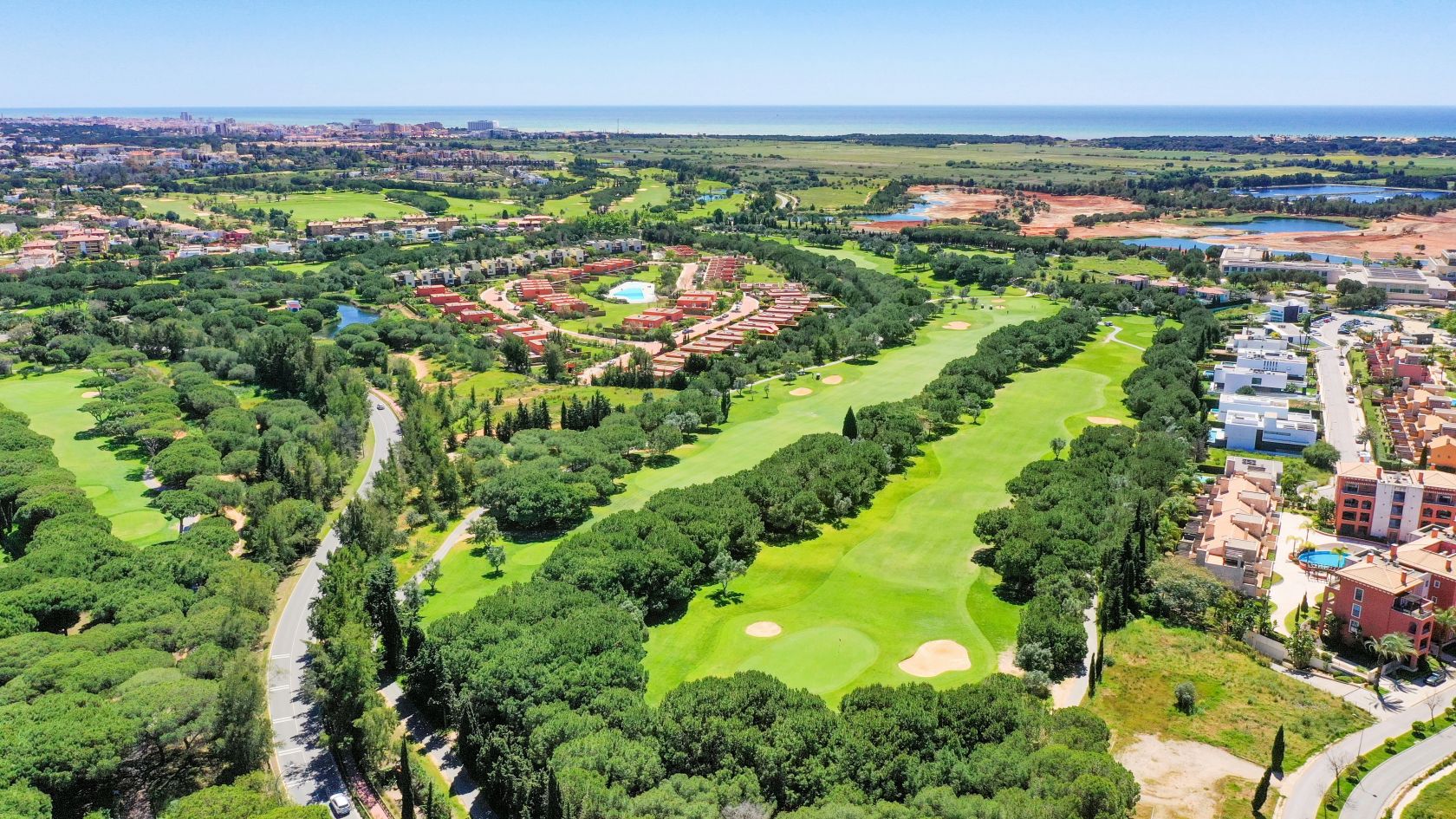
There is the idea of it. A marina, golf courses, long summers, something close to a self-contained coastal town built on a master plan that dates back to the 1960s. And then there is the version many people recognise. Seasonal and still waiting to fully become what it was always supposed to be.
That gap is now where a new phase of development is focusing its attention. And the person leading the charge has spent her career learning, in very different rooms, how to make places come alive.
Benedita Machado did not arrive in real estate through the usual route. She started in marketing and communications, moved through different industries, and then in 2016 landed at a port wine company. The Symington Family’s 5K Partnership had warehouses along the south bank of the Douro in Vila Nova de Gaia and wanted to transform them into something living. Benedita helped build the World of Wine, a cultural district that turned industrial heritage into a destination. It was, she says, the moment she fell properly in love with real estate.
“Once you are inside real estate, it’s very hard to move out,” she says. “It’s a passion that grows inside of you.”
From there she moved to Vanguard Properties, where she spent five years building out sales, marketing and product concept teams. She helped introduce something that sounds obvious but was, at the time, genuinely new: the idea that a real estate developer could operate as a brand. That clients could identify a product not just by its location or price, but by its character.
That background is what Arrow Global came looking for when they called her in late 2024.
Shifting the Lens
Arrow Global already controlled a large and complex real estate portfolio across Portugal. But internally, Benedita says, it was still operating with a largely investment-led mindset, focused on assets and returns rather than the experience of the people who would eventually live in those spaces.
The scale of what she walked into is telling. “When I joined, we did not even have a CRM in place,” she says. A company with 948 residential units currently on the market, representing a gross development value of €1 billion, and no centralised system for tracking client relationships. “It was very institutional. We needed to think from day one about the client who is going to use it.”
That shift changes the way decisions are made. It means thinking not just about what can be built, but about who will spend time there, how long they will stay, and what kind of place they are moving to.
The vehicle for that shift is From, a new commercial platform created within the Arrow group, B2C-oriented from day one and focused on bringing a client perspective to the portfolio before a single brick is laid. “We start looking at the asset before we even acquire it,” Benedita explains. “To see how we can approach it, how we can add value to it.” The name, she confirms, is intentional. From. As in: from Benedita to you.
Finally Becoming What It Was Supposed to Be
Vilamoura is Arrow’s largest investment in Portugal, more than half the company’s domestic portfolio, and the place where this new approach is being tested most visibly. The portfolio includes five golf courses, multiple hotels, the marina, a sports centre, and residential developments at various stages of completion.
Instead of treating these as standalone projects, the approach is broader. Golf courses, hotels, retail areas and residential buildings are being reconsidered at the same time, with the aim of shaping how the area works as a whole rather than in parts.
One of the clearest examples is the marina. Over time, many of its retail units were sold individually, which limited the ability to shape the mix of businesses operating there. “If you don’t control the shops you have there, it’s much harder to control the type of clients that walk around,” Benedita says. New plans include a separate retail area where that control is retained, with a more deliberate balance of shops, restaurants and services at a higher level than the area currently offers. A store like Sandro, she mentions, as the kind of name they are working towards.
The same thinking extends beyond the marina. Existing hotels are being repositioned, new ones introduced, and infrastructure expanded to support year-round use. A larger sports centre is part of that. And then there is the equestrian centre, being completely rebuilt to a scale that could bring international five-star equestrian competitions back to Portugal for the first time in over a decade. When an Olympic-level rider visited the site recently and asked whether he could move there to teach after retiring from competition, Benedita took it as something close to a verdict.
None of these are headline features on their own. But together they start to create a change in how the area functions outside the peak summer months, which has always been Vilamoura’s central challenge.
What Buyers Are Getting That They Don’t Always Know About
Among the specific developments Benedita is most eager to talk about is Botanica, a residential project in central Vilamoura, walkable to the marina and the golf courses, and one she describes as a personal favourite for the quality of its architecture and how well the product, design and price sit together.
The Springs, located next to the new Vista Club, is another. And it is here that Benedita raises something she says buyers are often not aware of: that purchasing within Arrow’s Vilamoura developments comes with access to Vista Club, a members’ club that will include both a country club and a beach club, exclusively for Arrow clients.
“People are buying in Botanica, and they don’t even know they will have a beach club and a country club for their very own private use,” she says. “This message is something we really need to put out there.”
On the western side of Vilamoura, a new retail area is also planned. Smaller in scale, but positioned to serve the growing residential density of that quarter and give it a more self-sufficient, community-facing feel.
The American Question
There is also a shift in who the area is being shaped for. Portuguese and British buyers still account for most of the activity, but there is growing attention on the American market. Arrow recently partnered with a US state media outlet to reach Californian buyers, and the sales team has been at broker events in New York, where agents are telling them their clients are actively asking about Portugal.
For now, many of those buyers are not relocating. They are investing with a longer timeline in mind, treating property here as a future option rather than an immediate move. A plan B, as Benedita puts it, somewhat ruefully. “It’s a bit concerning,” she admits, “hearing Americans say they want a plan B. America was always for us the country of freedom.”
That difference matters practically. American buyers tend to prefer completed or near-completed properties. They are not interested in waiting through two years of construction. This shapes both the type of developments being prioritised and how quickly they are brought to market.
A Place Being Treated as One
Some of Vilamoura’s long-standing tensions are still part of the conversation. Questions around seasonality, security, and the balance between nightlife and everyday living are not new. Benedita acknowledges them directly, noting that Arrow has been working with the municipality on safety, and that a better calibre of retail and restaurants will, over time, shift the character of who the area attracts.
For Benedita, the emphasis is on continuity rather than quick transformation. She is Portuguese, and Vilamoura is personal. “All of us have been in Vilamoura sometime in our lifetime,” she says. “I have Portuguese friends saying it’s so nice to come back after 10 or 15 years and finally see it becoming what it was supposed to be.”
What is different now is the level at which the changes are being coordinated. Vilamoura is not being approached as a collection of individual investments but as a single system, with the golf courses, marina, hotels and residential developments all headed in the same direction.
For the first time in a long while, Vilamoura feels like a place to go. Not just a destination that exists. One that is being actively, and very deliberately, rebuilt.
 Add as a preferred source on Google






 Portugal Handbook
 English
 Nederlands
 Deutsch
 Français
 Español
 Italiano
 Svenska
 Pусский
 中文
中文 Türkçe
 Português
 Czech
Czech Hungarian
 Polski
 عربي
عربي Suomi
Suomi עִברִית
 Português (Brasil)
Follow us on social media