


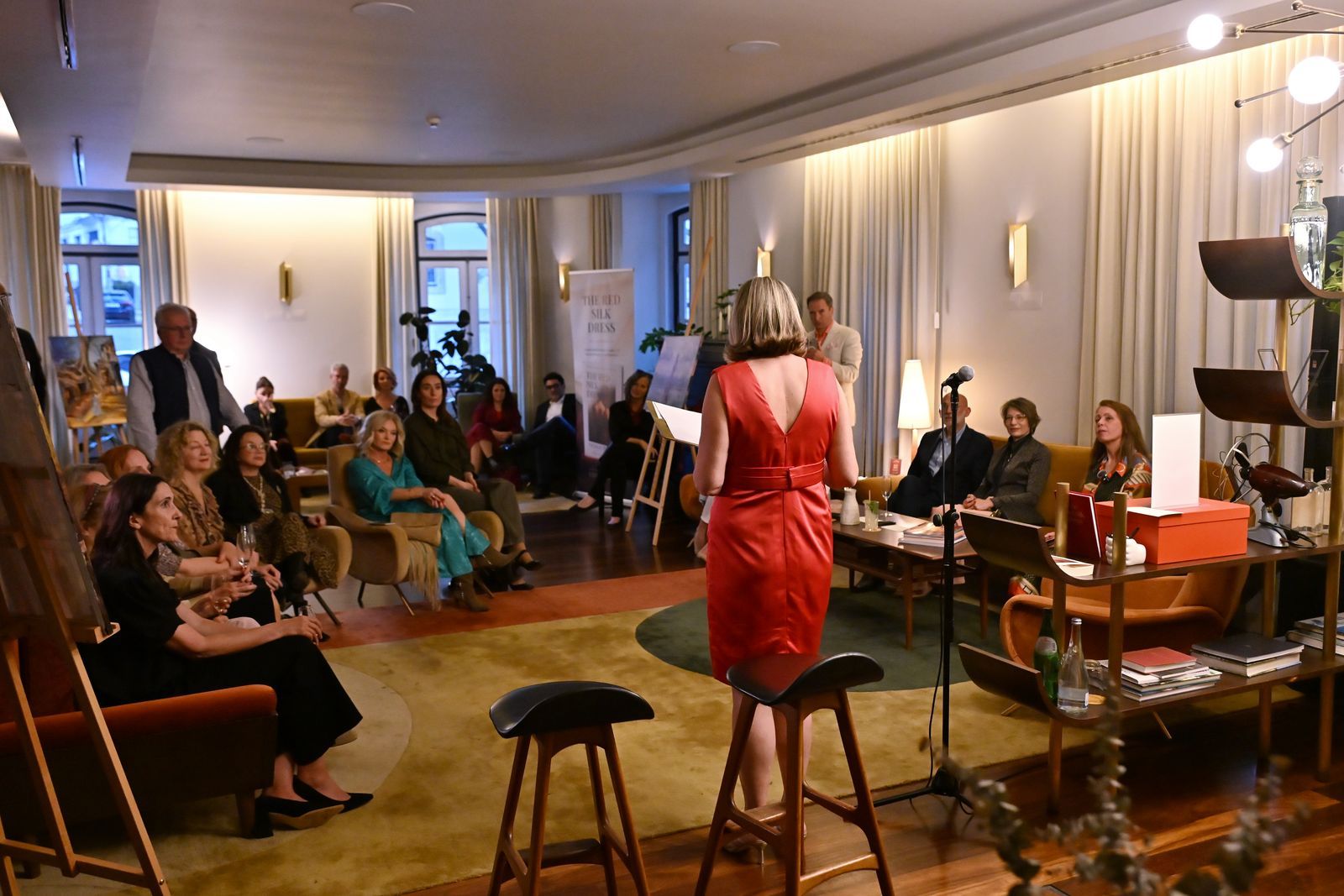
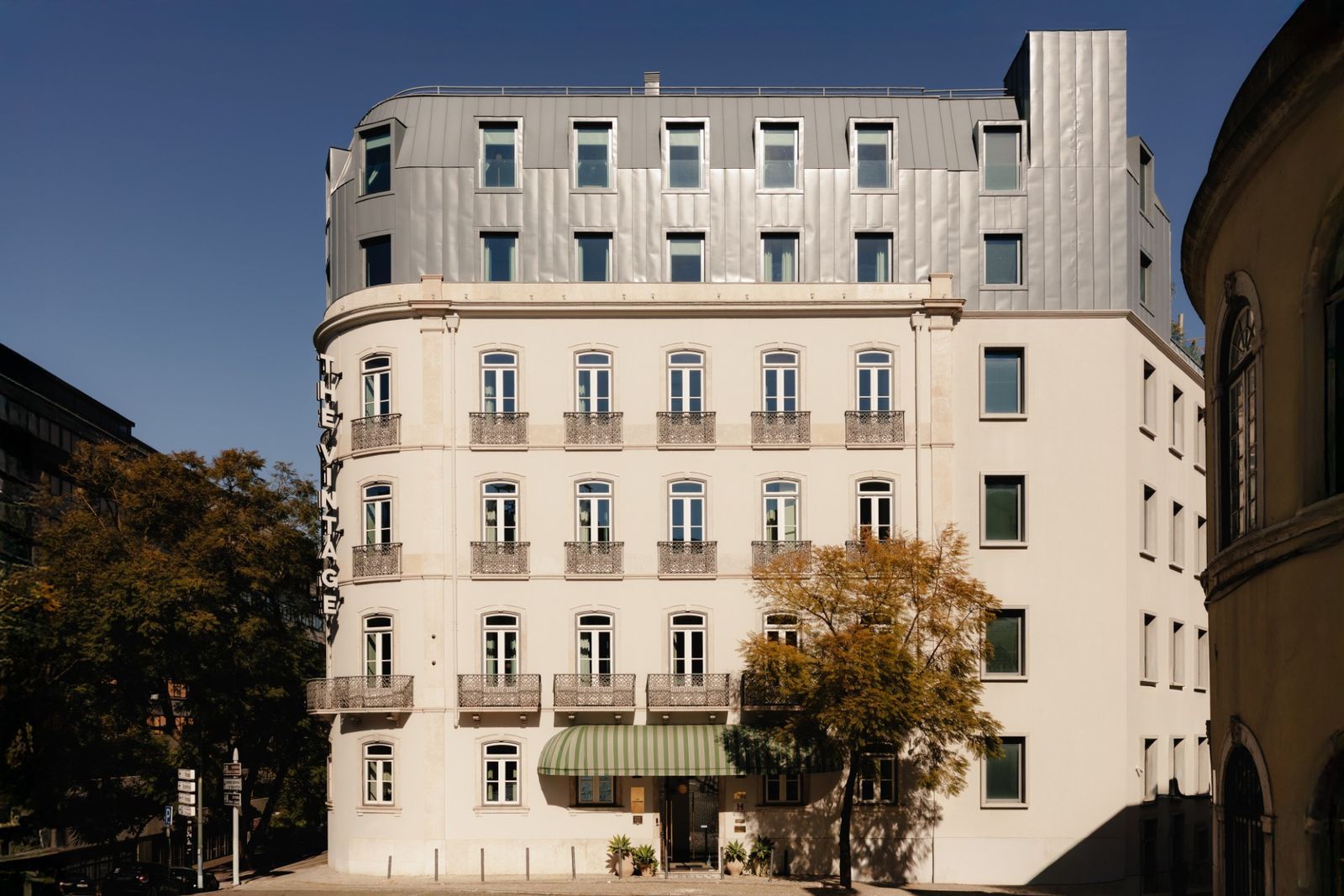
At the end of March, surrounded by warm velvet seating and soft lighting in the lounge at The Vintage Hotel in Lisbon, I held the first Red Silk Salon. It marked a new moment for The Red Silk Dress: not the formal arrival of the book, but its first intimate evening of conversation, art, and reflection. Although the novel travels through Southeast Asia and Paris, it was here in Portugal that I completed, edited, and finally released it.
Lisbon has become, for me, a city of reinvention. A place where many people arrive at thresholds in their lives, drawn not only by light and beauty, but by the possibility of beginning again. That made it a natural city in which to begin the Red Silk Salon.
But the evening also drew on a much older tradition.
Salons were never simply receptions. They were carefully held gatherings where writers, artists, thinkers, and guests came together around ideas, beauty, conversation, and cultural exchange.
In the great salons of 17th and 18th century France, the salonnière was far more than a hostess. She curated the room, shaped the atmosphere, and created the conditions for thought to become alive between people.
Many ideas we associate with liberal society were shaped in rooms like these: liberty, tolerance, the freedom to think aloud and the responsibility to listen well. The salon was not perfect, but it reminds us that civilised conversation is not a decorative luxury. It is part of the architecture of a free society.
Yet the French salon is only one part of the story. Portugal and Spain have their own tradition: the tertúlia, an informal gathering of writers, artists, thinkers and musicians in cafés, homes, and cultural spaces where conversation itself became the event. Less formal and more porous, the tertúlia was shaped not by presentation, but by thought unfolding in relationship.
Lisbon carries traces of that tradition still. Perhaps that is one reason I felt drawn to begin the first Red Silk Salon here. There was something about the hotel’s own philosophy of inspire, relax, play that felt deeply aligned with the evening. Not as instructions, but as states we move through when something is beginning: opening, trusting, and allowing imagination to lead before it has to justify itself.
In my opening words, I spoke of hotels as places where we are not quite who we are at home. We are slightly outside our lives. More observant. More curious. They are places of transition, observation and becoming, even if only briefly.
In The Red Silk Dress, hotels mark important thresholds in Claudette, my central character’s, journey. They are places of pause, reflection, and decision. To begin the salon in a hotel therefore felt deeply fitting.
The evening brought together literature, image, and conversation. Swedish artist Ingela Johansson’s seven original paintings, inspired by emotional turning points in the novel, opened another doorway into its pages. Through colour, texture and feeling, guests encountered the novel beyond its words. Story moved into painting and into guest reflection, becoming a conversation between forms.
Together, we explored themes of place, travel, and transformation. We spoke about what calls us forward. About the lives we inherit, the lives we choose, and the moments when something quietly begins to ask for more truth.
The evening had a simple structure, gently held by my husband, Carl Hinds, as emcee: a reading, a conversation with Ingela, guest reflections, and later an invitation to write anonymous “tomorrow cards” containing something postponed, unspoken or still possible. It was intentionally small. That mattered. A salon depends on intimacy. It needs enough structure to hold the evening, and enough openness for something real to emerge.
That is a different proposition from many contemporary events, which often follow a familiar pattern: people sit in rows, listen to a few voices at the front, ask one or two questions if time allows, and then drift into informal networking afterwards. There is value in that format, but it is not the only way to gather. The salon and the tertúlia offer something different. Not something presented from a distance, but something shared, explored and reflected on together. It asks less of spectacle and more of presence.
In a world of panels, platforms, and performance, perhaps what we need is a return to the human scale: a smaller space, a slower rhythm, a conversation with room to breathe. For many of us living in Portugal, this feels especially relevant. We arrive carrying other countries, careers, languages, and unfinished stories within us. We are not simply passing through. Portugal is changing us, quietly and in ways we may only understand with time.
Perhaps inspiration does not begin in certainty, but in opening.
At a time when so much exchange happens quickly and publicly, perhaps we need spaces where literature, art and conversation meet again. Spaces where we can listen more deeply, speak more truthfully, and remember that beauty is not separate from meaning. Not as nostalgia. But as possibility.
The Red Silk Salon began in Lisbon, at The Vintage, with paintings elegantly poised on easels, guests gathered close, and a novel finding another life in conversation.
And perhaps that is what salons, and tertúlias, have always been.
Rooms where something within us begins.
A new Red Silk Salon is now being planned for the autumn in Portugal.
To register your interest in future gatherings of story, art, and conversation, visit www.theredsilkdress.com.

About Natalie Turner
Natalie Turner is a British author based in Lisbon. Her debut novel, The Red Silk Dress (February 2026), explores identity and longing. She also works internationally as a leadership advisor and is the founder of Women Who Lead.
Main image credit: Natalie Turner reading from The Red Silk Dress during the first Red Silk Salon at The Vintage. Photo: Joaquim Morgado
 Add as a preferred source on Google





 Portugal Handbook
 English
 Nederlands
 Deutsch
 Français
 Español
 Italiano
 Svenska
 Pусский
 中文
中文 Türkçe
 Português
 Czech
Czech Hungarian
 Polski
 عربي
عربي Suomi
Suomi עִברִית
 Português (Brasil)
Follow us on social media