


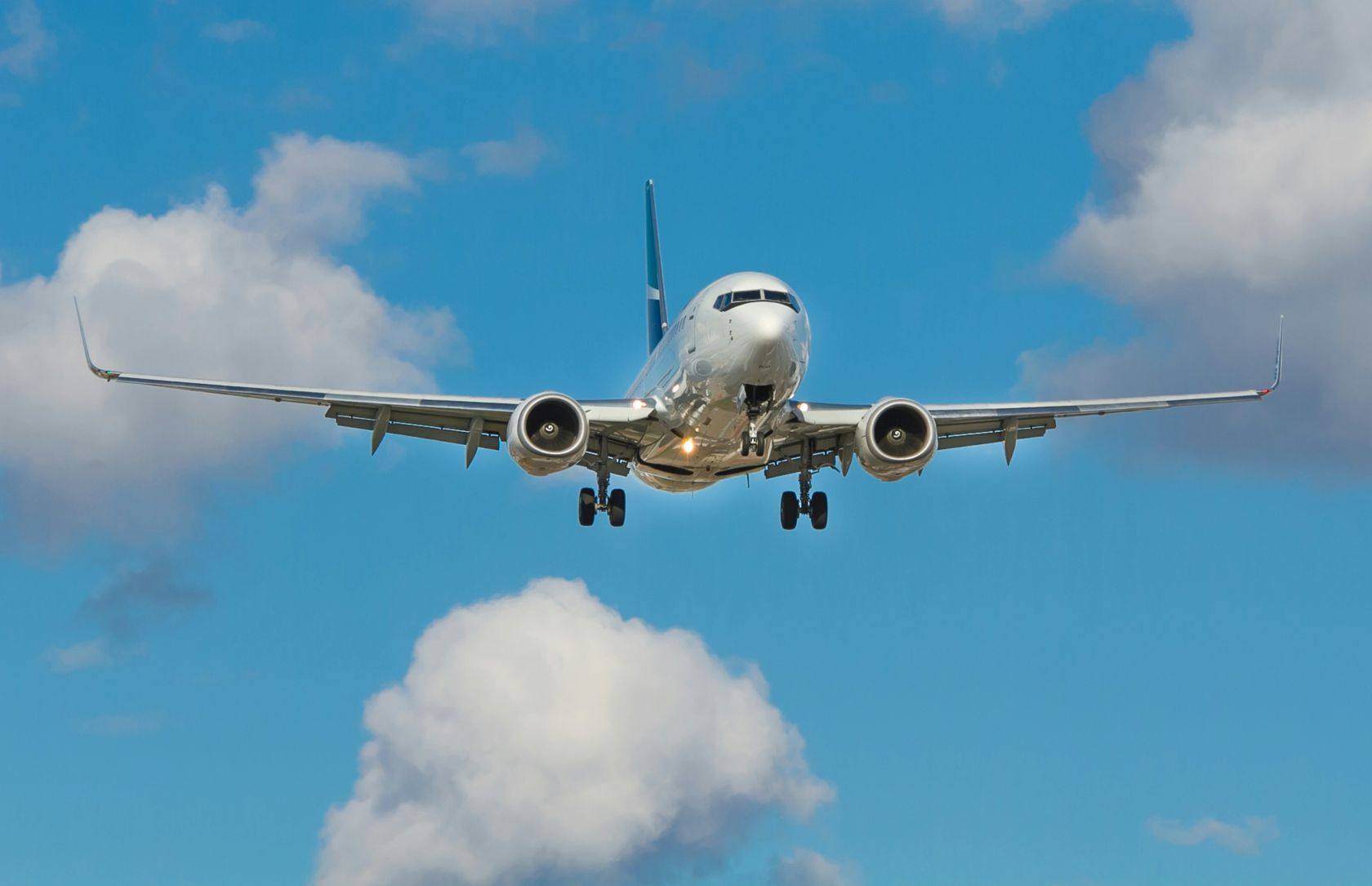
The environmental association cites a new study on the economic impacts of the growth of air transport and tourism published by the European Federation for Transport and Environment (T&E), of which ZERO is a member.
Impact of increased arrivals
The study "demonstrates that the continuous increase in arrivals by air not only aggravates environmental and climate impacts, but also contributes to pressure on the housing market, reduces productive investment in the economy and does not ensure a significant improvement in wages or quality of life for the population," it adds in a statement.
Sensitivity to tourist arrivals
House and rental prices are sensitive to the arrival of international tourists, regardless of the mode of transport, but the study isolates the contribution of air transport, given that Portugal may face "one of the greatest pressures on housing and rental prices".
According to Zero, the analysis estimates that "the average annual income from houses in Portugal, in areas of greater tourist pressure, will increase by €193 per year for new contracts, over the next five years (2026-2031)".
Concern about increased airport capacity
Environmentalists point out that these results increase their concerns regarding "the expansion of airport capacity in the Lisbon region".
"To the known impacts in terms of greenhouse gas emissions, noise, air pollution, biodiversity degradation and pressure on urban infrastructure, is now added an often neglected economic effect: the worsening of the housing crisis and tourist pressure on the territory".
Furthermore, the study also shows that "the pressure exerted by the growth of tourism associated with air traffic on the increase in housing prices may produce negative effects on the productivity of the Portuguese economy," referring to projections that indicate that business investment may suffer a 0.5% drop in the period 2019-2031, which corresponds, in absolute terms, "to an estimated loss of around 200 million euros per year."
Guiding public policy
In this context, Zero argues that "Portugal should orient its public policy towards the qualification of tourism and not towards its unlimited expansion," maintaining that the country "will benefit more from a model based on the quality of tourism, environmental sustainability, the protection of affordable housing and the diversification of its economic base than from a strategy focused on maximizing the number of flights and passengers."
It points out that this choice is "fully aligned with the National Strategy for Sustainable Tourism, which prioritises the creation of greater economic, social and environmental value instead of simply increasing the number of visitors."
Sustainable tourism
To encourage more sustainable tourism, Zero suggests evaluating the creation of "a fee charged to passengers when they leave the country by air," which already exists in several European countries.
This departure tax "could contribute to internalising part of the environmental and social costs associated with air transport and generate revenue destined for the enhancement of cultural and natural heritage, the improvement of environmental quality, the strengthening of sustainable mobility, and the qualification of the tourism sector itself," it adds.
 Add as a preferred source on Google





 Portugal Handbook
 English
 Nederlands
 Deutsch
 Français
 Español
 Italiano
 Svenska
 Pусский
 中文
中文 Türkçe
 Português
 Czech
Czech Hungarian
 Polski
 عربي
عربي Suomi
Suomi עִברִית
 Português (Brasil)
Follow us on social media