


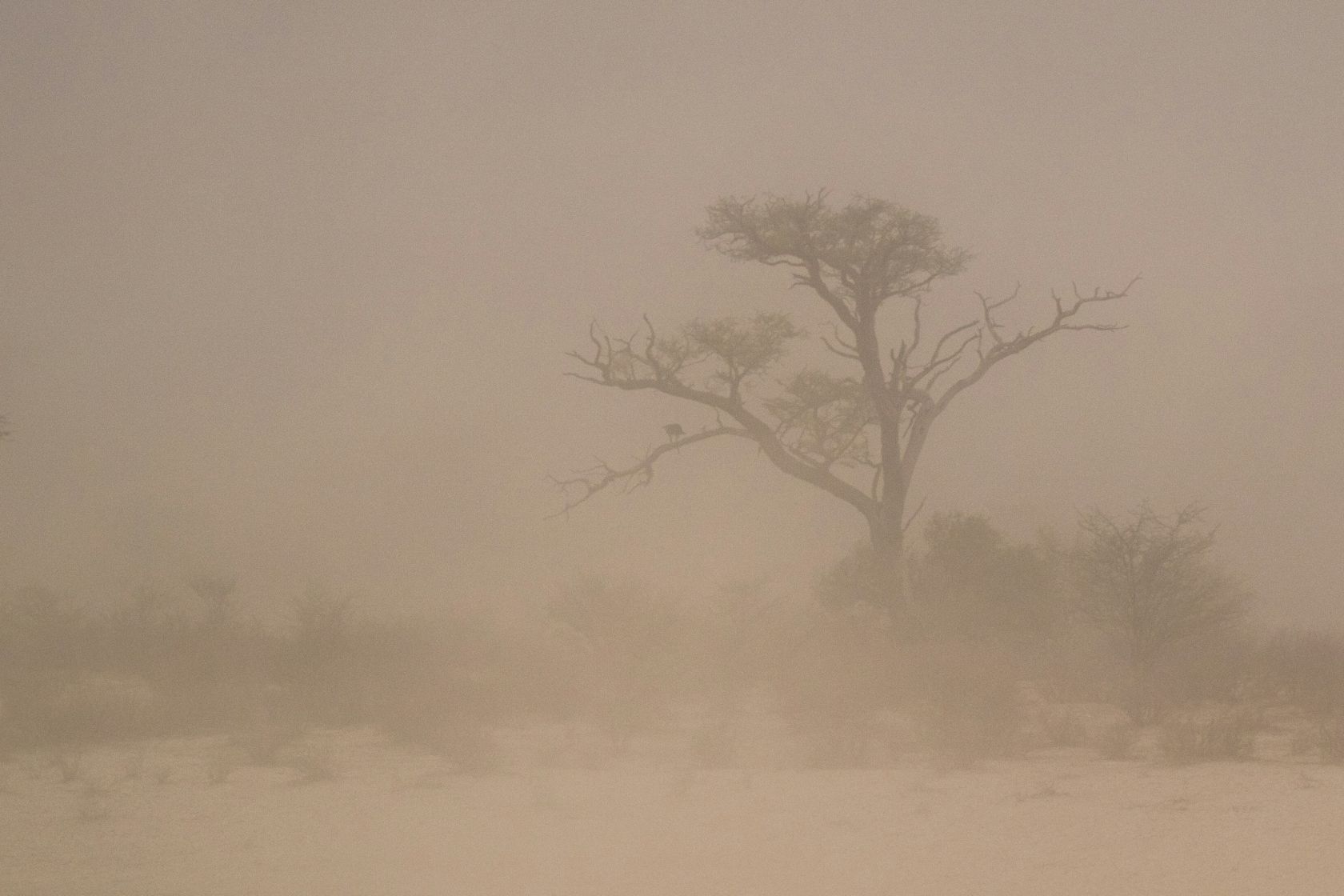
Researchers at the Paul Scherrer Institute (PSI) in Switzerland found that "the amount of dust increased by about half a microgram per cubic meter (μg/m³)" during that period.
"This corresponds to a ten to twenty-five per cent increase in this dust pollution," says project leader Kaspar Dällenbach, of the PSI’s Laboratory of Atmospheric Chemistry, as quoted in a statement from the research centre.
"This is not negligible, whether considering the efficiency and cost-effectiveness of large-scale solar installations or the health impacts of increased particulate pollution."
The average concentration of desert dust in Southern Europe is 5.3 micrograms per cubic metre of air, more than double the level in Central and Northern Europe (2.1 μg/m³).
To determine the level of this pollution across different regions of the continent with greater precision, the PSI researchers, including lead author Petros Vasilakos, Imad El Haddad, and Kaspar Dällenbach, also employed artificial intelligence.
Additionally, to make long-term comparisons, they "used data from ice cores taken at Colle Gnifetti, on the Swiss-Italian border."
Dust particles trapped in the Alpine glacier ice over the past centuries reveal that desert dust concentrations there have more than doubled during the industrial era—that is, over the last 150 years," the statement notes.
Scientists fear that desert dust concentrations will continue to rise due to the drying out of the Sahara, partially undermining efforts to curb human-caused atmospheric particulate pollution (from transport, industry, etc.), whose levels have been falling in Europe thanks to strict regulations.
Furthermore, "changes in atmospheric circulation patterns are bringing increasingly strong winds" from that region to the European continent.
According to Dällenbach, "the increase in desert dust is at least facilitated by human greenhouse gas emissions and associated global warming," leading to "drier conditions in certain regions and the expansion of deserts."
Regarding the health consequences of high concentrations, long-term effects (such as lung disease, asthma, and bronchitis) "could only be definitively proven through extensive, long-term studies"; however, "the immediate rise in mortality on days with high levels of airborne desert dust is well documented: a significantly higher number of people die from heart attacks and respiratory problems" on such days.
Petros Vasilakos notes that "the number of storms transporting dust from the Sahara and Arabian deserts has not increased," but these storms have become "more intense over the ten-year study period and, as a result, now transport more dust to Europe than before."
And unlike harmful particles from vehicle exhaust and smokestack emissions, these "cannot be reduced through direct intervention."
There are calls to create warning systems for high-desert dust concentrations, similar to those used for urban particulate and pollutant levels, such as ozone. This would allow the most vulnerable to take precautions and enable energy providers to be more attentive to dust accumulation on solar panels, which reduces electricity generation, so they can compensate and maintain grid stability.
 Add as a preferred source on Google





 Portugal Handbook
 English
 Nederlands
 Deutsch
 Français
 Español
 Italiano
 Svenska
 Pусский
 中文
中文 Türkçe
 Português
 Czech
Czech Hungarian
 Polski
 عربي
عربي Suomi
Suomi עִברִית
 Português (Brasil)
Follow us on social media