


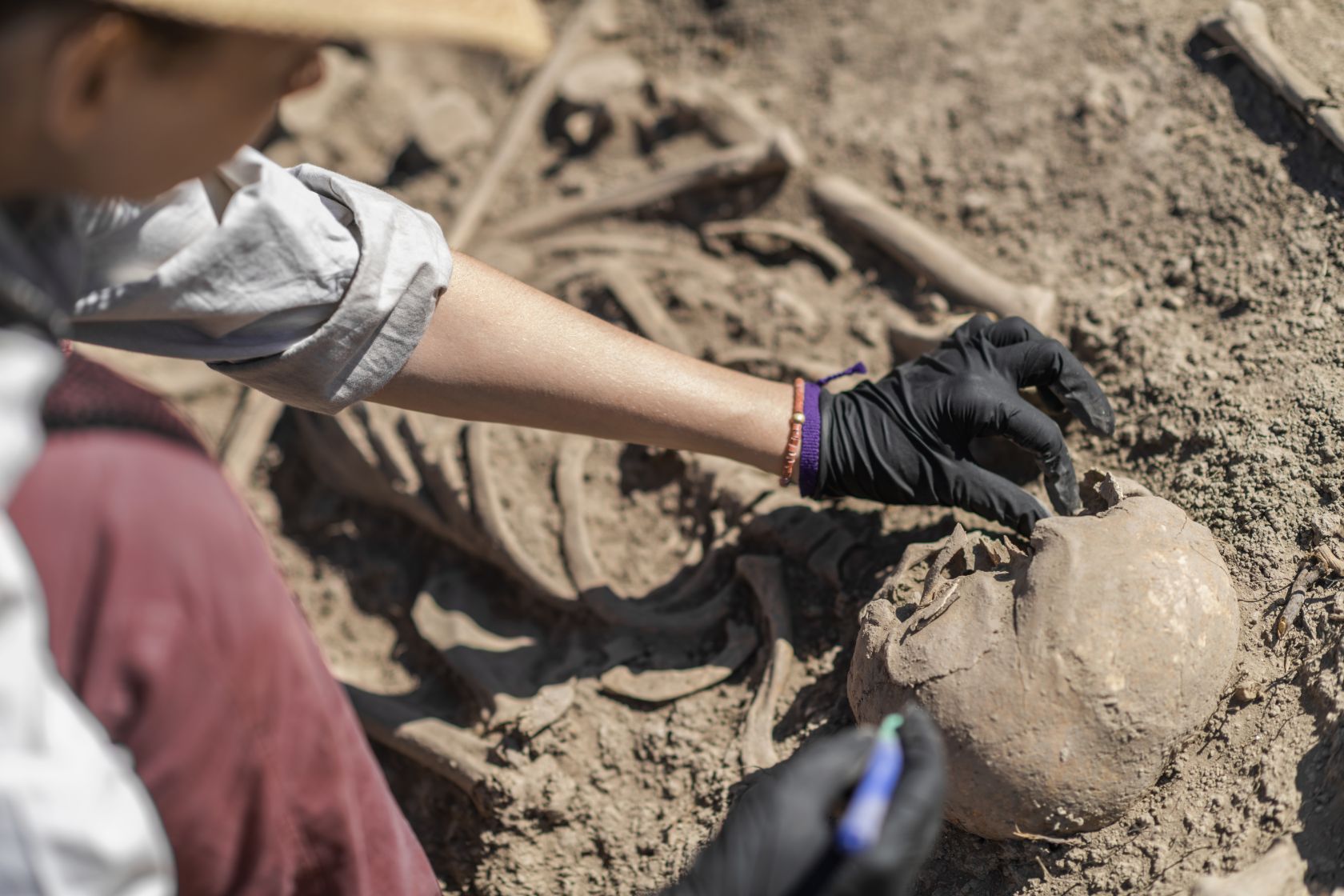
Speaking to the Lusa news agency, archaeologist Miguel Serra—a member of the coordination team—noted today that the project involves a €50,000 investment from the Beja City Council, describing it as “the largest ever.”
Archaeological campaign
The project, which will run from now until 2029, kicked off today with an archaeological campaign scheduled to last until 11 September, led by researcher Nelson J. Almeida, a professor of Archaeology at the University of Évora.
According to Almeida, work at the site—located between Mombeja and Beringel—focuses on “a new 53-square-meter area” that will allow for the examination of “a section of the defensive wall.”
“The idea is to gain a better understanding of this Bronze Age wall—which dates back about 3,000 years—as well as its relationship with any structures surrounding the settlement,” the University of Évora researcher explained.
Over the next four years, he continued, the project will encompass “new characterisation work using geophysical techniques” and the “study of potential existing structures, particularly near a possible second entrance to the settlement.”
Almeida noted that the initiative is unique in combining a “scientific and academic component” with heritage education, specifically aimed at enhancing the value of the archaeological site.
“We have a series of initiatives planned throughout this four-year project—targeting not only the local population but also national and international audiences—to create a conservation and heritage assessment plan,” he added.
When asked about the suspension of work at Outeiro do Circo in 2021, the researcher revealed that the intervening years were dedicated to analysing “materials from the site,” as there were items requiring study and a series of analyses that needed to be performed.
Artefacts collection
In a statement, the Beja City Council also noted that the suspension of fieldwork in 2021 was intended to allow for “a series of laboratory and desk-based studies dedicated to the vast collection of approximately 30,000 artefacts recovered there.”
The work now underway involves a new team but also includes the previous scientific leads, thereby “maintaining the connection to the lines of research and public outreach developed over the past 18 years,” the municipality highlighted.
According to the local authority, as with previous campaigns, the excavation days are open to the public (Monday through Friday, from 8:30 am to 12:30 pm), allowing anyone to observe the research team’s work up close.
The archaeological project is supported by several partner entities, such as the Union of Parishes of Santa Vitória and Mombeja, O Legado da Terra (a limited liability cooperative), and the Rainha Dona Leonor Museum.
Spanning approximately 17 hectares, Outeiro do Circo is believed to have been a major regional centre of power before the city of Beja developed, starting in the Iron Age around the 7th century BC.
The site has been known since the 18th century; it was the subject of an initial scientific study in 1977 and underwent archaeological work between 2008 and 2021 as part of various research projects.
Set The Portugal News as your preferred source for news on Google
 Add as a preferred source on Google






 Portugal Handbook
 English
 Nederlands
 Deutsch
 Français
 Español
 Italiano
 Svenska
 Pусский
 中文
中文 Türkçe
 Português
 Czech
Czech Hungarian
 Polski
 عربي
عربي Suomi
Suomi עִברִית
 Português (Brasil)
Follow us on social media