


They have to balance the economy, public opinion, social consequences and, inevitably, politics. But when good scientific evidence already exists, surely it makes sense to use it.
Elected politicians
Medicine gives us an obvious example.
If you visit a doctor with a particular condition, you expect the treatment you receive to be based on medical knowledge and evidence. You would find it rather strange if a politician decided that the doctor was wrong and prescribed something completely different.
Of course, running a country is rather more complicated than prescribing medicine. Science cannot provide an answer to every political question, and nor should we want scientists rather than elected politicians making all our decisions.
But there is a sensible middle ground.
Qualified professionals
Portugal has excellent universities, researchers and highly qualified professionals working across an enormous range of subjects. Their knowledge could play a much greater role in helping governments understand not only what might work, but what actually does work once a policy has been introduced.
Perhaps the bigger opportunity is not simply consulting experts before legislation is passed, but properly measuring what happens afterwards.
Governments introduce new laws with the intention of improving people’s lives. But how often do we return several years later and ask some fairly basic questions? Did it work? Did it achieve what was intended? Were there unexpected consequences? And, importantly, what does the evidence now tell us?
An independent body responsible for assessing the impact of major legislation could be extremely valuable.
Such a body would not tell governments what to do. That remains the job of elected politicians. Instead, it could provide governments and Parliament with reliable information about the results of previous decisions.
There is another advantage to this approach.
Political parties
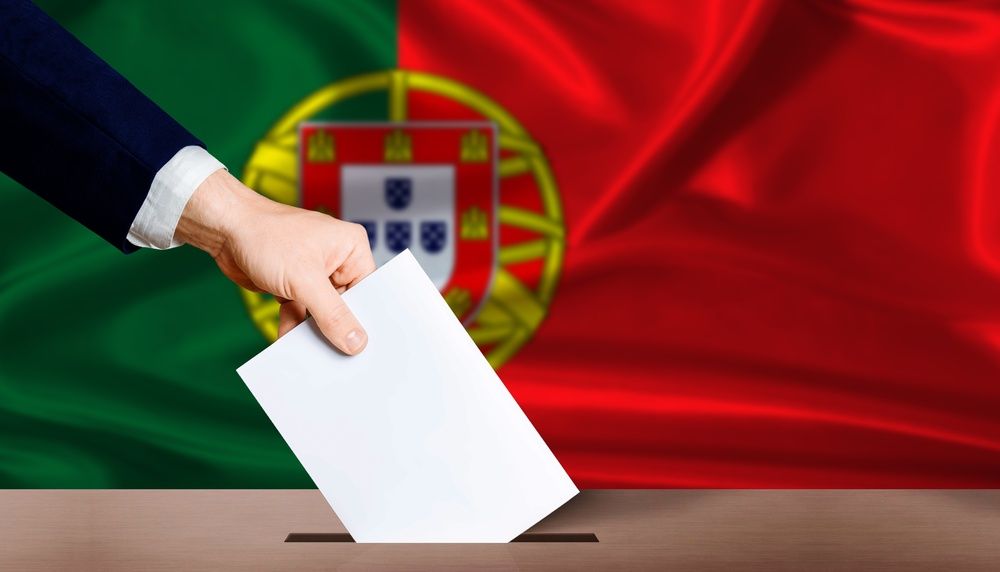
Portugal, like most democracies, periodically changes government. Different political parties naturally have different priorities, and that choice is fundamental to democracy. But it can also mean that policies introduced by one government are quickly reversed by another.
Sometimes that is absolutely justified. But constantly changing direction also costs money, consumes the time of public servants and creates uncertainty.
The debate over the visual identity of the Portuguese Republic was a relatively small example. One government commissioned a new identity and the next chose to replace it. Whatever anyone thinks about either design, the episode demonstrated how quickly work commissioned by the State can be undone following a political change.
On bigger issues, the consequences can be much more significant.
Independent research
This is where independent research and proper assessment could help. If there is clear evidence that a policy is working, there should perhaps be a higher hurdle before it is abandoned. Equally, if the evidence shows that something isn’t working, governments should be willing to change it regardless of which party originally introduced it.
None of this diminishes the role of politics. In fact, it could strengthen it.
Good government is not about having all the answers. It is about being willing to listen to people who know more about a particular subject and then making a judgement based on the best information available.
Portugal already has much of the expertise it needs. Its universities and research institutions produce talented people and important work, while Portuguese scientists and professionals contribute to innovation both at home and internationally.
New evidence
The opportunity is to bring more of that knowledge into the everyday process of government.
Science will not always get things right. Scientific understanding changes as new evidence emerges. But that willingness to change conclusions when the evidence changes is actually one of science’s greatest strengths.
Politics and science have very different roles. We need politicians to make choices, set priorities and ultimately be accountable to voters. But we should also give them access to the best possible evidence when they make those choices.
Bringing those two worlds closer together could help Portugal make better decisions, avoid unnecessary reversals and make better use of the considerable expertise the country already possesses.

About Renato M. Rodrigues
Biomedical scientist and researcher (iBiMED/UA and UTAD) with an MSc in Molecular Biomedicine, a Postgraduate Certificate in Clinical Research, and specialisation in Healthcare Leadership. Focused on reproductive health and oncology (prostate cancer), combining expertise in cellular/molecular assays with published scientific output, academic governance, and pedagogical innovation.
Set The Portugal News as your preferred source for news on Google
 Add as a preferred source on Google






 Portugal Handbook
 English
 Nederlands
 Deutsch
 Français
 Español
 Italiano
 Svenska
 Pусский
 中文
中文 Türkçe
 Português
 Czech
Czech Hungarian
 Polski
 عربي
عربي Suomi
Suomi עִברִית
 Português (Brasil)
It is refreshing to read such a well composed essay. Sr. Renato concisely summarises an important subject and provides a reasoned conclusion in clear received English which is free of the cliché ridden, AI generated language of other recent articles. Congratulations !
By Cavaleiro R. from Other on 30 Aug 2026, 07:43