


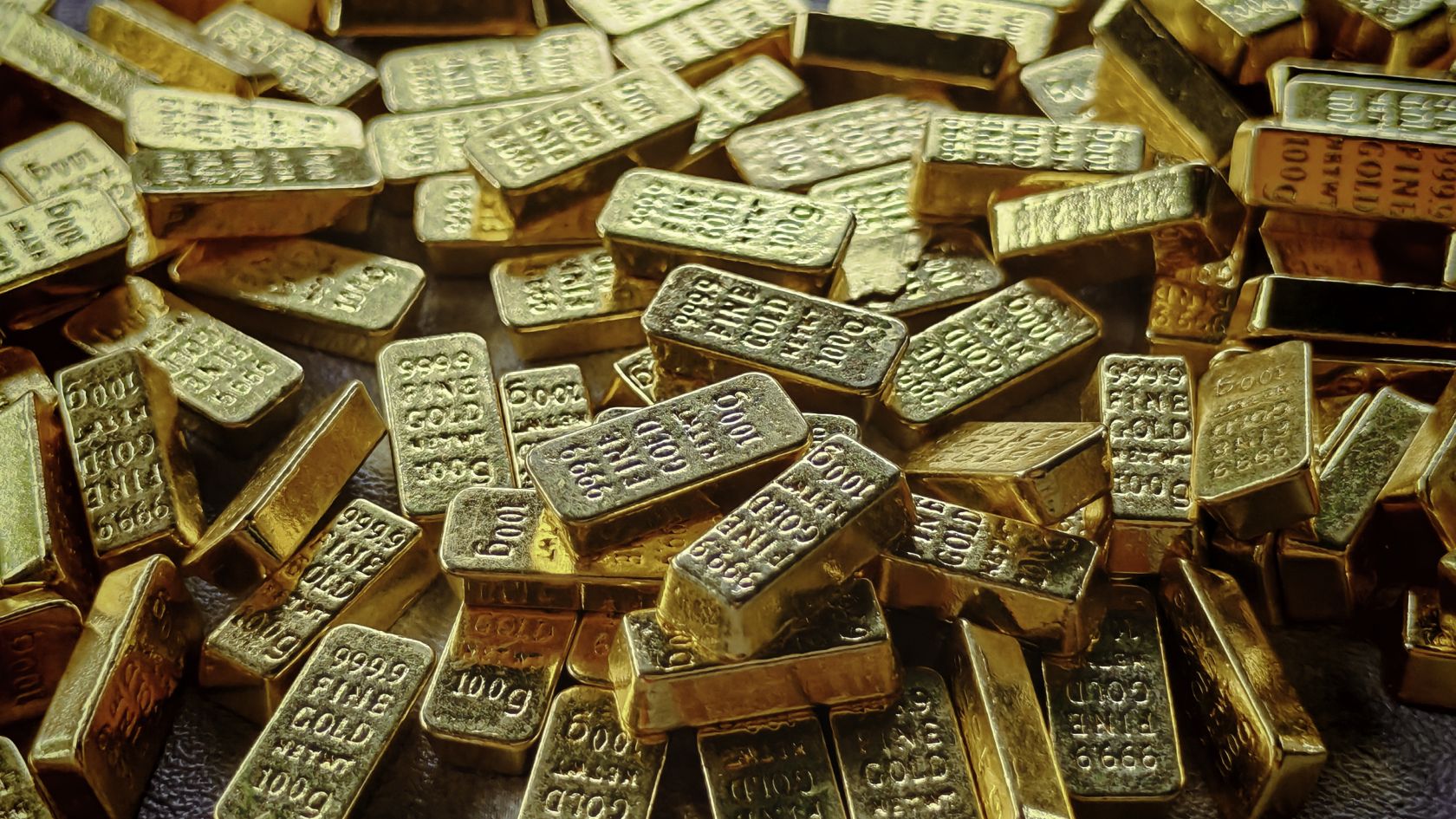
One half of the 382.66 tonnes of bullion is held in high security vaults located at Carregado, 40 km. north of Lisbon, while the other half sits in London.
Portuguese law prohibits the direct sale of gold reserves to benefit the national Treasury. Instead, the precious ingots are used as a collateral to fund loans made to the State through the Bank for International Settlement which is the “central bankers bank”.
Paradoxically, practically none of the bullion has been mined in Portugal. The last of the country´s limited output ended with the closure in 1992 of the Jales- Gralheira concession in the Vila Real district. The output of this mine went back to the Roman era when skilled engineers perfected a hydraulic process which enabled tribute to be paid by Lusitanians to Rome.
Recently Canadian miners have prospected the original complex but have estimated that production could not recommence within ten years and only then if the current global demand continues. Until favourable conditions exist, gold for industrial purposes and the manufacture of jewellery must be imported.
The origin of the present holdings has caused much speculation. At the outbreak of WW2 in 1939 the reserves stood only at a meagre 63 tonnes much of which was thought to be part of the tribute received from the vast colonial Empire which had placed Portugal among the world´s super powers. Before independence, Brasil had contributed many tonnes but most of the value was diverted into the real estate investments of royalty and nobility rather than enterprises to benefit the community.
However, war and its urgent requirement for weapons changed everything. Wolfram (now known as tungsten) soared in value because of its uses for armaments such as armour-plating for tanks. This enhanced Portugal´s trading position due to most of this vital European resource being located within its boundaries.
Despite its declared neutrality, the Portuguese government initially favoured the German cause. During 1940/41 practically all of national output was sold on the Lisbon metal exchange to agents of the Third Reich and transported by road and rail to the manufacturers of the Ruhr. With international currency values in chaos, gold was the only acceptable payment so the Germans looted gold deposits from the banks of conquered nations. These were then smelted to new ingots each of which was stamped with the insignia of eagle and swastika before being transported to suppliers.
After the entry of the USA into WW2, the allies demanded that Portugal should sell its production of wolfram only to them but the Salazar government acquiesced only partly and continued sending smaller quantities to aid the diminishing war effort of Germany. To pay for this, the Germans launched a national appeal for contributions in gold and jewellery from the citizenry. This included the opening of the “Melmer Account” by the SS which enforced collection of valuables from enslaved peoples including the unfortunate occupants of several hundred concentration camps which had been built across the now tottering Nazi Empire.
Just how much gold was derived from these sources will never be known but undoubtedly additions were made to each ingot which was cast in foundries of the Reich before being stamped and transported, often by submarine, to Porto or Lisbon. The Bank of Portugal was aware of this and took the precaution of recasting the bullion on arrival. Even so, it admits to “several” ingots bearing the swastika insignia as still being held at Carregado although evidence for this has never been shown.
Following the end of hostilities, the Allies attempted to persuade Portugal to return the gold which had been stolen from the banks and citizens of subjected countries but only a nominal amount of 4 tonnes was remitted. The government successfully argued that both Britain and the USA owed considerable payments for materials and the use of the Azores during the war years.
However, the protests continued and were augmented by complaints from African colonies that their gold assets had also been plundered by Portugal. In an effort to end controversy, the Soares Commission was established in the late 1990s to independently examine the claims (e.g. the U.S. Eizenstat Report) that Portugal and other neutral countries had profited from thefts and atrocities committed by the Nazi regime.
After much deliberation, the Commission produced a final judgement that admitted the receipt of payments which included massive quantities looted from European central banks but rejected criminality as the gold had been accepted by Portugal as legal tender for the payment of trade exports in the same way as it had accepted money from the Allies for strategic goods.
All that glitters is not gold.
Set The Portugal News as your preferred source for news on Google
 Add as a preferred source on Google








 Portugal Handbook
 English
 Nederlands
 Deutsch
 Français
 Español
 Italiano
 Svenska
 Pусский
 中文
中文 Türkçe
 Português
 Czech
Czech Hungarian
 Polski
 عربي
عربي Suomi
Suomi עִברִית
 Português (Brasil)
Follow us on social media