


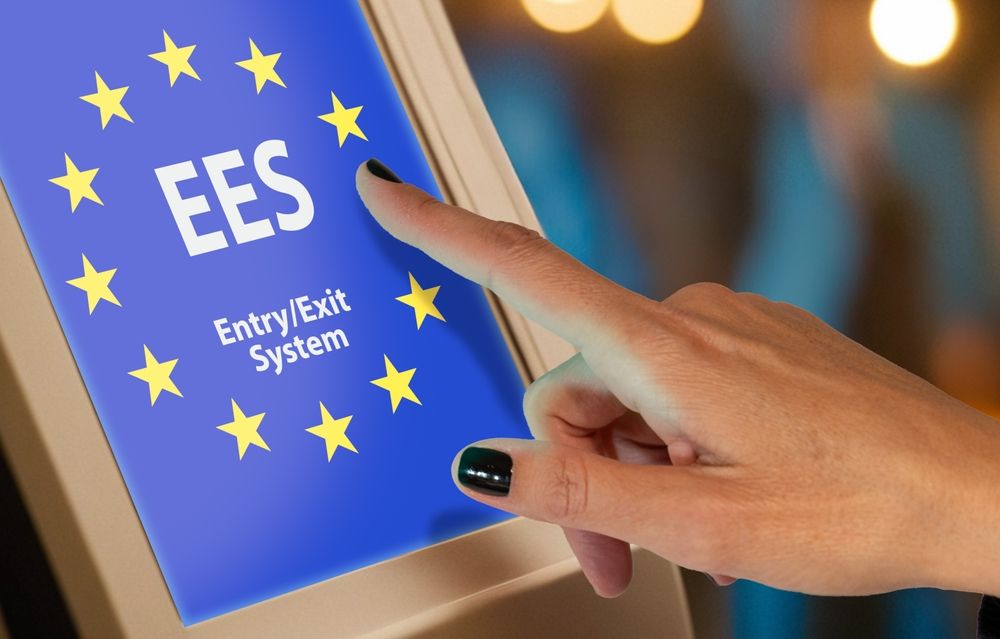
This warning comes as concerns grow across the travel industry over the impact of the biometric border scheme, which was fully introduced across the Schengen area in April 2026, requiring non-EU nationals entering participating countries to register fingerprints and facial images as part of enhanced border checks.
Speaking at an event organised by UK travel association ABTA in London, Uku Särekanno, deputy executive director of Frontex, said the most difficult phase of the rollout remains the initial registration of travellers.
“We expect the situation to stabilise within one or two years because the most challenging part is the first enrolment”, he stated, adding that implementation progress varies considerably between member states.
The comments have intensified concerns among airlines, airports and tourism operators, many of whom have already reported long queues and operational disruptions at airports, ferry terminals and land border crossings since the system was introduced.
Popular destinations exposed
This issue is particularly significant for Spain, one of Europe's most popular destinations for international visitors, as millions of non-EU travellers, including large numbers arriving from the United Kingdom, pass through its airports and ports each year.
According to industry representatives, continued delays at main gateways such as Málaga, Alicante and destinations in the Balearic and Canary Islands could affect visitor experiences during peak holiday periods.
Although there is currently no official evidence of changing travel behaviour, tourism bodies have expressed concern that prolonged waiting times could discourage some holidaymakers, particularly those planning short breaks or frequent trips.
Uneven implementation
According to Frontex, one of the main challenges lies in the differing pace of implementation across the EU.
While some countries have invested heavily in infrastructure, technology and staffing to support the new system, others have encountered technical and operational obstacles.
As a result, passenger experiences can vary significantly depending on where they enter the Schengen area, as some border crossings process travellers relatively efficiently, while others continue to experience congestion, particularly when large numbers of first-time users require biometric registration.
Officials estimate that achieving consistent procedures across roughly 1,700 external border crossing points remains a substantial undertaking.
Temporary relief measures
In order to reduce pressure during the early stages of the rollout, EU member states have been permitted to temporarily suspend certain EES requirements during periods of exceptionally high demand. Those contingency measures, however, are scheduled to expire in September.
The approaching deadline has raised concerns within the travel sector, with industry groups calling for flexibility to remain in place while border authorities continue adapting to the system.
Airlines and travel organisations argue that removing these measures too quickly could increase disruption during busy holiday periods if operational issues have not been fully resolved.
Full enforcement
Despite those concerns, Frontex has indicated there are currently no plans to extend the temporary exemptions. Instead, the agency's priority is improving operational consistency and ensuring the system functions effectively under standard enforcement conditions.
That approach means border authorities are expected to continue applying the biometric checks in full, even if some locations continue to experience congestion during peak travel seasons.
Security and efficiency
According to EU officials, the Entry/Exit System is a long-term investment in modernising border management and strengthening security across the Schengen zone, arguing that some disruption was inevitable given the scale of introducing biometric checks across multiple countries and thousands of border points.
However, acknowledgement from Frontex that the adjustment period could last as long as two years has fuelled debate over whether the rollout has been sufficiently coordinated.
 Add as a preferred source on Google







 Portugal Handbook
 English
 Nederlands
 Deutsch
 Français
 Español
 Italiano
 Svenska
 Pусский
 中文
中文 Türkçe
 Português
 Czech
Czech Hungarian
 Polski
 عربي
عربي Suomi
Suomi עִברִית
 Português (Brasil)
Don‘t put on the European Union it is portugals‘s incompetence. They long queue were there even before the new came in charge. Do you your job and stop talking !!
By Tiom from Lisbon on 19 Jun 2026, 16:58