


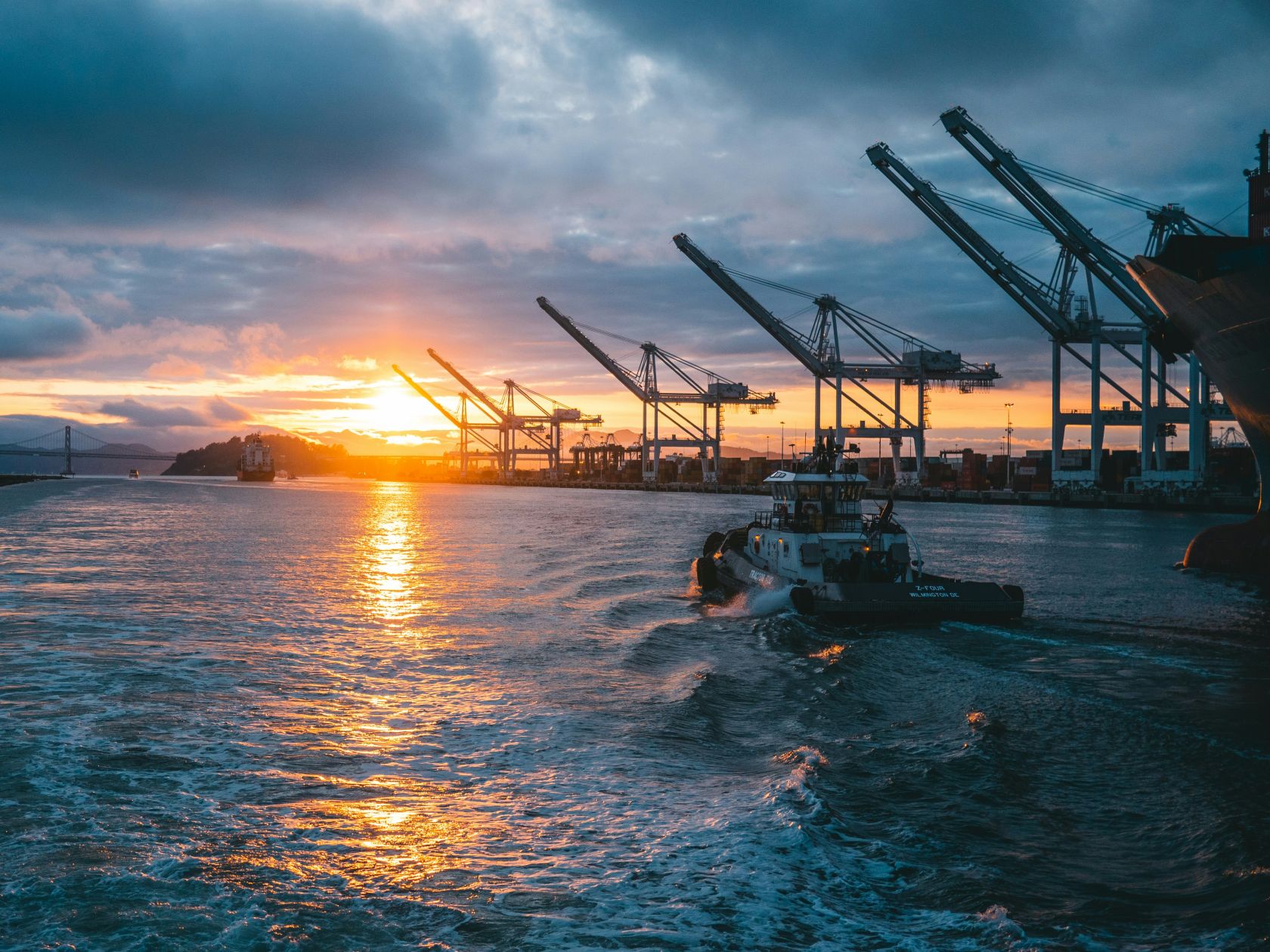
Efficient supply chains, such as road, maritime and air transport, are helping Portuguese companies reach customers across global markets, Essential Business reports.
Supported by modern infrastructure and strong multimodal connectivity, Portugal is strengthening its position as a strategic gateway connecting Europe, the United States, South America and Africa.
Geopolitical shifts have reshaped international trade routes, and the war in Ukraine and conflicts in Iran and the Strait of Hormuz have exposed the fragility of supply chains and the demand for reliable sea, road and rail trade networks.
Strategic pillar
Portugal has 126 economies accessible through direct air cargo connections, 60 accessible by sea, and 127 by post.
The Port of Sines, which handles the largest volume of cargo, is where the majority of Portugal’s main energy supply, such as oil, petroleum products and natural gas, is imported.
The industrial and logistics area of the Port of Sines covers over 2,000 hectares and is an import and export point for international submarine cables, as well as the location for the development of data centres.
In July last year, the Portuguese government announced the Port 5+ plan, which foresees a 4-billion-euro investment to reduce emissions by around 80 percent by optimising the port system. Digitalisation, electrification, energy efficiency and alternative fuels are expected to drive the change.
Means of transportation
The growth of e-commerce, particularly in Lisbon and Porto, has increased the demand for logistics centres, according to Essential Business. Over the coming years, the CBRE – Portugal Logistics Confidence Index 2025 expects an increase in most operators’ investment and storage capacity.
Road transport remains the most used method for transportation by Portuguese companies, accounting for 62.8 percent of goods exported, constituting an increase of 2.8 percent compared to 2024. This means that out of the 79.3 billion euros in goods exported last year, 49.8 billion euros were transported by road.
In 2025, maritime transport was used for 24 percent of goods exports, reaching 19 billion euros, and air transport accounted for 7.1 percent of goods exports, reaching €5.66 billion in 2025. Rail transport has the greatest potential for growth, accounting for only 0.6 percent of exported goods.
Sustainability expectations
Digitalisation is transforming how goods reach customers, and the growth of e-commerce has forced companies to invest in advanced technologies to monitor and track shipments. Due to regulatory requirements and customers’ expectations, sustainability has also become central to logistics operations.
With renewable energy, more sustainable vehicles, and improved packaging solutions, companies will continue to modernise how they deliver goods to their customers.
 Add as a preferred source on Google







 Portugal Handbook
 English
 Nederlands
 Deutsch
 Français
 Español
 Italiano
 Svenska
 Pусский
 中文
中文 Türkçe
 Português
 Czech
Czech Hungarian
 Polski
 عربي
عربي Suomi
Suomi עִברִית
 Português (Brasil)
Follow us on social media