


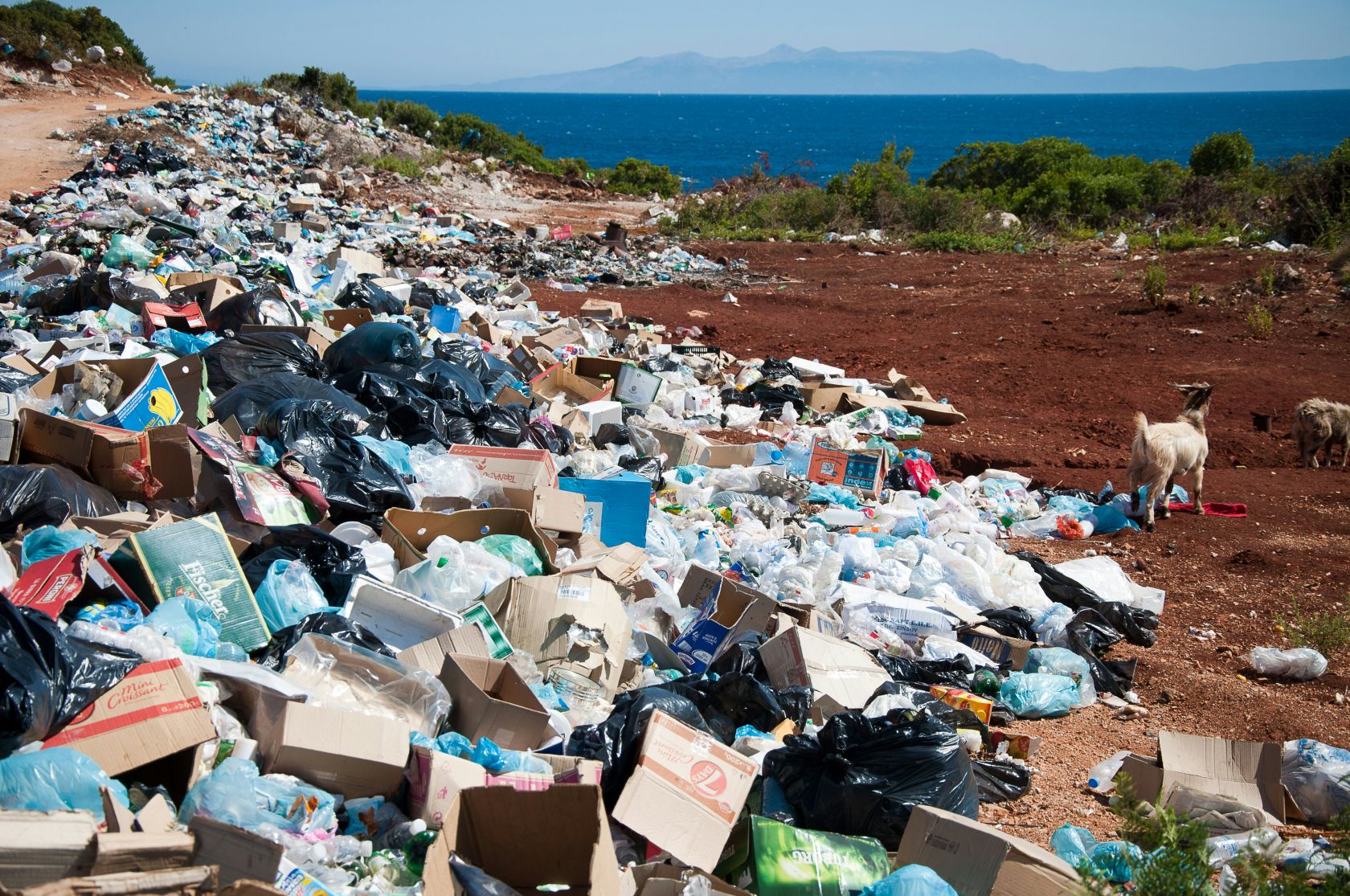
The announcement was made by Environment and Energy Minister Maria da Graça Carvalho, who said that the Algarve currently sends around 85% of its waste to landfill.
Around 400,000 tonnes of waste are produced in the region every year, and the amount has increased by around 13% over the past four years. The Algarve currently sends a much higher proportion of its waste to landfill than the national average, which stands at around 56%.
Tourism also affects the amount of waste produced in the Algarve. The region receives millions of visitors every year, particularly during the summer months, which means much more waste is produced than the resident population figures would suggest.
The Minister said this helps explain why the Algarve has the highest amount of waste produced per capita in Portugal.
The region currently relies on two landfills, located in Portimão and Loulé, and both are approaching their limits. One is estimated to have around 18 months of capacity remaining, while the other has around two years.
Plans are already underway to expand the existing landfill sites, which should give the Algarve approximately another seven and a half years of capacity. However, the Government says a longer-term solution is needed.
The proposed waste-to-energy facility would use waste that cannot be recycled to produce energy instead of sending it directly to landfill.
The Portuguese Environment Agency (APA) is expected to launch a tender on 15 October to study the best technology for the project and where the new facility could be built.
No location has yet been chosen. The decision will involve the Algarve's 16 municipalities through the Algarve Intermunicipal Community (AMAL).
Portugal will also have to reduce the amount of municipal waste going to landfill considerably over the coming years, with the European Union setting a target of no more than 10% by 2035.
Set The Portugal News as your preferred source for news on Google
 Add as a preferred source on Google








 Portugal Handbook
 English
 Nederlands
 Deutsch
 Français
 Español
 Italiano
 Svenska
 Pусский
 中文
中文 Türkçe
 Português
 Czech
Czech Hungarian
 Polski
 عربي
عربي Suomi
Suomi עִברִית
 Português (Brasil)
I was surprised by the scarcity of recycling bins when we were in Fuzeta last year. I'm sure tourists contribute to the problem, but most come from countries with established recycling systems and practices. Trash haulers need to understand that recycling materials can be profitable and worth the investment in equipment.
By Dirk Durstein from USA on 11 Aug 2026, 13:09