


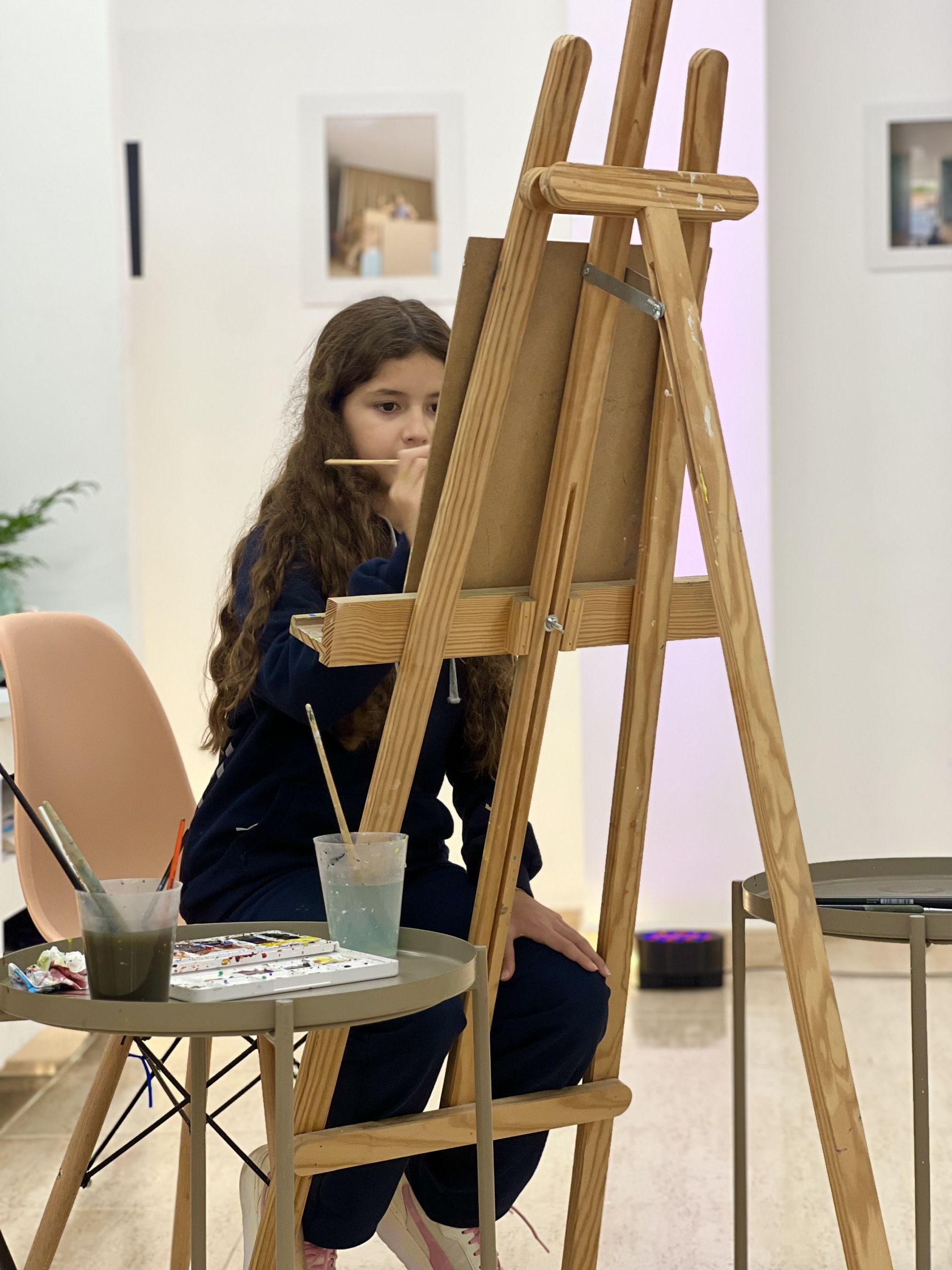
For many people, art is simply a hobby or a way to express creativity. For Julia Gurchenkova, founder of Algarve Arts Academy, it is something much deeper.
“Art is a healing process,” she says. “When we observe reality, we learn to accept it. When we create, we process our emotions.”
It is a philosophy that lies at the heart of Algarve Arts Academy, a creative space in the Algarve that has become much more than an art school. While students certainly learn to draw, paint and develop artistic skills, many also discover something unexpected: confidence, friendship, emotional healing and a renewed sense of purpose.
Julia’s own journey explains why.
Originally from Siberia, she graduated with a master’s degree in monumental and decorative art before building a successful international career in the gaming industry, working as an art director, lead artist and mentor. Art was not only her profession but a constant companion throughout her life.
Some of her earliest memories involve drawing. As a child, she discovered that creativity allowed her to slow down and focus in a way nothing else could.
“It was the thing that helped me become calm,” she recalls. “I could completely focus and enter a state of flow.”
That experience would later prove invaluable during some of the most difficult chapters of her life. Julia has spoken openly about navigating grief, divorce, immigration and major personal challenges. Throughout those periods, art remained a source of stability.
“Only because I was creating every day, painting and drawing, I survived through these difficult cycles,” she says. “I truly believe that art is a cure.”
When she moved to the Algarve with her son, she noticed a lack of opportunities for children seeking serious artistic development, particularly within the international community. Rather than waiting for a solution, she created one herself.
Today, Algarve Arts Academy combines classical artistic training with modern creative practices in an environment designed to encourage both artistic and personal growth. Yet for Julia, teaching techniques is only one part of the mission.
“We are not only teaching people how to draw,” she explains. “We want to help them transform.”
Finding Healing Through Art
That transformation often begins with something simple: slowing down.
Modern life rarely allows moments of uninterrupted focus. Phones vibrate, notifications appear constantly, and many people struggle to spend even a few minutes fully present in the moment. Inside the academy, however, the atmosphere is intentionally different.
Soft music, birdsong and minimalist interiors help create a calm environment where students can immerse themselves in the creative process. There are no distractions, no pressure and no expectations of perfection.
“It’s almost like meditation,” Julia explains. “You sit quietly with your brushes and paints and focus only on what you’re creating.”
According to Julia, this focused attention naturally lowers stress levels and allows people to enter a flow state, a mental condition in which concentration becomes effortless and worries temporarily fade into the background.
The effects can be surprisingly powerful.
Over the years, Julia has witnessed students use creativity to process grief, overcome fears and reconnect with parts of themselves they thought had been lost.
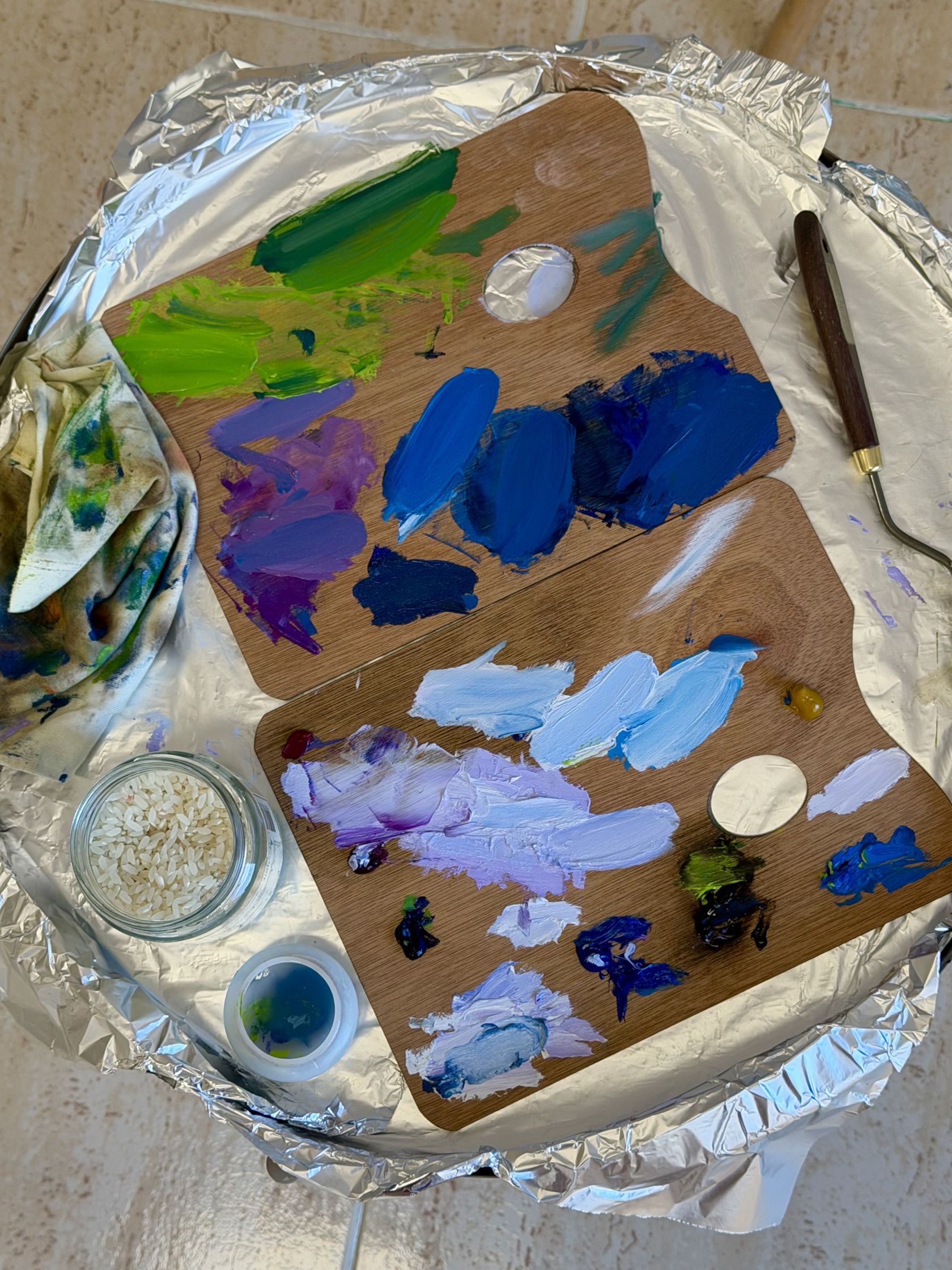
One story that particularly stayed with her involved a woman who had lost someone close to her. Following the bereavement, she could no longer wear the colour red because it triggered painful memories.
Through painting and creative exercises, she gradually began to engage with colour again.
“Eventually she could wear red again,” Julia says. “For her, that was a huge step.”
While art cannot erase difficult experiences, Julia believes it can help people move through them.
More Than an Art School
The healing benefits extend beyond individual expression. One of the most remarkable developments at the academy has been the sense of community that has formed among students.
What starts as a weekly art class often develops into genuine friendships. Students meet for coffee, visit exhibitions together, and continue to support one another outside the classroom.
For some participants, particularly retirees or people who have recently moved to the Algarve, these connections become an important part of their social lives.
One student told Julia, “I never thought about my social life this way. I see it differently because of you.”
Stories like these have reinforced Julia’s belief that creativity is not only about producing artwork but about creating meaningful human connections.
“We want people to see life through art, relate through art and live through art,” she says.
The academy welcomes students of all ages and ambitions. Some younger participants dream of careers in illustration, game design or fine art. Others simply attend because they enjoy creating.
Adults arrive with equally varied motivations. Some are looking for a new hobby, others want a break from demanding careers, and many are searching for a creative outlet they may have abandoned years ago.
Regardless of their starting point, Julia says she often notices profound changes after a period of consistent practice.
Children become more confident. Adults develop a stronger sense of self-expression. Many discover an artistic voice they never realised they possessed.
After two years of regular attendance, she says, students often begin creating work that reflects their own personality rather than simply copying techniques.
For Julia, these moments are more important than any finished painting hanging on a wall.
“The masterpiece is not always the artwork,” she says. “Sometimes the masterpiece is the person who has changed while creating it.”
That philosophy is reflected in the academy’s slogan: “Dive into art and find the treasure within.”
The treasure, Julia believes, is different for everyone. For some, it may be a hidden artistic talent. For others, it may be confidence, friendship, emotional healing or a renewed sense of purpose.
As Algarve Arts Academy celebrated its second anniversary this June, its success is measured not only by the artwork produced within its walls but by the transformations taking place in the lives of those who walk through its doors.
In a world that often moves too quickly, the academy offers something increasingly rare: a space to pause, create, connect and heal.
And according to Julia, that may be one of art’s greatest gifts.
For a deeper look at Algarve Arts Academy, its founder, Julia Gurchenkova, and the academy’s unique approach to creativity and personal development, look out for the Summer Edition of Central Magazine, available across the Algarve.
Set The Portugal News as your preferred source for news on Google
 Add as a preferred source on Google






 Portugal Handbook
 English
 Nederlands
 Deutsch
 Français
 Español
 Italiano
 Svenska
 Pусский
 中文
中文 Türkçe
 Português
 Czech
Czech Hungarian
 Polski
 عربي
عربي Suomi
Suomi עִברִית
 Português (Brasil)
Follow us on social media