


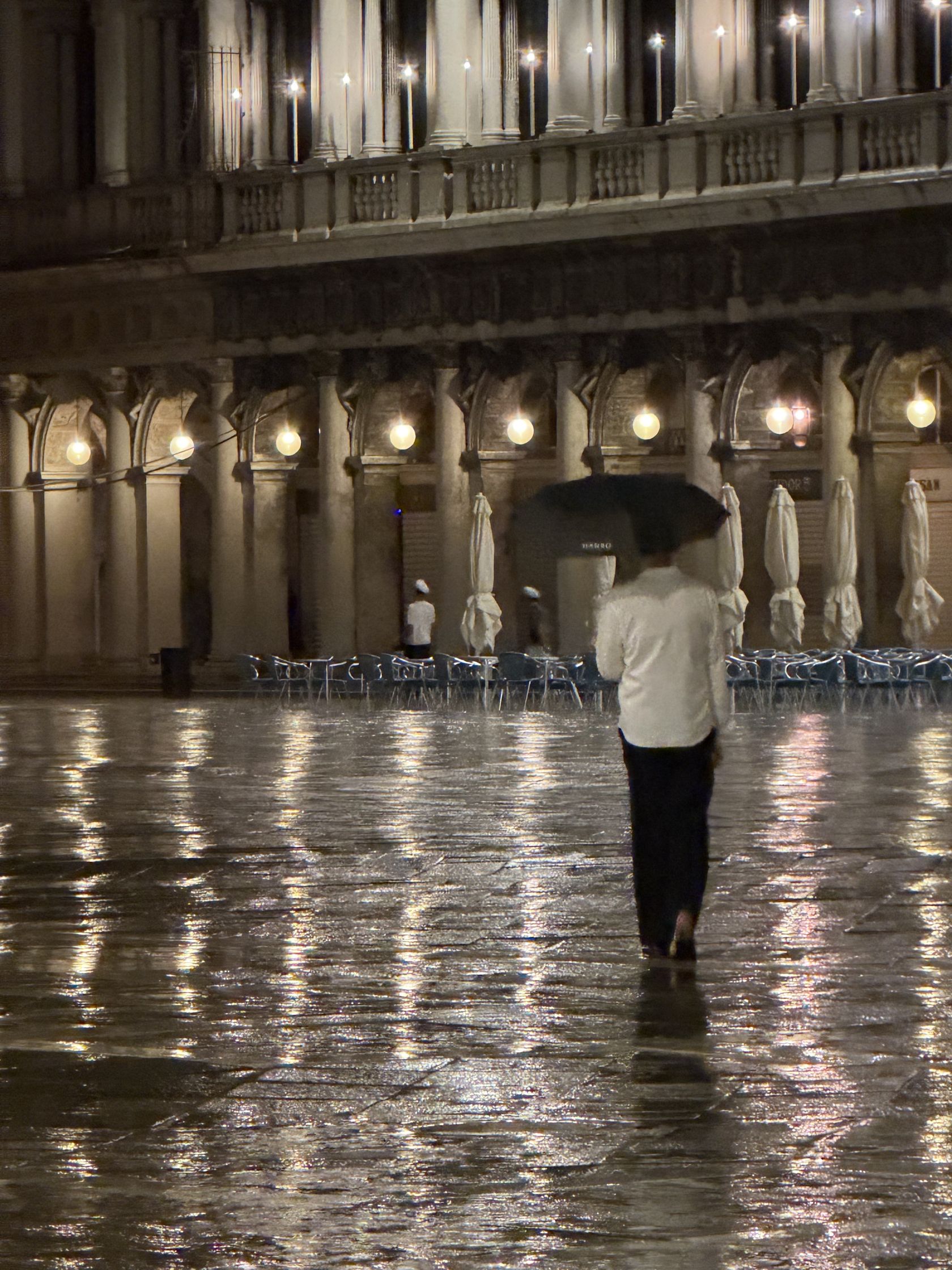
Painting is certainly still here — and I don’t believe it is going anywhere — but sculpture, installation and performance are claiming more and more physical and emotional territory on the international art scene.
You no longer necessarily stand in front of an artwork.
You walk through it. Around it. You hear it. It moves. It changes. Sometimes you wait for it to happen.
And sometimes it happens to you.
At the Belgian Pavilion, Miet Warlop’s IT NEVER SSST turns language itself into physical material. Huge plaster words are carried, passed between performers, dragged, broken and reconstructed while musicians and dancers move through the space.
Watching it, I found myself thinking about the evolution of language: how we invent words, inherit them, misunderstand them, destroy them and somehow continue searching for new ways to communicate.
This is where performance becomes so powerful. You are not being given an explanation of an idea.
You are watching the idea happen.
Then comes the Austrian Pavilion, where Florentina Holzinger’s Seaworld Venice takes physicality to another level.
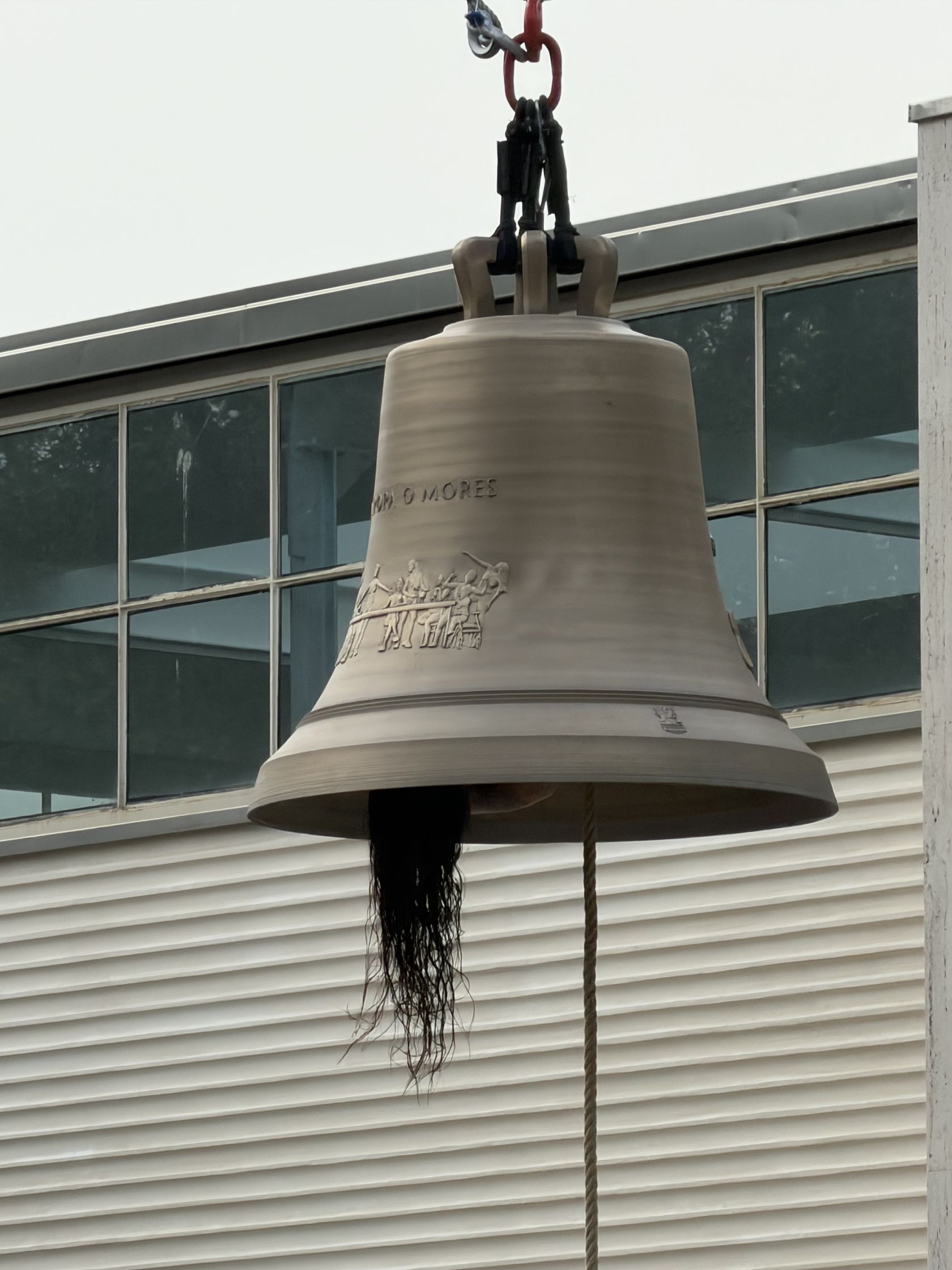
Nordic Countries Pavilion — Finland, Norway & Sweden. How Many Angels Can Dance on the Head of a Pin? brings together surreal sculptures and installations by Klara Kristalova, Benjamin Orlow and Tori Wrånes, transforming the pavilion into a strange Nordic landscape where human, animal and mythical forms seem to merge.
Water, bodies, machinery, waste and technology become one enormous, unsettling system. And then there is the monumental bell based on the female body — an image that is beautiful, strange and disturbing at the same time.
The work confronts our relationship with water, pollution, nature and technology, but it doesn’t politely invite you to think about ecology from a comfortable distance.
It confronts you with it on a scale you simply cannot ignore.
An environmental subject that might otherwise become another statistic suddenly has weight, sound, movement and a human body.
At the United States Pavilion, Alma Allen’s magnificent biomorphic sculptures offer another kind of physical encounter.
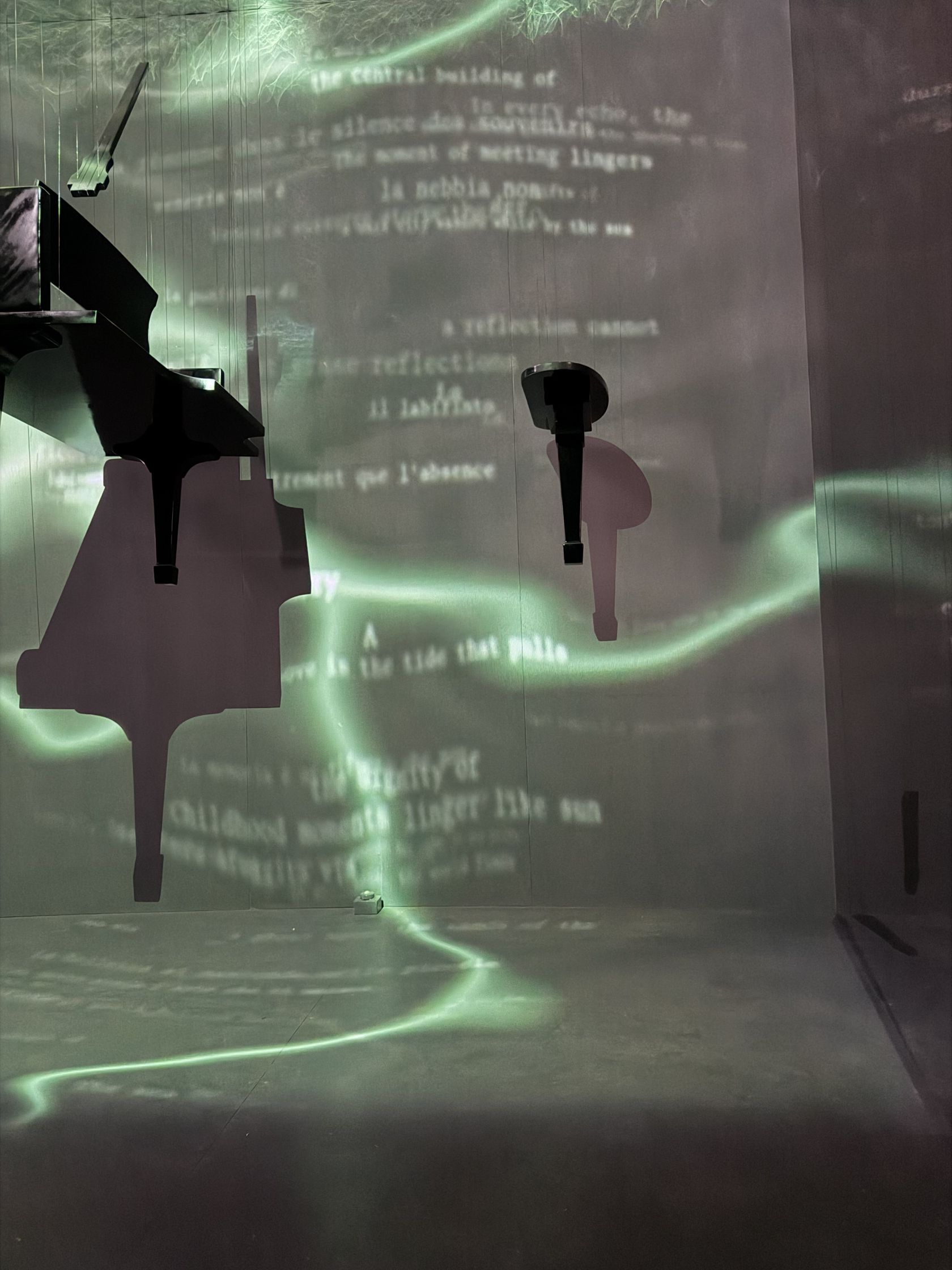
Venice Pavilion — NOTE PERSISTENTI (Persistent Notes), featuring Italian pianist and composer Dardust. An immersive musical installation where piano, sound, vibration, water and architecture come together, transforming the musical identity and memory of Venice into a physical experience to be heard, felt and explored.
Some rise so dramatically through the rooms that they appear almost to push against the ceiling.
Bronze. Mexican onyx. Marble. Quartzite. Travertine. Walnut.
These substantial, almost primordial materials somehow feel alive. Bronze becomes almost liquid; stone appears soft.
And then Japan gives you a baby.
Literally.
At the Japan Pavilion, Ei Arakawa-Nash’s Grass Babies, Moon Babies invites visitors to carry one of 208 baby dolls through the exhibition while the sounds of the artist’s own twin babies fill the space.
You can even change your baby’s diaper and discover a QR code connecting you to a poem.
It is absurd, funny, slightly uncomfortable and unexpectedly tender — a wonderfully crazy baby experience.
Yet something fascinating happens. People slow down. Strangers smile at one another. Adults instinctively behave differently simply because they are carrying something shaped like a child.
Underneath the humour are questions of care, parenting, responsibility and what one generation leaves behind for another.
These completely different pavilions share something important.
They demand your physical presence.
A photograph can reproduce the silhouette of Alma Allen’s sculpture, but it cannot reproduce its weight. A video cannot entirely recreate the tension of a performance unfolding metres away from you.
Installation has scale. Sculpture has weight. Performance has time.
You have to be there.
And perhaps that is why, even in an age when almost every artwork in Venice can appear on our phones within seconds, travelling to experience art in person matters more than ever.
Julia Gurchenkova, MFA, is an artist, curator and visual storyteller with over 15 years in the international creative industries. Founder of AAA and special correspondent for The Portugal News, she explores how contemporary art is moving between sculpture, performance, installation and new forms of experience.
See her Venice reports on Instagram @uolja.
Main image caption: San Marco square after the rain.
Set The Portugal News as your preferred source for news on Google
 Add as a preferred source on Google






 Portugal Handbook
 English
 Nederlands
 Deutsch
 Français
 Español
 Italiano
 Svenska
 Pусский
 中文
中文 Türkçe
 Português
 Czech
Czech Hungarian
 Polski
 عربي
عربي Suomi
Suomi עִברִית
 Português (Brasil)
Follow us on social media