


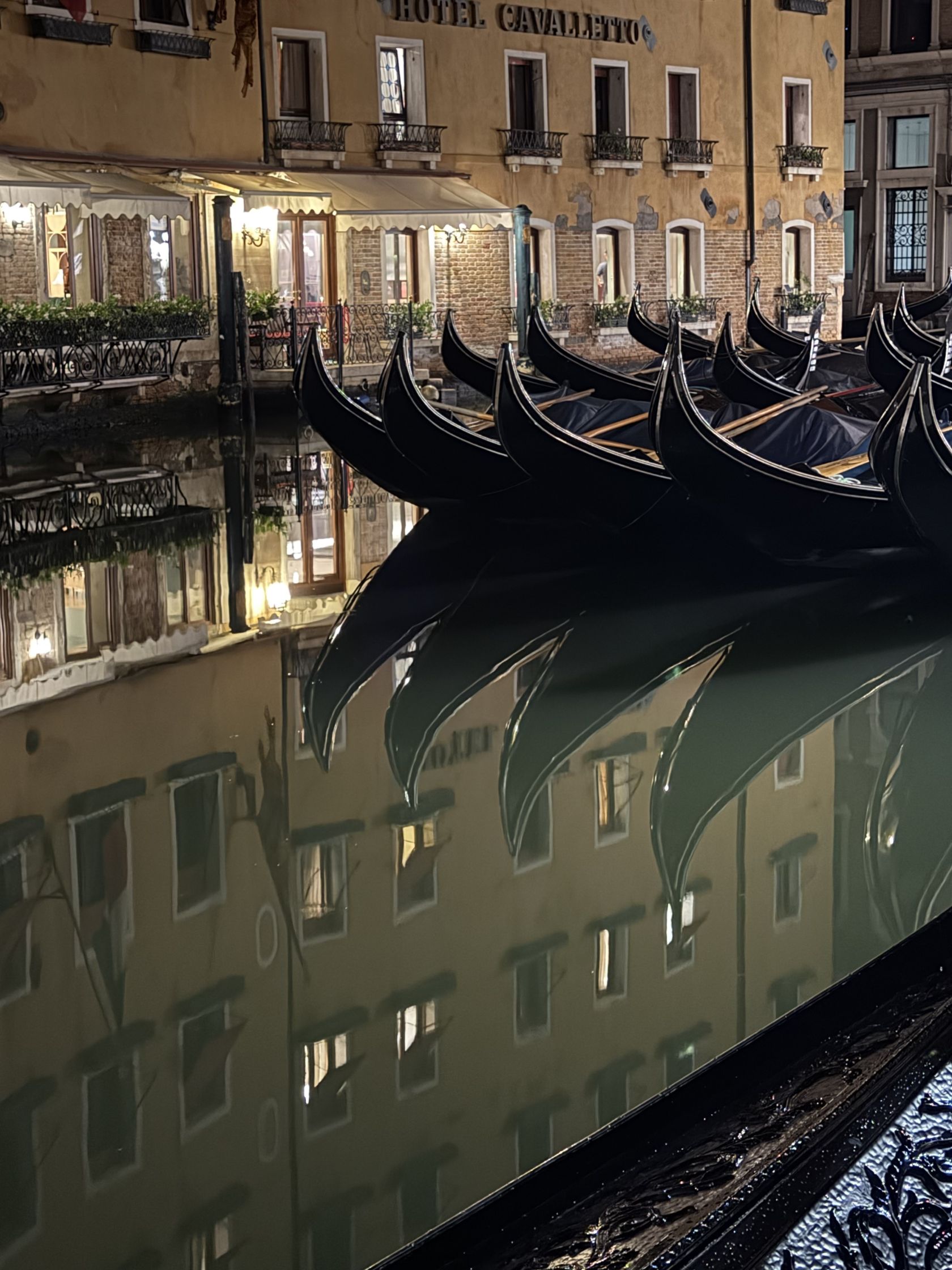
There is something almost magical about travel.
Somewhere between closing the door at home and taking that first breath of unfamiliar air, our usual way of seeing begins to shift. Colours seem brighter. Architecture suddenly matters. We notice the shape of a chair in a café, voices coming from a market, the way sunlight hits an old wall in the late afternoon.
We start looking again.
Perhaps this is why artists have always travelled. A new place interrupts our visual habits. Different light, architecture, food, sounds and ways of living force the mind out of autopilot — and for a creative person, that is an extraordinary gift.
As an artist and educator, I think about this constantly. Creativity rarely begins with knowing how to hold a brush or shape a piece of clay. It begins much earlier — with curiosity and attention.
In familiar surroundings, our brains become wonderfully efficient. We know the road, the supermarket, the view from the window. Gradually, we stop examining them closely.
Travel interrupts this.
Suddenly breakfast happens differently. People speak with their hands differently. Streets have unfamiliar proportions. Light has another temperature. Even time seems to move at another speed.
And sometimes inspiration comes from something apparently insignificant: a faded shop sign, an unexpected combination of colours, a ceramic plate in a tiny restaurant or a sentence overheard at the next table.
You simply never know where inspiration is hiding.
This summer, Venice offered the perfect reminder.
I travelled there for the 61st International Art Exhibition of La Biennale di Venezia, In Minor Keys, conceived by the late curator Koyo Kouoh and unfolding across the Giardini, the Arsenale and locations throughout the city until 22 November 2026.
But during the Biennale, Venice does not simply host an exhibition.
The city becomes part of it.
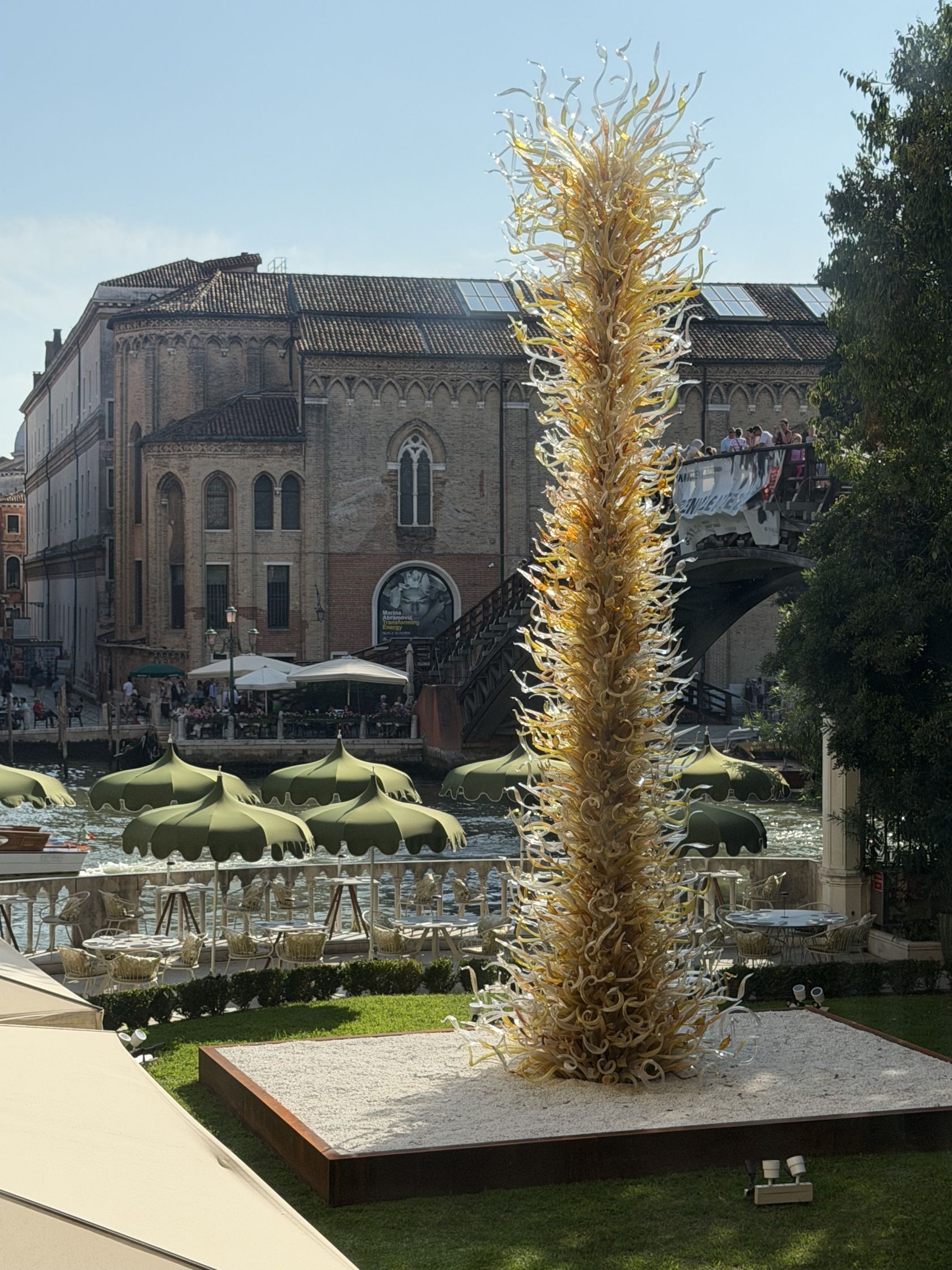
Nordic Countries Pavilion — Finland, Norway & Sweden. How Many Angels Can Dance on the Head of a Pin? brings together surreal sculptures and installations by Klara Kristalova, Benjamin Orlow and Tori Wrånes, transforming the pavilion into a strange Nordic landscape where human, animal and mythical forms seem to merge.
You leave a pavilion and another composition is already waiting outside: green water against faded pink plaster, laundry moving between buildings, reflections breaking apart as a boat passes, centuries-old stone worn smooth by millions of footsteps.
After several hours surrounded by art, you begin looking at everything differently.
And that, perhaps, is the real gift of travelling creatively.
You don’t have to return with a finished painting or an enormous revelation. You might return with a colour combination. A photograph. A sentence written quickly in your phone. An idea for a ceramic form.
Or simply with the feeling that the world has become interesting again.
Museums matter. Streets matter. Nature matters. Architecture matters. Travelling matters. Meeting people who make things differently from us matters.
Every new experience quietly expands the visual and emotional library from which creativity grows.
So travel when you can. Take the sketchbook. Walk into the strange little gallery without knowing what is inside. Look at the buildings. Try unfamiliar food. Watch how people dress. Pay attention to the light.
Most importantly, allow yourself to be curious.
Travel does not hand us inspiration ready-made.
It simply wakes us up enough to recognise it.
And sometimes a little geography is all creativity needs.
Julia Gurchenkova, MFA, is an artist, curator and founder of AAA in the Algarve. Travel is an essential part of her creative practice — a way of discovering new artists, places and ways of seeing. As a special correspondent for The Portugal News, she shares these encounters across Europe.
Follow her visual travel diaries on Instagram @uolja.
Main image caption: Belgian Pavilion — Miet Warlop’s IT NEVER SSST, a powerful live performance exploring language and its evolution. Words become physical objects — carried, moved, broken and reconstructed — transforming communication into movement, rhythm and emotion.
Set The Portugal News as your preferred source for news on Google
 Add as a preferred source on Google






 Portugal Handbook
 English
 Nederlands
 Deutsch
 Français
 Español
 Italiano
 Svenska
 Pусский
 中文
中文 Türkçe
 Português
 Czech
Czech Hungarian
 Polski
 عربي
عربي Suomi
Suomi עִברִית
 Português (Brasil)
Follow us on social media