


Maybe your mind wanders to far flung beaches or hip international cities. And while budget and CO2 footprint could influence your decision, many are also starting to take overtourism into consideration. And we should. One thing is feeling weary of stumbling over other tourists and having an eye poked out by a selfie stick; another is the social responsibility we carry as we choose our destination.
But does Portugal receive too many tourists? It depends on how you look at it. In 2025, Portugal had a record-breaking revenue projection of around €62.7 billion, driven by an increase in guests and overnight stays. In July alone, 3.4 million guests visited Portugal, and there were 9.4 million overnight stays in various accommodations. The sector is a major economic driver, contributing significantly to GDP (over 20%) and jobs (some numbers indicate 1.2 million jobs), with robust domestic and international spending continuing.
Great for the national economy, but not necessarily for the locals. When too many tourists flood a destination, infrastructure, housing, and public space come under pressure. The consequences can include overcrowding, rising rents, strained resources, and a decline in the quality of life for residents. In Lisbon, entire neighbourhoods like Alfama are now avoided by locals. Shops close to make way for hotels, residents are pushed out of the city centre, and the historic heart of the city is starting to resemble a theme park of tuk-tuks, souvenir stores, and tourist-only restaurants. What once made Lisbon, Lisbon, is slowly disappearing — a familiar and worrying pattern across many European cities.
The road less travelled
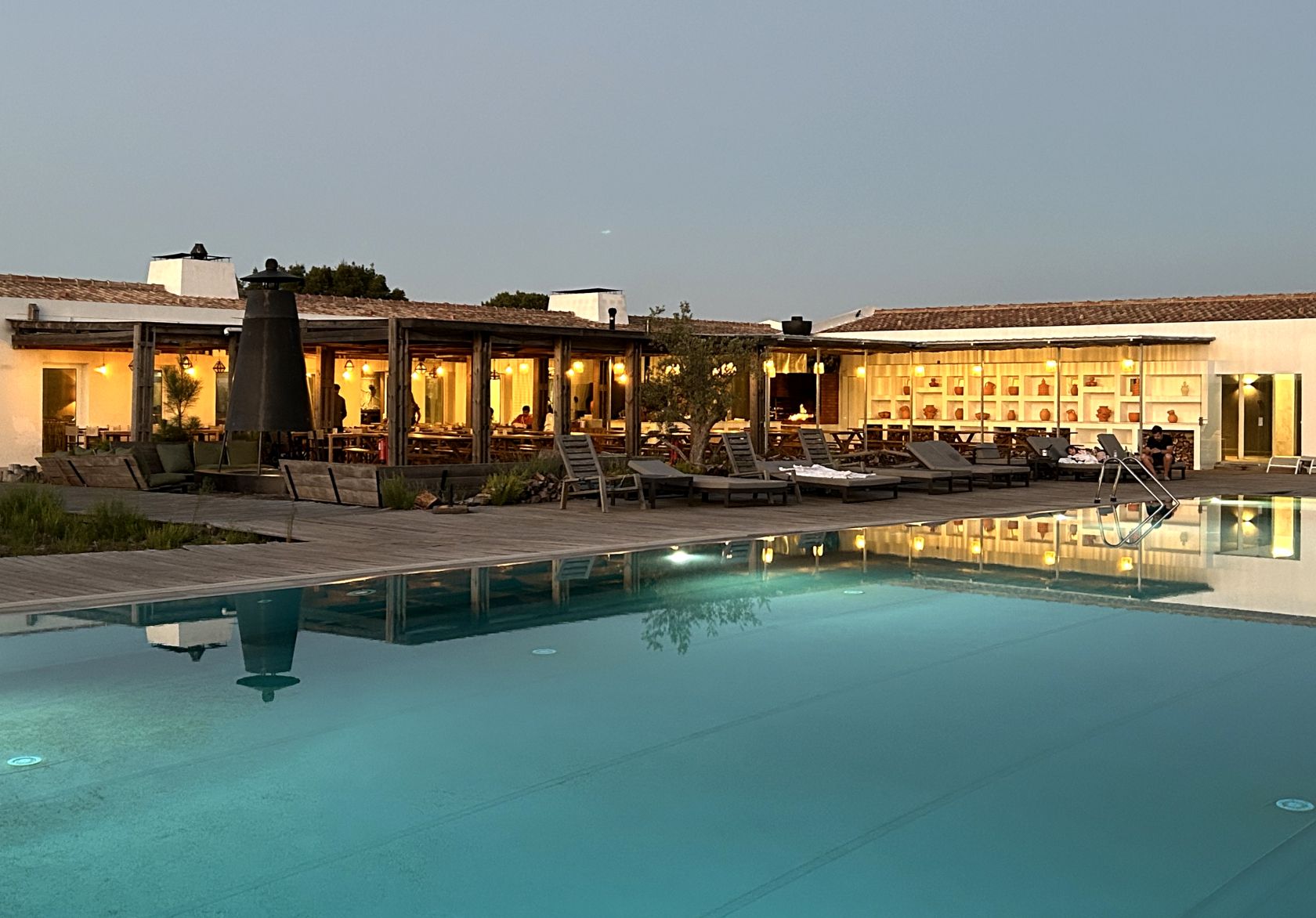
So how do we keep tourism sustainable? One solution is to attract visitors to other parts of the country. An example of these efforts to make a positive impact through tourism — combined with an old dream of being a gardener — we find in the thinly populated countryside of Alentejo, more precisely in São Teotónio. Here, Pedro Franca Pinto opened Craveiral Farmhouse in 2018. “The vision at Craveiral is to regenerate the region through the circular economy and connect farming, gastronomy, hospitality and nature experiences to the guests and community. Our value of sustainability is not just environmental but also financial and social,” he told me over lunch with his partner and his dogs when I visited. “I always wanted to be a gardener, but my parents wanted me to become a lawyer, so I did. I guess this place represents my late come rebellion,” he says in a hushed voice, sending a glance back to his mom knitting in the shade — a lovely woman who later shows me photos of the grandkids and her Facebook page where “Prince William” has sent her a friend request. Pinto is an advocate for slow living, not instant gratification (and is that not the whole premise of gardening?), and the long-term attitude and navigating by these values has won Craveiral sustainability awards in both 2024 and 2025.
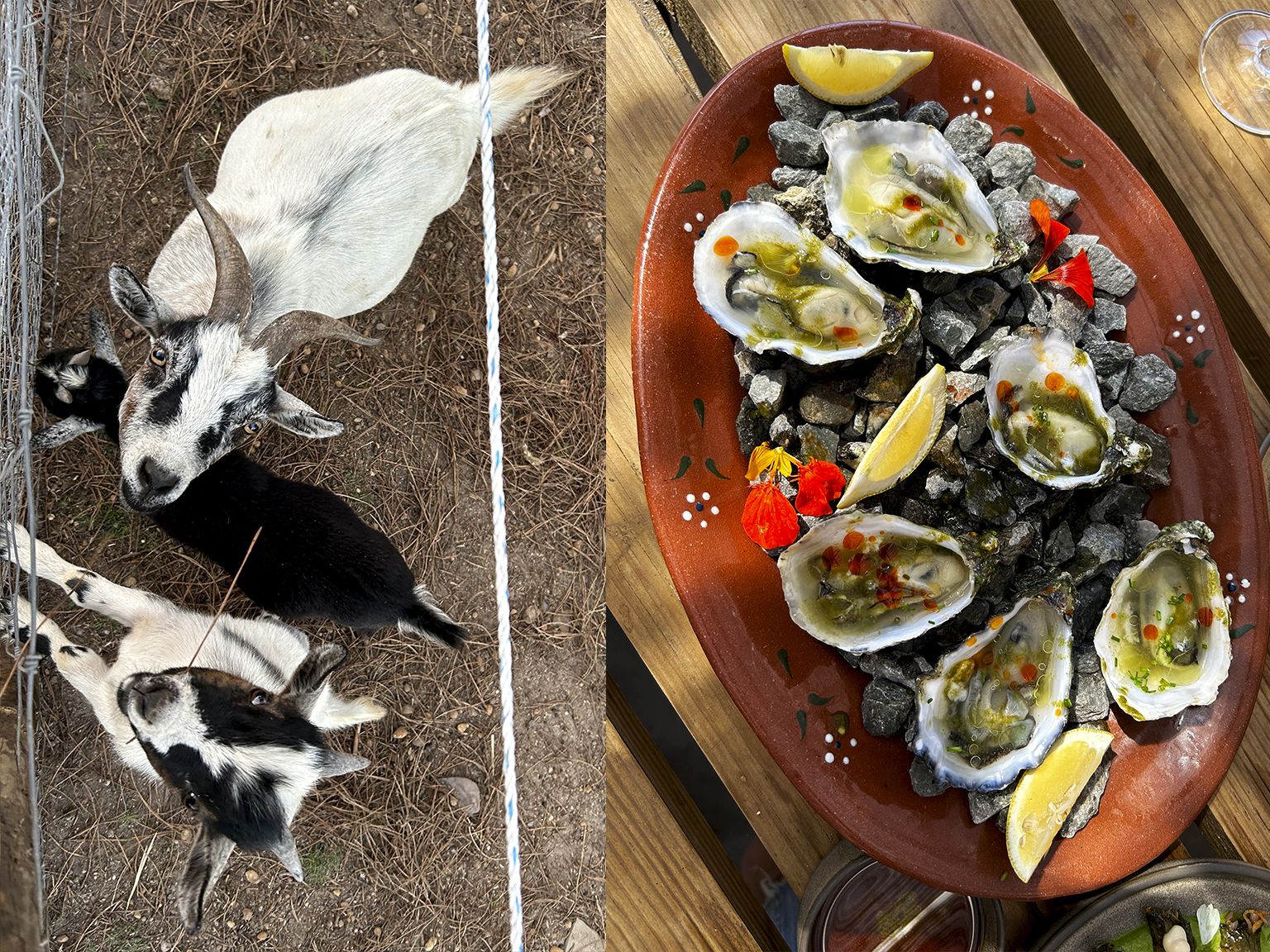
Next to the open outside kitchen, fires roaring in the ovens, fresh oysters and momos meet vegetables from the garden and other delicacies on the long, wooden table. While you might think the momos seem out of place here at the Alentejo farm-to-table concept, there is a good reason for their presence: “I support an integrationfocused view of immigration that recognises and honours our diverse local community, including some of our employees, who have origins in other countries. That is why our menu includes recipes from Nepal,” Pinto shares and explains that they generally promote long-term relationships with their employees, which is why many of them start as trainees and work their way up into management positions.”
Simple farmhouse luxe
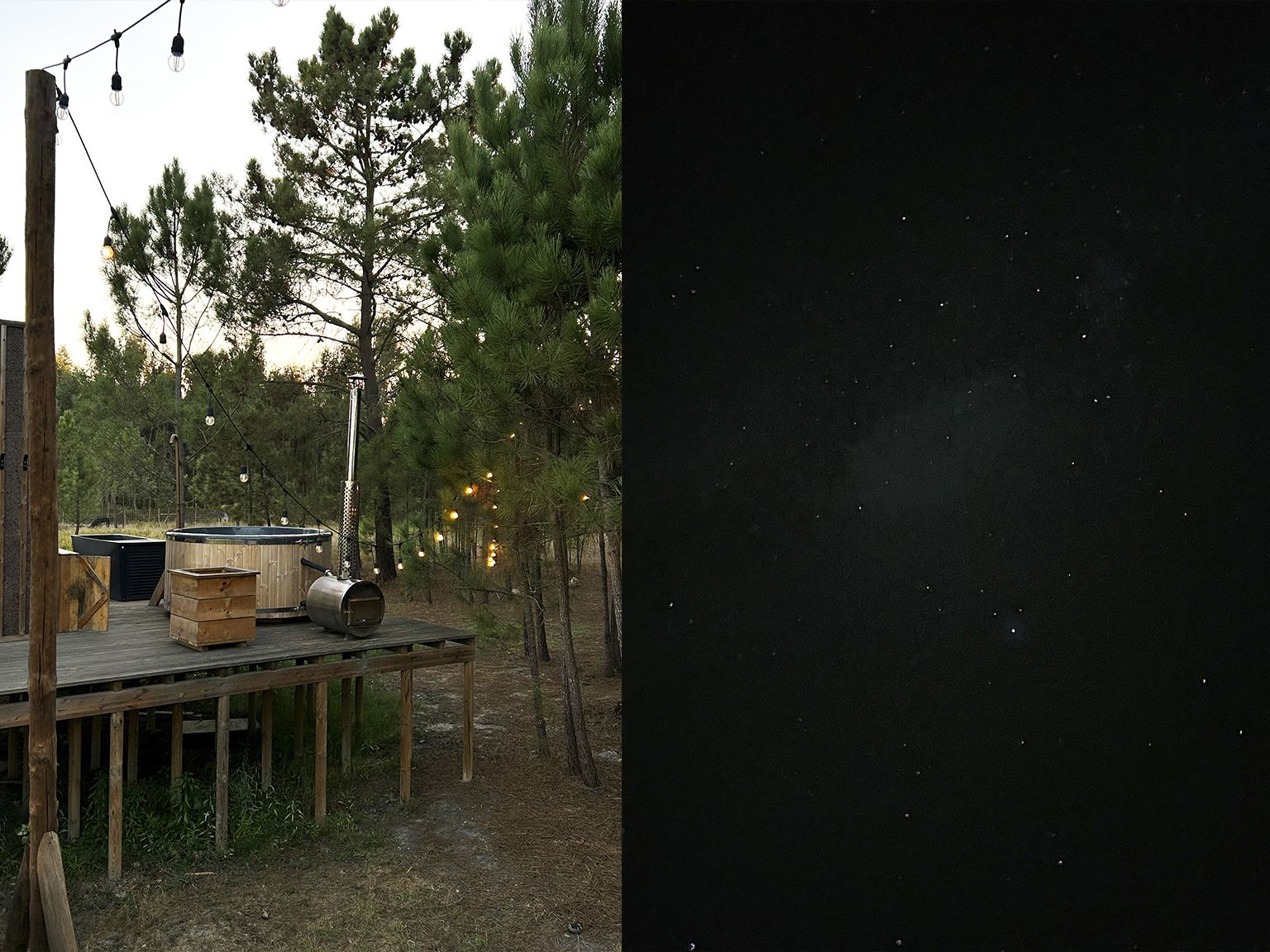
Somewhere between luxury and simplicity, this place is actually succeeding in combining them, adding Portuguese hospitality and authenticity to the mix. It’s comfort that will appeal to many, not looking for a full-blown ‘down in the dirt’ farm holiday, yet Craveiral is one of those places you can really sink into. With amenities like indoor and outdoor pools, a wilderness bath, yoga studio, etc., the place is not stuffy or impersonal, nor dull.
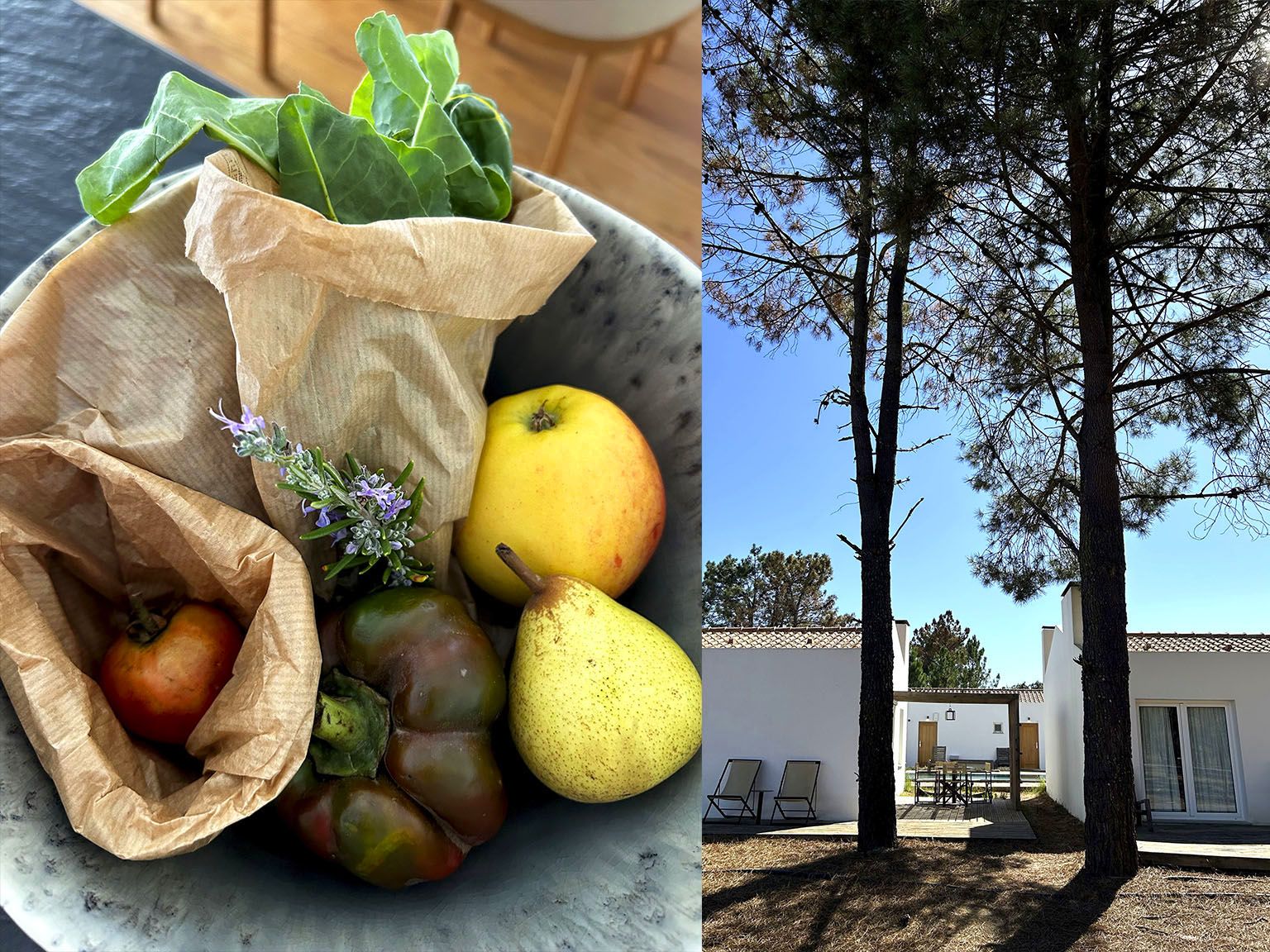
This is perfectly illustrated when I’m shown to one of the 38 houses spread over 9 hectares of land. Quality furniture, a workspace and an open kitchen (think Hästens bed, freestanding cork tub, organic soap bars and art on the walls) meet a view of a big enclosure with a herd of goats lounging around the pine trees, side-eyeing the neighbouring horses and donkeys. This cluster of houses has a private pool, while a bit further down the gravel roads (which I joyfully later explore on one of the bikes available to guests), a bigger project of keeping 300 chickens of four different endangered Portuguese breeds is found, supplying the farmhouse with plenty of eggs. I’m greeted by a bowl of what is currently growing in the chemical-free garden and bread from the wood-fired oven. Guests are free to pick what produce they desire during their stay — the houses all have kitchens — and even to take some home with them when they leave. The idea is that guests should make themselves at home.
Long boardwalks stretch through the grounds, which, apart from the cultivation areas, grow wild. Bees are buzzing in the rosemary bushes, and at night the stars are out, and the crickets are chirping. The peace and quiet feels luxurious, yet there is no risk of boredom as Craveiral offers many activities for adults and children alike, e.g. surf lessons from their beach bar in Praia Carvalhal, 15 minutes away, stand-up paddling, fishing and motocross. There is painting, cooking, cinema nights and much more for kids.
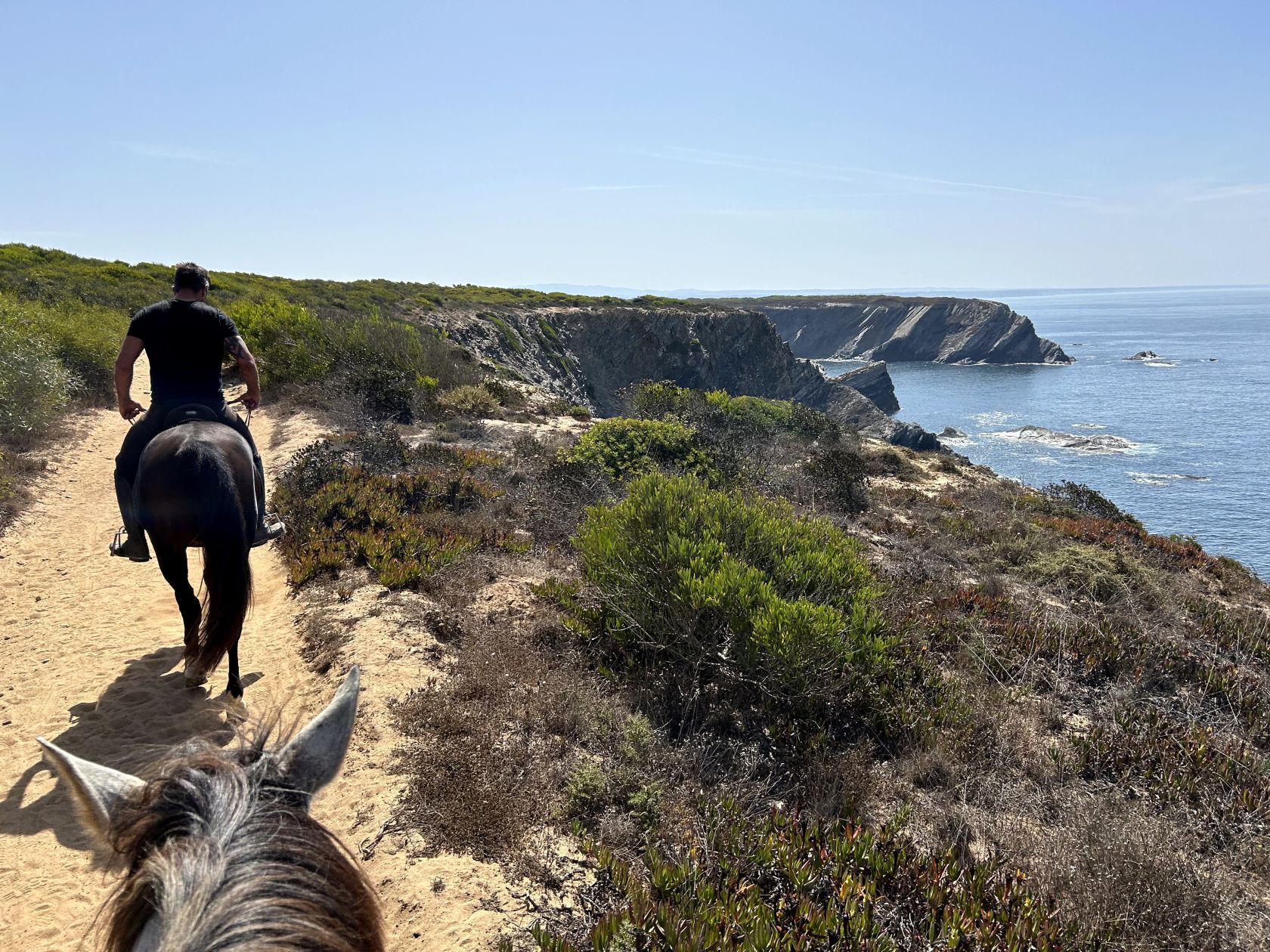
I enjoy the most beautiful horseback ride I’ve ever been on, along the Fisherman’s trail on the Vicentina coast, followed by a delicious wine tasting at the nearby Vicentino Winery (don’t miss the Sauvignon Blanc) and a yoga class at night. This place is a good example that an accommodation can be a destination in its own right, while there are still plenty of experiences in the surrounding area to be explored.
Fact box
- The farm hosts not only holidays and breaks but also events, weddings (they even had an Indian one), yoga retreats and remote work options.
- You can also eat at the restaurant without staying here, or grab a pizza for takeaway.
- Getting here: If you don’t have a car, take the train to Santa Clara - Saboia station and book a 20 min transfer from here. Pets are very welcome. craveiral.pt.








 English
 Nederlands
 Deutsch
 Français
 Español
 Italiano
 Svenska
 Pусский
 中文
中文 Türkçe
 Português
 Polski
 عربي
عربي Suomi
Suomi עִברִית
 Português (Brasil)
Follow us on social media