



With the weather suddenly turning hot, not only are we humans feeling the heat, our pets will too. Recognising the symptoms of heatstroke is critical for their survival, so look out for excessive panting, thick sticky drool, bright red or pale gums, and sudden collapse. Lethargy is quite common in pets in the heat, after all, nobody in their right minds will want to play ‘fetch’ when the sun is blasting down, and my dogs are no different. For example they will sprawl round the house on the cold tiles, like furry rugs laying ready to trip me up. But just be alert to heatstroke symptoms.
Because pets cannot sweat to release heat through their skin like humans do, they display unique symptoms when they are overheating. Their breathing changes to excessive and heavy panting or laboured breathing, which can be rapid and noisy. When a dog is hot, they breathe rapidly, forcing air over their wet tongue, mouth, and lungs. The evaporation of that moisture pulls heat away from the body, lowering their temperature. Check their gums and tongue – they might appear bright red, pale, blue or purple, and drooling may be thick and sticky. They might may be unsteady on their feet and perhaps unwilling to move, and may show signs of being dizzy or confused, have muscle tremors, or suffer seizures.
They may be restless and pacing, digging to find cool soil, and frantically seeking shade. Vomiting or diarrhoea might occur (which may contain blood).

First Response
If your pet displays any heatstroke symptoms - and they are generally common whatever pet you have - move them out of the heat and into a cool, shaded, or air-conditioned area. Cool them down safely by pouring cool (not ice-cold) water over their body. You can place cool, damp towels over their neck, armpits, and groin, or place them in front of a fan. Take them to your vet immediately, and call ahead to let them know you are on your way so they can prepare.
Flat-faced pets, such as pugs, bulldogs or Persian cats, as well as old or overweight pets, are at a significant risk for heatstroke. Small animal pets, such as rats, hamsters and guinea pigs can also suffer from the heat, as can birds and reptiles, and might show stiffness or abnormal changes in skin/tongue colour before losing appetite and becoming lethargic.
Hydration
To certainly lessen the risks of heatstroke, provide clean fresh water in plastic bowls (metal ones conduct and hold the heat), and add moisture to their diet by adding water to their dry food or increasing the moisture that canned food offers. Pet water should ideally be cool or slightly chilled, but avoid making it ice-cold, which could cause stomach cramps or bloating. By all means add a lump or two of ice to refresh the bowl, but don’t dump in loads of ice to make it shockingly cold. Let them find shade, or provide it for them.
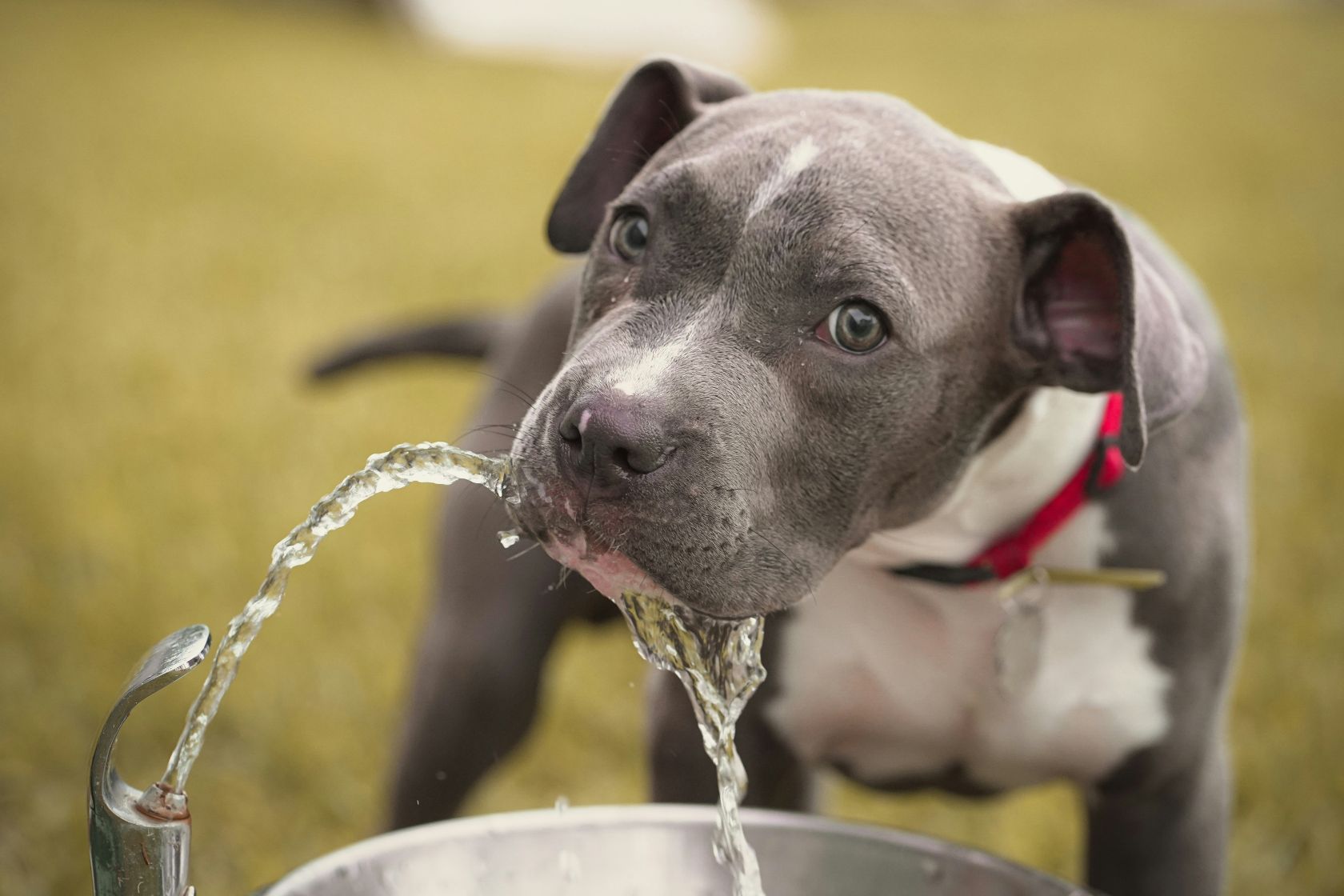
Offer multiple water stations – they may favour one area, but will soon cotton on to another if they are dry and thirsty enough. Try to limit activity to early mornings or late evenings, and always carry a portable or collapsible bowl if travelling with your pet.
Water fountains are good for pets, particularly cats, who seem to be drawn to moving water!
Avoid Hot Pavement
Test the ground with the back of your hand before walking your pet; if it’s too hot for you, it’s too hot for their paws. There is a ‘7-second rule’ you can use to determine if pavement, the road or even artificial grass is too hot for a pet to walk on. Just place the back of your hand flat against the ground for 7 seconds – if it is too hot for your hand, it is certainly too hot for your pet’s sensitive paws. I completely forgot this recently, and couldn’t understand why my dogs didn’t fall on their food as they normally do, until I tested the ground and found it was ‘too hot to handle’ right where they would normally stand for food.
 Add as a preferred source on Google







 Portugal Handbook
 English
 Nederlands
 Deutsch
 Français
 Español
 Italiano
 Svenska
 Pусский
 中文
中文 Türkçe
 Português
 Czech
Czech Hungarian
 Polski
 عربي
عربي Suomi
Suomi עִברִית
 Português (Brasil)
Follow us on social media