


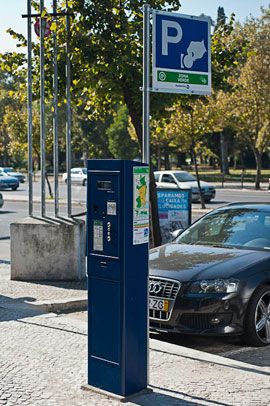
As reported by Lusa, the proposal will be presented at the next private meeting of Lisbon City Council’s executive, and if approved, will increase hourly parking charges by €0.05 and €0.10, depending on the parking zone.
The revision is based on the cumulative rise in Portugal’s Consumer Price Index (CPI) between 2024 and 2025, estimated at 4.82 percent, and is intended to reflect inflation while supporting the financial sustainability of the city’s parking operator, Empresa Municipal de Mobilidade e Estacionamento de Lisboa (EMEL).
Operating costs
Under the proposal, the hourly tariff in green zones would rise from €0.80 to €0.85, yellow zones from €1.60 to €1.70, and brown zones from €2.00 to €2.10.
A new rate of €3.15 per hour is also proposed for black zones, replacing the current €3.00 tariff, although these zones exist only within EMEL’s regulations and have not yet been introduced anywhere in the city.
In accordance with the proposal, signed by Gonçalo Reis, Vice Mayor and councillor responsible for mobility projects across Lisbon, parking fees have remained unchanged for approximately 15 years despite rising operating costs. This document argues that updating tariffs is necessary to maintain a sustainable mobility model and ensure EMEL can continue investing in transport infrastructure and services.
The revenue generated through EMEL supports a range of mobility projects across Lisbon, including the expansion of the city’s Gira public bicycle-sharing network, new cycling infrastructure, the operation of municipal car parks and the management of the capital’s traffic light system.
According to EMEL, the limited-duration parking areas are divided into colour-coded zones based on parking demand, which is a system designed to encourage turnover of parking spaces and improve access for residents, visitors and local businesses.
Green zones cover areas with lower parking pressure, yellow and red zones apply to progressively busier locations, while brown zones are reserved for areas where demand significantly exceeds the availability of parking spaces.
Sustainable urban travel
As reported by ECO, Lisbon has increasingly relied on parking management alongside investments in cycling, public transport and shared mobility as part of its broader strategy to reduce congestion, improve air quality and promote more sustainable urban travel.
The proposal is widely expected to secure approval, as the municipal executive, led by Mayor Carlos Moedas, governs with an absolute majority following the integration of an independent councillor into the PSD/CDS-PP/IL administration, giving the coalition sufficient votes to pass the measure.
If adopted, the revised tariffs will mark the first adjustment to Lisbon’s on-street parking prices since the early 2010s, aligning charges more closely with inflation and the city’s evolving mobility strategy.
 Add as a preferred source on Google







 Portugal Handbook
 English
 Nederlands
 Deutsch
 Français
 Español
 Italiano
 Svenska
 Pусский
 中文
中文 Türkçe
 Português
 Czech
Czech Hungarian
 Polski
 عربي
عربي Suomi
Suomi עִברִית
 Português (Brasil)
Follow us on social media