


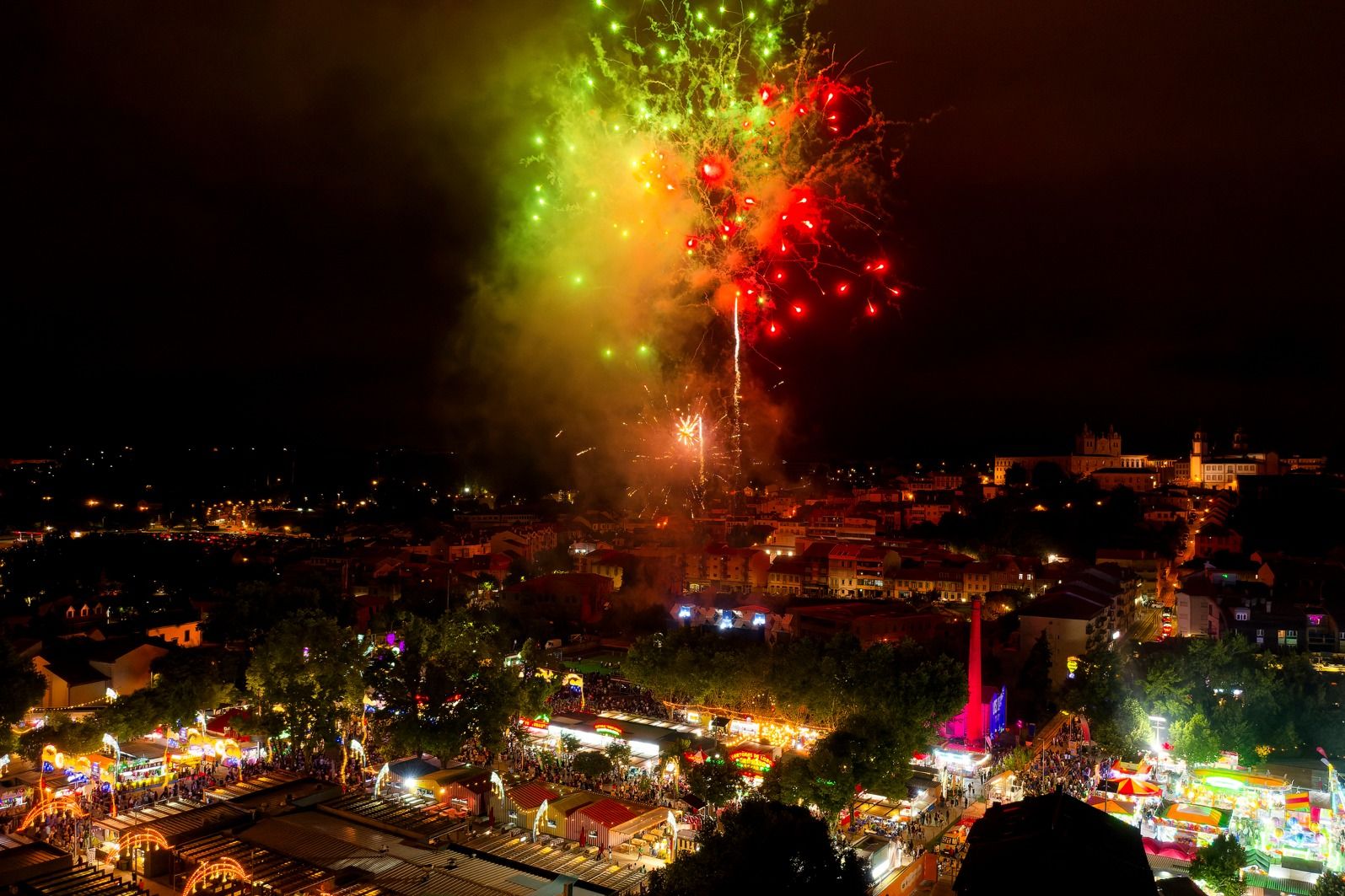
“This space provides emotional comfort for families visiting the São Mateus Fair. They might not even use it, but knowing it exists brings peace of mind; they end up visiting the fair more often and don’t feel inhibited or avoid socialising,” one of the space’s coordinators told the Lusa news agency.
Sandrina Sousa, together with her husband Sérgio Silva, manages the *Sírculos* space, located inside the Multipurpose Pavilion.
The initiative was implemented after they heard, “primarily from the parents” of clients they treat at their clinics, “venting that they don’t visit the São Mateus Fair due to the sensory overload, specifically lights, colours, and sounds, which can trigger meltdowns in autistic children,” for instance.
“In the event of a meltdown, this room is equipped with elements that help calm the mind. People can stay as long as they need, and once they feel better, they go about their day,” Sandrina Sousa added.
This year, *Sírculos* is also offering a sensory kit that “can be lent to families while they visit the São Mateus Fair”, a “sort of first-aid resource for when they realize they are losing” control.
The bag contains “various items used for self-regulation, as well as sensory maps and augmentative and alternative communication boards.”
“This map shows the family, based on the specific sensory sensitivities of the individual, which areas pose the highest risk. For example, if someone is particularly sensitive to sound, the map helps them identify where that stimulus is strongest, allowing them to prepare accordingly,”
Sandrina Sousa explained. This is because the sensory kit also includes noise-blocking earmuffs, a type of headset that “significantly reduces surrounding sounds and noise” for the user.
Augmentative and alternative communication tools, also part of the “kit”, represent this year’s pilot project, which Sirculos aims to expand to the São Mateus Fair starting in 2027.
“Currently, we have the communication boards in two dining areas and in the restrooms of the Multipurpose Pavilion, but it would be ideal to have them everywhere to ensure greater and better integration and comfort for families, argued Sandrina Sousa.
Developed by Sirculos’ team of speech therapists, these “small placards” feature the alphabet and images, “used in any country in the world”, so that a citizen unable to speak, or with speech difficulties, can communicate their needs, especially the most basic ones, such as
ordering food.
“If the stalls and venues display this small placard, it fosters inclusion and facilitates communication with any citizen; this promotes emotional comfort, which is essential for the well-being of both the individual and their family,” she maintained.
While the couple was speaking to the Lusa news agency, a French girl accompanied by her mother visited the room; they “had learned about the space last year but hadn’t needed it then, whereas this time they made use of it.”
“I had a young autistic teenager who was in crisis come in with her mother. As they were leaving, the girl herself came over to express her gratitude that this room exists here at the fair,” Beatriz Fernandes told Lusa.
The speech therapist, who, along with colleagues, is present at the event, also noted that the space has attracted “curiosity, as well as interest from educators and teachers wanting to learn about the concept, take the idea back to their schools, and implement it” in the school
environment.
“What we hear most often here is that schools lack this type of equipment to assist the school community during moments of crisis,” reported Beatriz Fernandes.
Set The Portugal News as your preferred source for news on Google
 Add as a preferred source on Google






 Portugal Handbook
 English
 Nederlands
 Deutsch
 Français
 Español
 Italiano
 Svenska
 Pусский
 中文
中文 Türkçe
 Português
 Czech
Czech Hungarian
 Polski
 عربي
عربي Suomi
Suomi עִברִית
 Português (Brasil)
Follow us on social media