


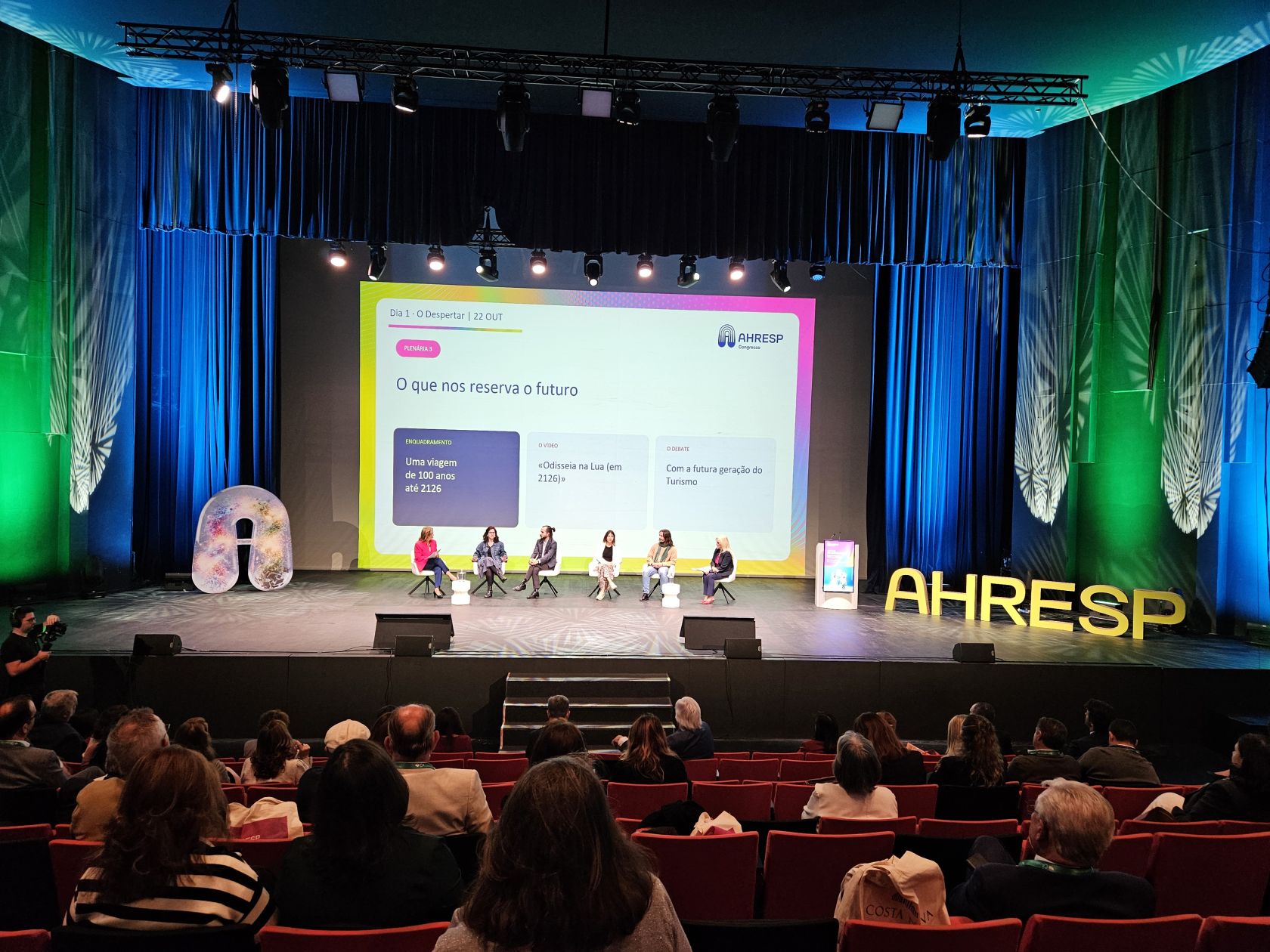
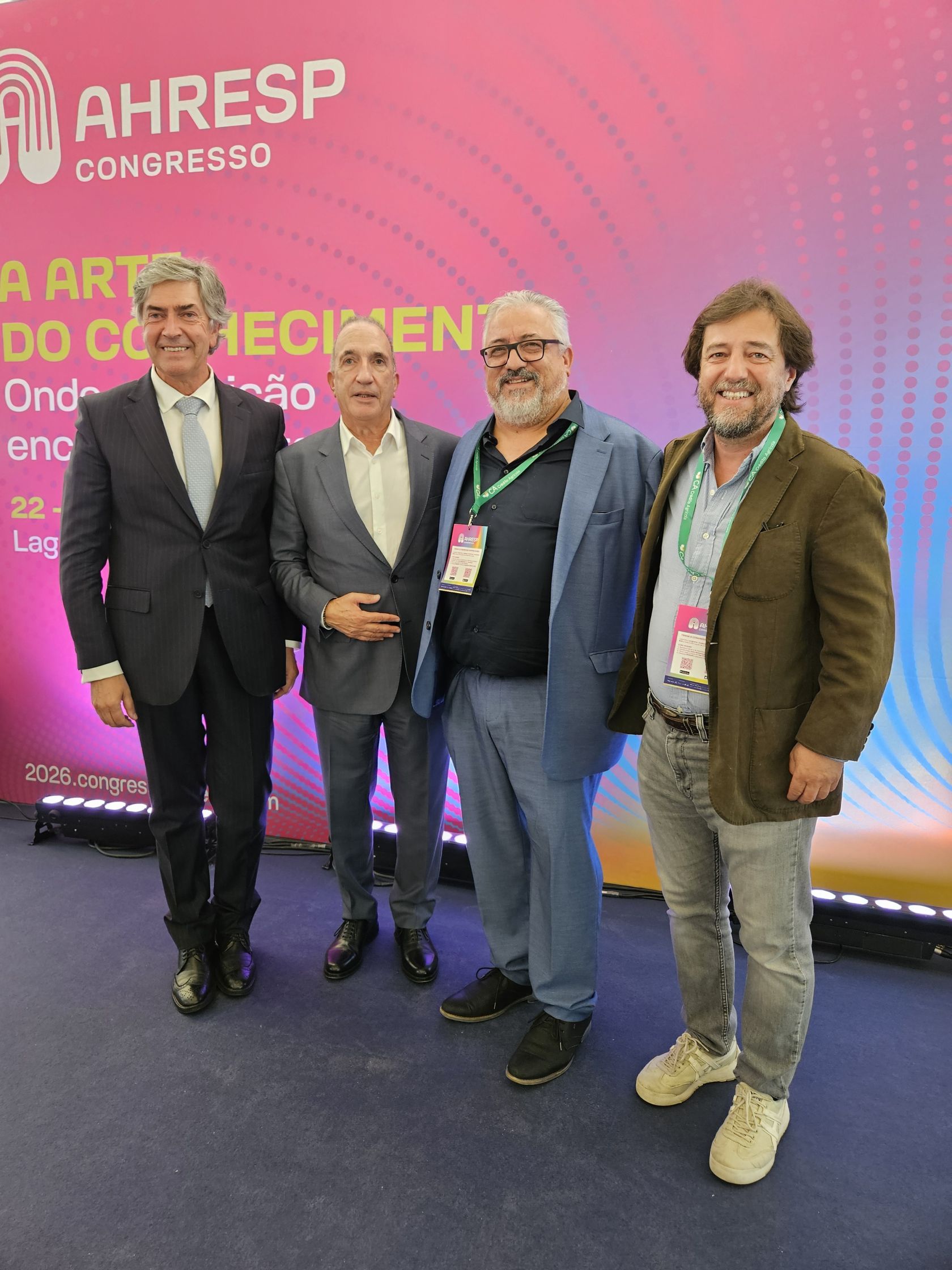
Many years later, while participating in the AHRESP National Congress in the Algarve, I found an industry profoundly different from the one I knew in my youth. Technology is present in practically all areas of activity, from reservations and stock management to communication with customers and the definition of commercial strategies. However, I left the congress with a reinforced conviction: hospitality will continue to be, above all, a human activity.
The theme of the meeting, centred on the relationship between intuition and the algorithm, highlighted an essential question. How far should we allow technology to transform the experience of those who visit us?
Artificial intelligence already makes it possible to analyse preferences, anticipate needs, automate procedures and support management decisions. For many companies, especially small and medium-sized ones, these tools represent an opportunity to improve productivity and reduce administrative tasks that consume time and resources.
But there's a difference between knowing a customer's habits through data and understanding what they really need at any given time. An algorithm can identify previous preferences. An attentive professional can sense a concern, recognise a hesitation, or turn an unexpected situation into a positive experience.
One of the most interesting interventions of the congress brought together young people linked to tourism, who reflected precisely on this relationship between technology and human contact. It was evident that the new generations do not see artificial intelligence as an inevitable threat, but as a tool that must be put at the service of people.
I was also struck by the participation of Portimão's tourism students, whose quality of service and work demonstrated the enormous potential of young Portuguese professionals. The attention to detail, professionalism and dedication that I observed are characteristics that no technological innovation can do without.
The real challenge for companies will not be to choose between workers and machines. It will be to understand how to use technology to free professionals from repetitive tasks, allowing them to dedicate more time to what creates an emotional connection with the customer.
There is also a dimension that we cannot ignore. If we want excellent hospitality, we need to value the professionals in the sector, invest in training and provide conditions that allow us to attract and retain talent.
Technology will continue to evolve and many of the functions we know today will be transformed. But receiving well will continue to require sensitivity, experience, adaptability and genuine interest in people.
Perhaps the greatest opportunity of artificial intelligence is precisely this: to allow hospitality to become more efficient without ceasing to be human.
Because, in the end, what a visitor remembers about Portugal is rarely the computer system that processed his reservation. It is the people who made him feel welcome.
Set The Portugal News as your preferred source for news on Google
 Add as a preferred source on Google


 Portugal Handbook
 English
 Nederlands
 Deutsch
 Français
 Español
 Italiano
 Svenska
 Pусский
 中文
 Türkçe
 Português
 Czech
 Hungarian
 Polski
 عربي
 Suomi
 עִברִית
 Português (Brasil)

Follow us on social media