


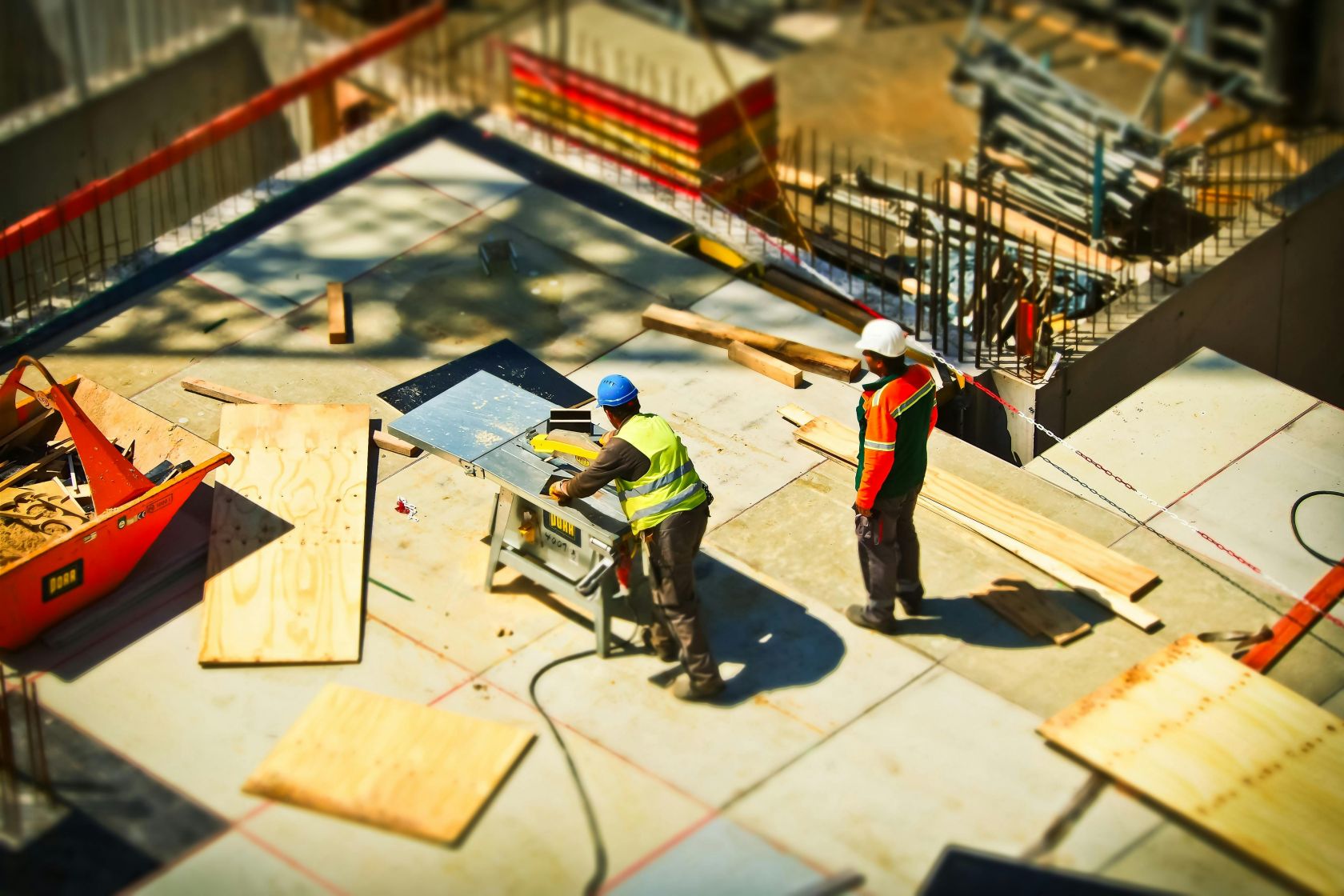
The new legislation that the Government is preparing for modular construction may finally bring about this change, at a time when the country is facing one of the biggest structural challenges in recent decades: the lack of housing.
Portugal continues to build far below what is necessary. The consequence is visible and no longer surprises anyone. Prices per square metre are constantly rising, increasing the difficulty in accessing housing and putting evident pressure on families and companies. The problem is not new, but it has been treated with solutions that often attack only the surface.
Industrialised construction appears here as a real opportunity. It is not a new or experimental technology. It is a model that has already been tested in several European countries, where it allows for reduced construction times, increased project predictability and, above all, gains scale. And it is precisely this scale that has been lacking in Portugal.
The announcement of a new regulation is therefore an important signal. By creating framework agreements accessible to the public administration and municipalities, the Government is trying to solve one of the main obstacles in the sector: the difficulty in integrating this type of solution into public contracting and licensing processes. Simplifying, homologating and providing predictability are fundamental steps for the market to work.
But there is a point here that cannot be ignored. The problem has never been the lack of solutions. The problem has been the way the system absorbs them.
Today, many projects remain stuck in lengthy permitting processes, differing interpretations between municipalities, and an absence of clear standards for new construction methodologies. Modular construction, despite its advantages, often ends up being treated as an exception when it should start to be seen as part of the main solution.
If this new legislation succeeds in creating a clear and uniform framework, it could have a much greater impact than meets the eye. It can accelerate projects, reduce indirect costs and, above all, give confidence to investors and promoters to bet on this model.
But for this to happen, it is essential that municipalities follow this change. They are the ones who, at the end of the day, have the power to decide on the projects. And they are also the ones who can turn this opportunity into a real engine for increasing supply or, on the contrary, maintain the current pace of blockage.
Portugal does not just need to build more. You need to build faster, more efficiently, and with a system that works.
Industrialised construction can be part of this answer. This new law can be the first step. But, as in so many other areas, everything will depend on execution.
 Add as a preferred source on Google







 Portugal Handbook
 English
 Nederlands
 Deutsch
 Français
 Español
 Italiano
 Svenska
 Pусский
 中文
中文 Türkçe
 Português
 Czech
Czech Hungarian
 Polski
 عربي
عربي Suomi
Suomi עִברִית
 Português (Brasil)
Follow us on social media