


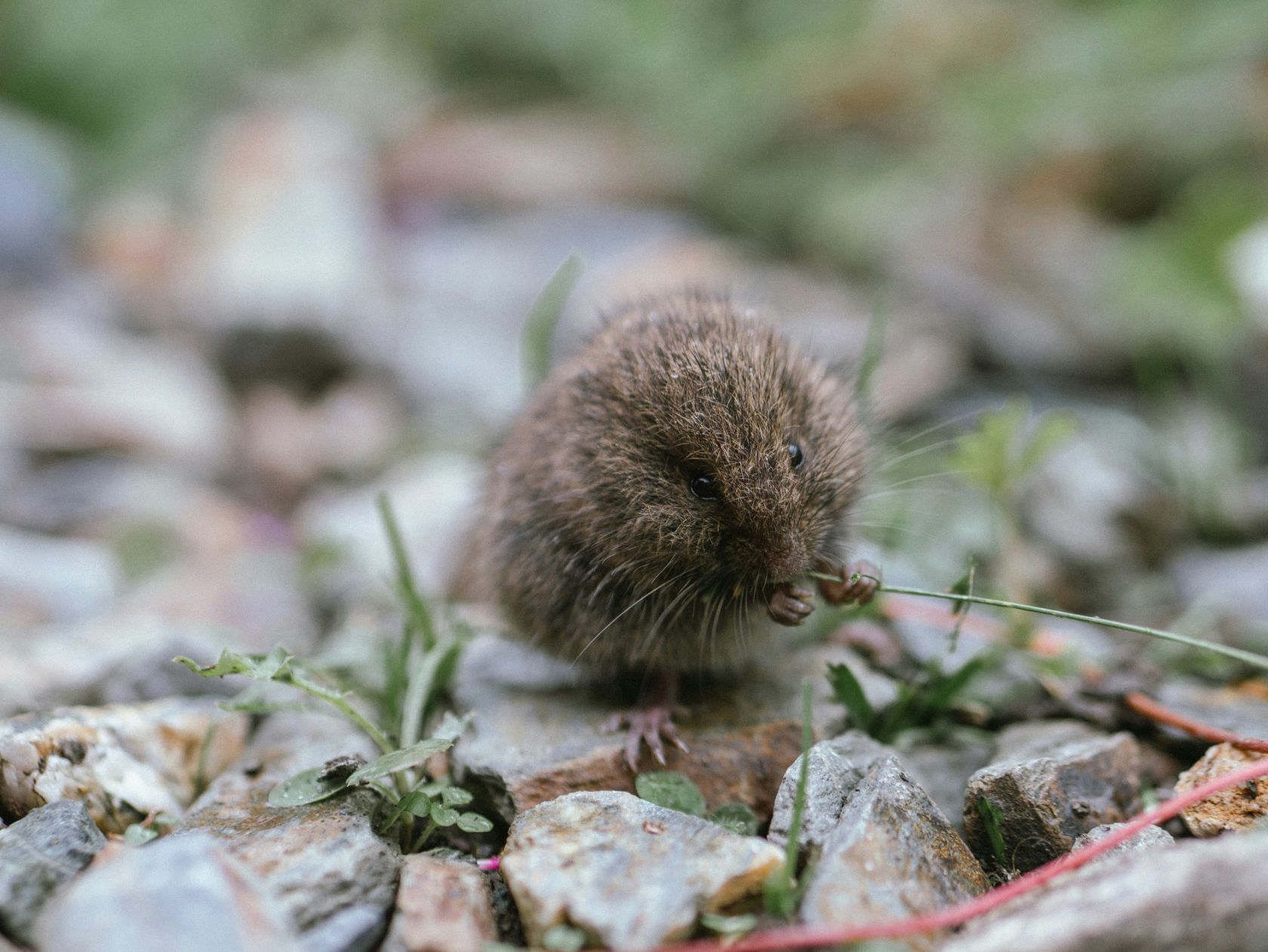
Shrews belong to the fourth most species-diverse mammal family, with over 385 species spread across five continents. Portugal is home to five native species of true shrews, and they live in terrestrial habitats ranging from dense woodlands and rural farmlands to urban gardens. They spend their secretive little lives hidden under leaf litter, within decaying logs, in old stone walls, or just beneath the soil’s surface in burrows and are widely distributed across the country. Because of their elusive, nocturnal nature, there are no exact population counts, but they are widely spread across the country.
Well, who would believe that they are so common? To compensate for their exceptionally short lifespans of less than 18 months in the wild, they reproduce rapidly: females have 2 to 4 litters per breeding season, with each litter producing between 2 and 10 babies. The majority of shrew species are highly promiscuous - females routinely mate with multiple males during a single breeding season, which often results in each litter having multiple fathers.
Shrews are tiny - and are some of the smallest mammals on earth, measuring anywhere from 3.5 to 15 cm in total length and weighing between 1.5 and 100 grams. That’s about the weight of a pack of playing cards! Because the babies have poor vision, they will form a line by hanging onto the tail of the sibling in front of them, creating a long conga line to follow their mother. With super-fast metabolisms, both babies and adults need to eat three times their body weight daily, and can literally drop dead from starvation within a few hours if they don’t. And here’s a fact - while most baby mammals have baby teeth that they lose over time, shrews lose their baby teeth while still in their mother’s womb, so they are born with a full set of permanent adult teeth ready to bite into anything.
Insectivores v Omnivores
They resemble mice at a quick glance, but are really more closely related to moles and hedgehogs. They are insectivores, eating such things as spiders, centipedes, and worms. Mice are rodents, and are opportunistic omnivores that eat almost anything, mostly thriving on grains, seeds, and fruits. If you come across a shrew, you will see they have a notably longer, pointier snout compared to mice, and while mice have large, obvious ears and big eyes, shrews have tiny, nearly hidden ears and small, beady eyes. Teeth are different, too. Mice have chisel-like front teeth, whereas shrews have sharp, spiky teeth.
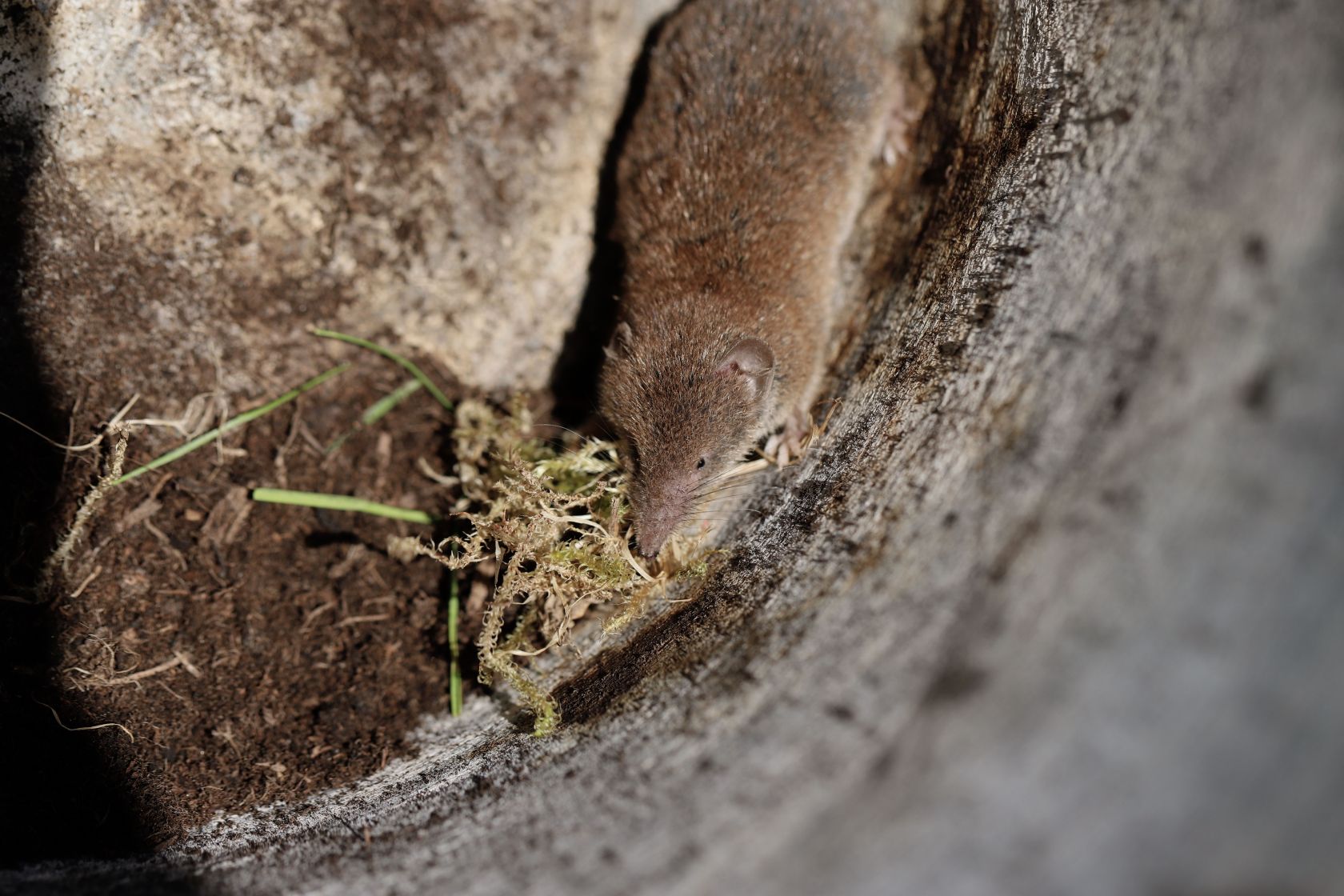
Taming of the Shrew
Driven by their fast metabolism, these solitary predators have a reputation for fierce, territorial, and aggressive dispositions, and William Shakespeare justly titled his play ‘The Taming of the Shrew’ as a direct comparison of a fierce, ill-tempered woman to a likewise fierce, ill-tempered shrew!
Tiny vampires
Some shrew species are among the very few venomous mammals on the planet, having grooves in their teeth to deliver a paralysing venom for hunting prey larger than themselves. This toxic, paralytic venom is produced directly by their specialised salivary glands. Shrew venom is generally harmless to us, and a bite will only cause localised pain, swelling, and burning in humans. They don’t hibernate in the winter, but to save energy and survive the cold, some shrews undergo a biological transformation where their skull, brain, and internal organs actually physically shrink. Ancient Romans and medieval Europeans believed shrews were dangerously venomous, cursed by the Devil, and even capable of causing paralysis in livestock by mere contact.
Stinky
Shrews smell bad too, because they produce a foul, musky secretion from specialised skin glands that serves as a vital defence mechanism. Like skunks, they release this foul scent to mark their territory, leave scent trails, and ward off predators.
Shrews are generally not considered true pests, but rather beneficial, insect-eating mammals. However, their voracious appetites, digging habits, and pungent smell can sometimes make them a nuisance in yards or accidental intruders in homes.
 Add as a preferred source on Google







 Portugal Handbook
 English
 Nederlands
 Deutsch
 Français
 Español
 Italiano
 Svenska
 Pусский
 中文
中文 Türkçe
 Português
 Czech
Czech Hungarian
 Polski
 عربي
عربي Suomi
Suomi עִברִית
 Português (Brasil)
Follow us on social media