


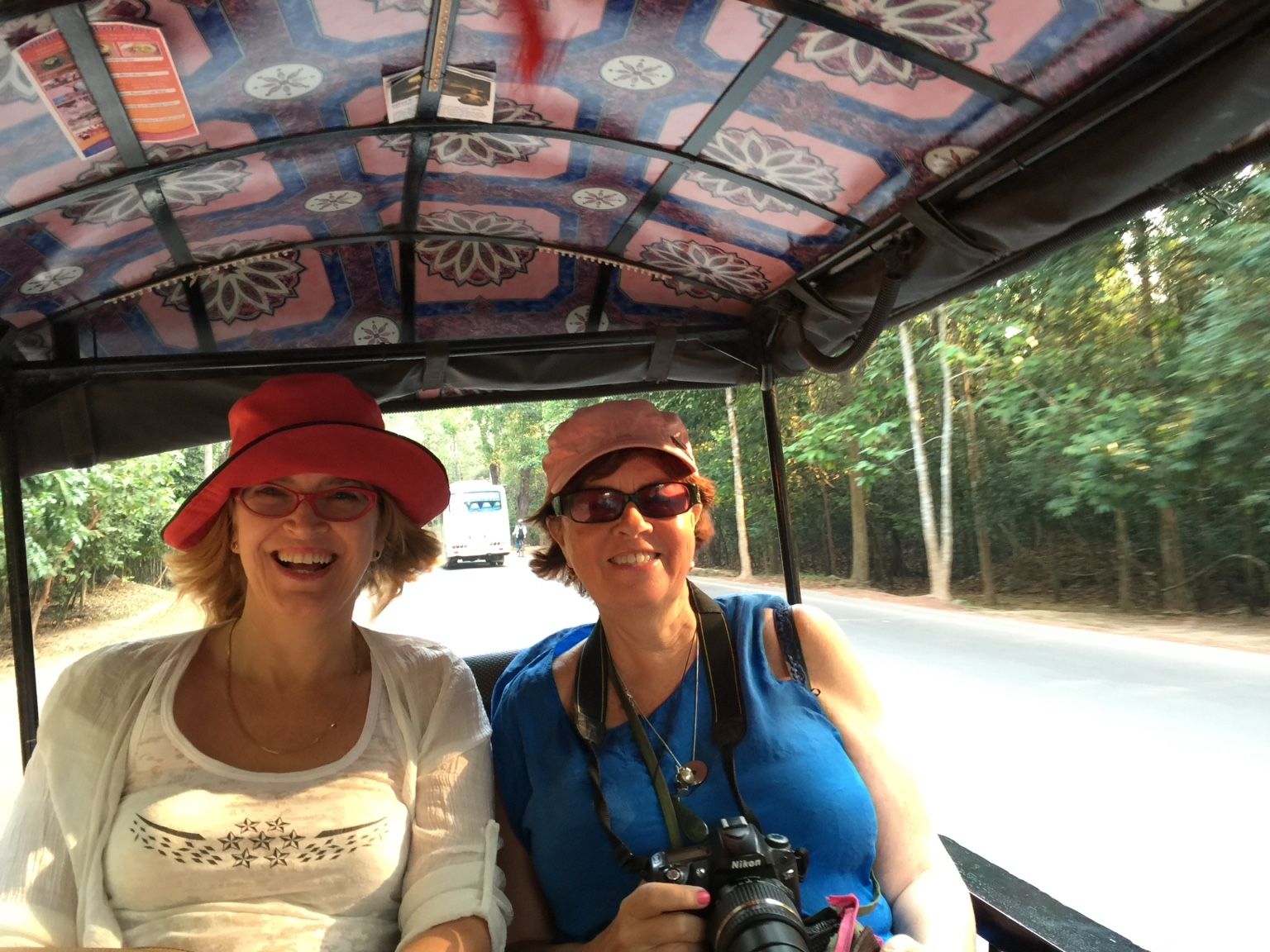
The tuk-tuk rattled along the road, hot air catching the strands of hair beneath my hat, my camera in one hand and a notebook awkwardly balanced on my knee as I tried to capture the world rushing past. A flash of saffron robe. Dust rising from the roadside. Smoke curling from somewhere I could not see. The scent of cooking, petrol and something sweet drifting briefly through the open sides before disappearing behind us.
Cambodia was coming at me faster than I could take it in. I remember the heat most of all, the way it settled on skin, fabric and ancient temple walls.
It was there, on a five-day writing retreat led by Australian writer and mentor Jan Cornall of Writer’s Journey, that I began to learn how to write. Not at a desk, not by thinking harder about plot or character, but by being asked to enter a world more fully: the sharpness of lime on the tongue, silk slipping coolly through my fingers, the scent rising from a market in the afternoon heat, the sudden quiet inside a temple after the noise of the road. I thought I was gathering material for a novel. Looking back now, I can see something else was happening.
My world was full of work, ideas, responsibility and plans. I knew how to think, achieve and keep moving. But somewhere within all that movement, another part of me had grown still. The sensual, imaginative woman in me, who responded instinctively to beauty, music, colour, texture and place, had gone quiet, waiting for me to notice her again.
And there, in Cambodia, she began to wake up.
Something happens when we return to our senses. Thought loosens its grip. The world draws closer. You cannot stand beneath the Cambodian sun and experience it as an idea. You cannot reason your way through the scent of lemongrass crushed beneath a knife or the coolness of shadow after the heat of the road. You have to be there. You have to feel it.
Slowly, I learnt this was true of writing too. If I wanted a reader to enter a character’s world, I first had to enter it myself, to know how the air touched her, what scent reached her before she saw its source, and what a particular fabric stirred in her. And then I had to go further, because the senses do not stop at the surface of things.
A smell can carry us back decades. A room can make the body tighten before the mind knows why. A piece of music can reopen a longing we believed we had put away. The senses take us into memory, and memory into feeling.
That was where The Red Silk Dress truly began: with learning to feel the world again.
Years later, after I had finished the book and moved to Portugal, I met Joana Nobre at TEDx Marvila in Lisbon, where we were both speakers. Joana, a Portuguese scent specialist, spoke about scent, memory and emotion; I spoke about purpose as the algorithm for innovation. Later, over a glass of wine at the Gulbenkian Art Gallery, I asked whether she would read The Red Silk Dress.
Video: A short reading from The Red Silk Dress, exploring scent, memory and the senses.
When her endorsement arrived, there were four words I knew I wanted on the front cover: “Elegant, immersive, quietly daring.”
It is immersive that I keep returning to.
Joana could not have known about the notebooks on Cambodian tuk-tuks or the sensory fragments I had spent years learning to collect. Yet here was a woman whose work is rooted in smell, one of our most evocative senses, who had recognised what I had tried to create: a world that could be entered, not simply read.
Australian journalist and writer Diana Plater, author of Whale Rock, was among the people I met on that retreat. She had travelled those same roads and felt that same heat. After reading my finished novel, she wrote that it transported her back to Cambodia, that she could almost smell the spices and feel the heat on her skin. When I read those words, something came full circle. The details we had gathered were no longer notes in a journal. They had become atmosphere, emotion, memory, a world another person could enter.
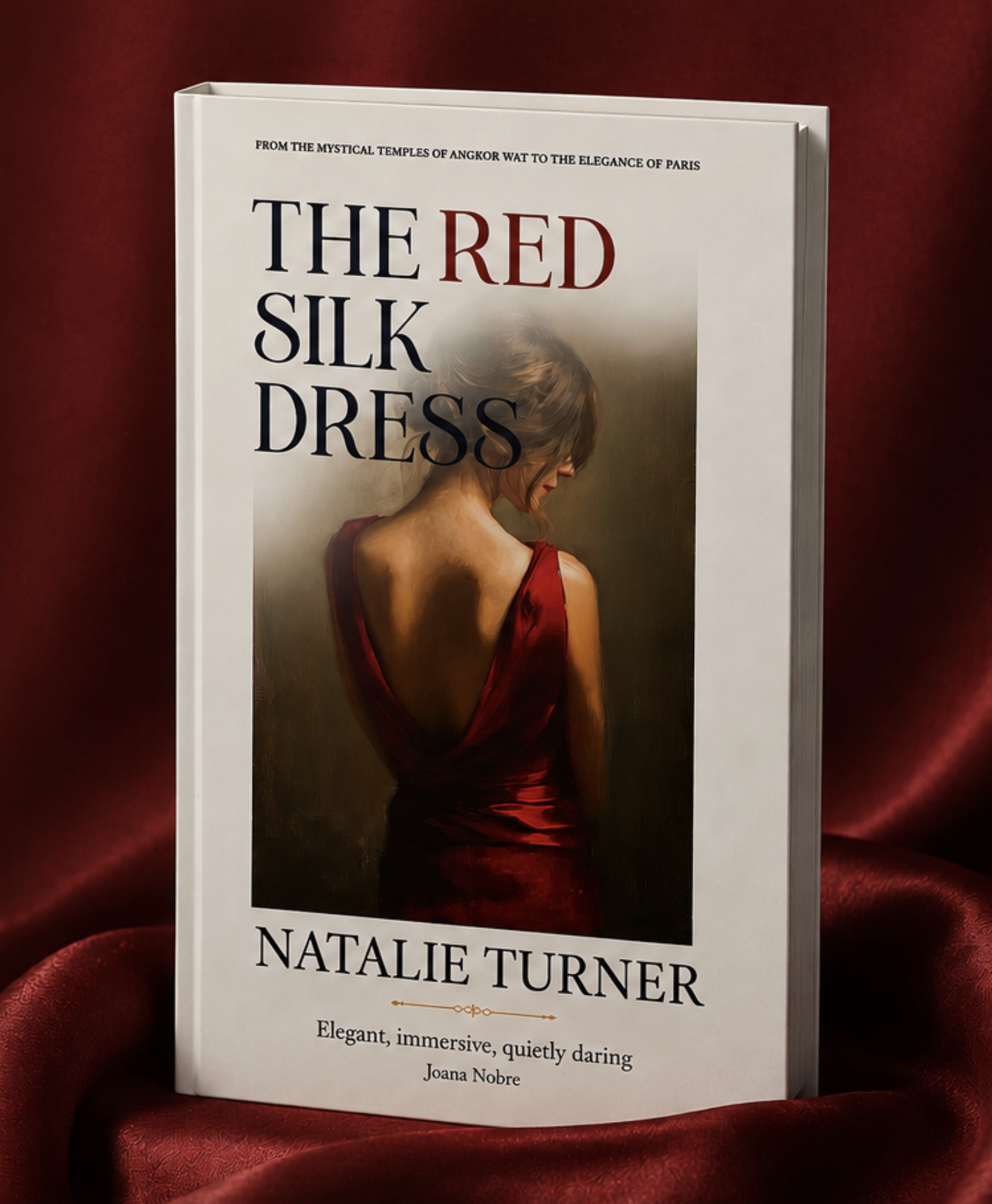
I thought I had gone to Cambodia to learn to write. I did. But I was also learning to notice what moved and nourished me, and to understand that sensuality was not merely pleasure and beauty was not frivolous. They were ways of becoming present again.
As I began to wake, Claudette, the woman at the heart of my story, began to wake too.
She is not me, and her story is not mine. But I knew something of what it meant for a part of oneself to go quiet, of the strange ache of longing for a life you could not yet name, and of the distance between the person we have learned to be and the person inside us asking to emerge.
The more I learned to see, smell, taste, touch and feel life again, the more alive both the woman on the page and the woman writing her became.
Eleven years later, I can see something I could not see then. I thought I was trying to capture the world as it rushed past the open sides of a tuk-tuk, raising my camera and scribbling in my notebook, afraid I might miss something.
In truth, the world was capturing me, drawing me back into it and, slowly and quietly, back into myself.
Somewhere between what I noticed and what I felt, a story began to live.
Join Natalie at the Red Silk Salon at Howard’s Folly in Estremoz on 26 September.
To read more of Natalie’s columns, discover The Red Silk Dress and step further into the world of Red Silk, visit
www.theredsilkdress.com
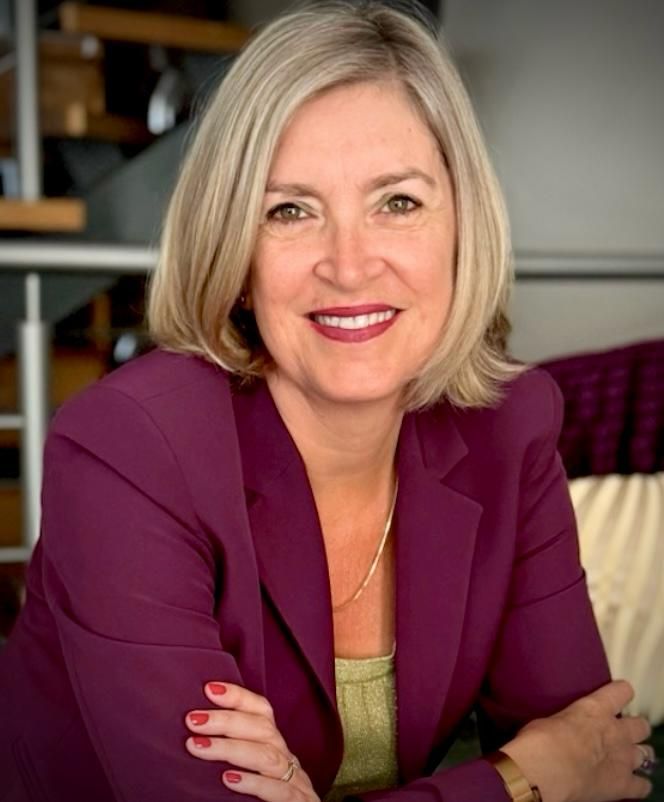
About Natalie Turner
Natalie Turner is a British author, columnist, cultural curator and leadership adviser based in Lisbon. Her debut novel, The Red Silk Dress, explores longing, identity and awakening across Cambodia, Malaysia and Paris. She is also the author of the award-winning book Yes, You Can Innovate, creator of Red Silk and founder of Women Who Lead.
Main image: Natalie Turner with Australian journalist and author of Whale Rock, Diana Plater, travelling through Cambodia during the 2015 writing retreat.
Set The Portugal News as your preferred source for news on Google
 Add as a preferred source on Google






 Portugal Handbook
 English
 Nederlands
 Deutsch
 Français
 Español
 Italiano
 Svenska
 Pусский
 中文
中文 Türkçe
 Português
 Czech
Czech Hungarian
 Polski
 عربي
عربي Suomi
Suomi עִברִית
 Português (Brasil)
Follow us on social media