


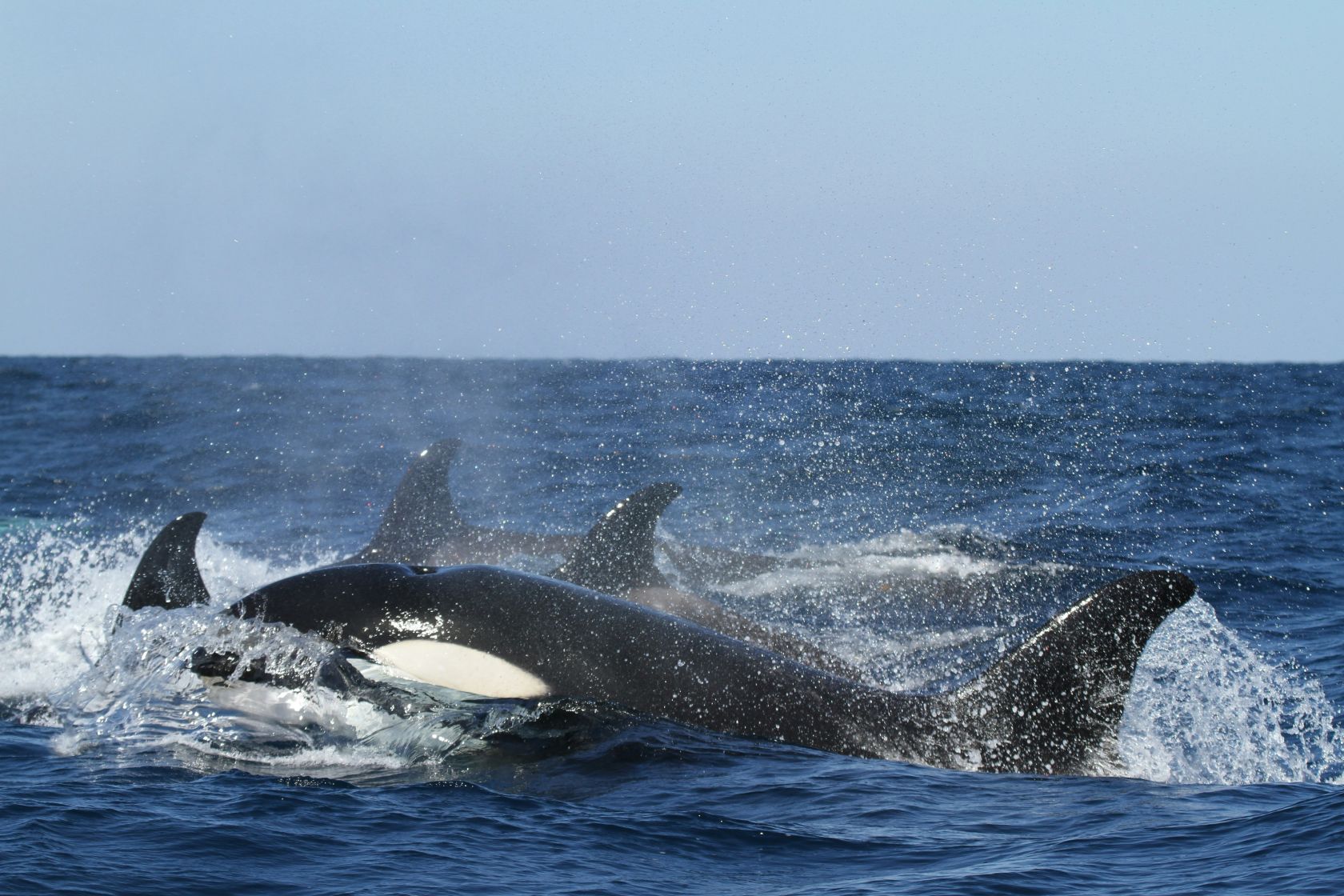
One of the most serious cases involved an attack by these cetaceans, which took place about 90 kilometres southwest of Peniche, and this resulted in the sailboat being sunk.
As stated by SIC notícias, there were five people on board: two adults, one being Portuguese and the other French, and three children, who had to be evacuated onto a life raft. The search-and-rescue operation, which was coordinated from Lisbon, involved a local fishing boat, a Navy frigate, a rescue vessel and an Air Force helicopter, the latter of which took the family to hospital.
This incident is similar to other recent events which have occurred off the Portuguese coast, for example the case of a sailboat that, while sailing towards a regatta in the north of the country, lost its ability to manoeuvre because the animals had destroyed its rudder off Guincho Beach in Cascais.
Even though the most serious incidents occur within national territory, these marine mammals are also active all over the Iberian Peninsula, and there are a large number of sightings in northern Spain.
In the Galician waters, more precisely at the entrance to the Ría de Vigo, two ships suffered damage to their rudders within a period of less than 24 hours. They had to be assisted by Spanish maritime rescue services, which towed the crews safely to the port of Baiona, as Euro Weekly News reported.
The repeated incidents have raised concerns among people in the shipping industry, leading boat tour operators and sailing schools to limit their outings and, as a result, causing a decrease in the number of sailboats travelling along the coast towards southern Portugal or northern Europe.
Even though the damage had been extensive and had caused anxiety among the sailors, the scientific community has ruled out any intention of aggression and rejects the idea of deliberate attacks on people.
The biologists from the Institute for Nature Conservation and Forests (ICNF) and the marine wildlife experts have stated that this behaviour, which was first seen in 2020 among just three young individuals, is due to curiosity and a playful nature; it has now been passed on by social learning to approximately half of the Iberian population, which numbers only 40 animals. Vessel rudders attract the animals because they are movable and make noise in the water.
Because of these interactions with a strictly protected and endangered species, the maritime authorities tell sailors to stay calm, reduce speed or halt the vessel, switch off both the engine and the autopilot, and to avoid touching the animals or dropping any objects into the water as they wait for the pod to move away from the sailing area.
 Add as a preferred source on Google







 Portugal Handbook
 English
 Nederlands
 Deutsch
 Français
 Español
 Italiano
 Svenska
 Pусский
 中文
中文 Türkçe
 Português
 Czech
Czech Hungarian
 Polski
 عربي
عربي Suomi
Suomi עִברִית
 Português (Brasil)
Follow us on social media