


Inextricably entwined with this will be the roles intended for the two superpowers in their quest for superiority in the global chain of mining, processing and manufacturing of critical and strategic minerals and the so-called “battery metals”. These head the list of resouces considered to be indispensable to maintaining and enhancing the present lifestyle of humankind.
Batteries and magnets have many applications ranging from wind turbines to electric vehicles and military equipment. The Pentagon considers their use so essential that they are now classified as a priority for warfare equal to bullets and bombs.
During the 21st century, the hegemon of the new digital economy has undoubtedly been the USA. It owes much of this position to the meteoric ascendancy of seven of its major cyber businesses, each of which has grown in power and wealth to a stage whereby each is capable of assuming the status, if not the responsibilities, of a nation state.
By contrast, China has spent these decades in pursuing a patient policy of communal investment in education, technical expertise and research in every aspect of a transformed economy. This employs its own brand of capitalism to challenge the magnitude of America.
Progress has been astonishing. This was demonstrated by the recent carnival of robots participating in sporting events where human Olympic records could be broken and complex tasks performed with ease. What their future capabilities may become when controlled by agents of super-AI is beyond speculation
The Chinese net of influence has been effectively cast across the globe so that it is now the dominant processor of nearly all of the critical minerals surveyed by the International Energy Agency. For example, one half of the planet´s refined copper is produced by Chinese companies which own four of the globe´s largest smelting plants. Chile has the largest reserves of this metal and sells 75% of its unrefined production to China. The Democratic Republic of the Congo, heavily rich in minerals, has contracted to sell one half of its mining production to Chinese markets.
The creation of the BRICS alliance of nations which seeks a practical alternative to the leadership of a greater US enables China to share its technical knowledge and powers with its partners through the cohesion of an infrastructure which includes fibre cables and data centres
The response of a frustrated USA has been to threaten the forced acquisition of territories where coveted resources are thought to be abundant. If it cannot secure its own chain of mineral supplies, an Ormuz style chokehold may result in a situation whereby the most advanced technology lacks the hardware necessary to sustain it. Hence the headlong rush to secure resources and create stockpiles.
The EU is well aware of its vulnerability in this struggle between two enormous rival systems which could relegate its economy to a secondary global status. In response, it has recently introduced the Critical Raw Materials Act which aims to develop the European processing and recycling of extracted minerals to feed its industries thereby reducing dependence on external suppliers.
Within the context of this Act, Portugal can exhibit great potential. It has a long history of mining and possesses considerable reserves with the expertise to make the most of such finite assets.
Copper (with Zinc) is the backbone of the mining industry with an annual revenue in the region of 1.5 billion Euros, a value which is expected to increase by around 12% this year. The Neves Corvo mine in the lower Alentejo produces a relatively steady cash flow to benefit its new Swedish owner – the Boliden Group – and has established customers in telecommunications and construction.
However, it is the vast Pyrites belt which holds great promise of expansion with the development of new workings while the modernisation of traditional mining areas such as Aljustrel, Gavião and Lagoa Salgada (also producing lead, gold and silver) will enhance production by using the latest imported machinery.
Lithium is confined to the north of Portugal where at least six sites have been explored successfully. The most important is at Barroso where revised estimates speak of forty million tonnes of ore being available for exploitation between years 2028 and 2040. Because of environmental controversy, other locations may be delayed but there can be no doubt that pressure from Brussels and a government policy of producing mineral wealth in “the national interest” will break the remaining strands of opposition. With the price of lithium ore now recovering from the doldrums of 2025 to around 20,000 Euros per tonne, Portugal possesses the most valuable hard-rock lithium deposit in Europe.
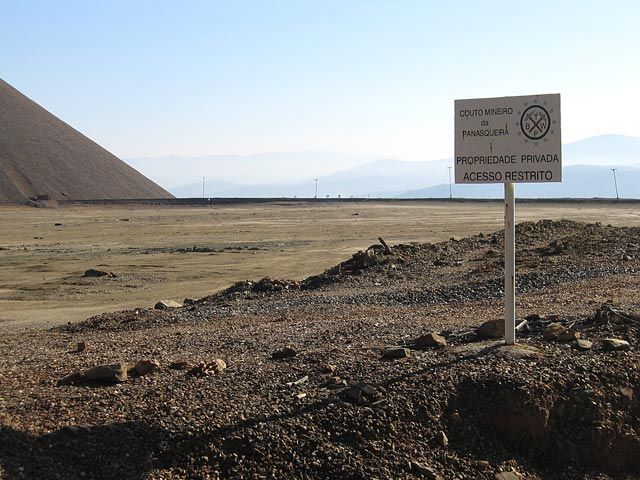
Tungsten (known as wolfram during WW2) and tin production at the Panasqueira mine is expected to be boosted by opening up new deep levels using powerful excavation equipment. With the continuing conflicts worldwide, the demand for this metal by arms manufacturers seems to be assured.
In global terms, Portugal is hardly likely to be included in the deliberations of Messrs. Trump and Xi Jinping but its importance in the European economy will increase considerably in the next decade. However, to obtain the utmost value to our nation it is essential that factories for processing and recycling are established on Portuguese soil. Investment must come from within the EU, not without, to ensure that refined products are directed to secure and improve the competitive ability of European industry.
Portugal must alter its present policies so that its considerable geological wealth is transformed to provide economic riches for the nation while protecting its rural citizens as far as may be possible from damage to their historic culture.
Read more here:
Three Strategic Mineral Assets of Portugal: Copper, Tungsten and Lithium
Set The Portugal News as your preferred source for news on Google
 Add as a preferred source on Google








 Portugal Handbook
 English
 Nederlands
 Deutsch
 Français
 Español
 Italiano
 Svenska
 Pусский
 中文
中文 Türkçe
 Português
 Czech
Czech Hungarian
 Polski
 عربي
عربي Suomi
Suomi עִברִית
 Português (Brasil)
Follow us on social media