


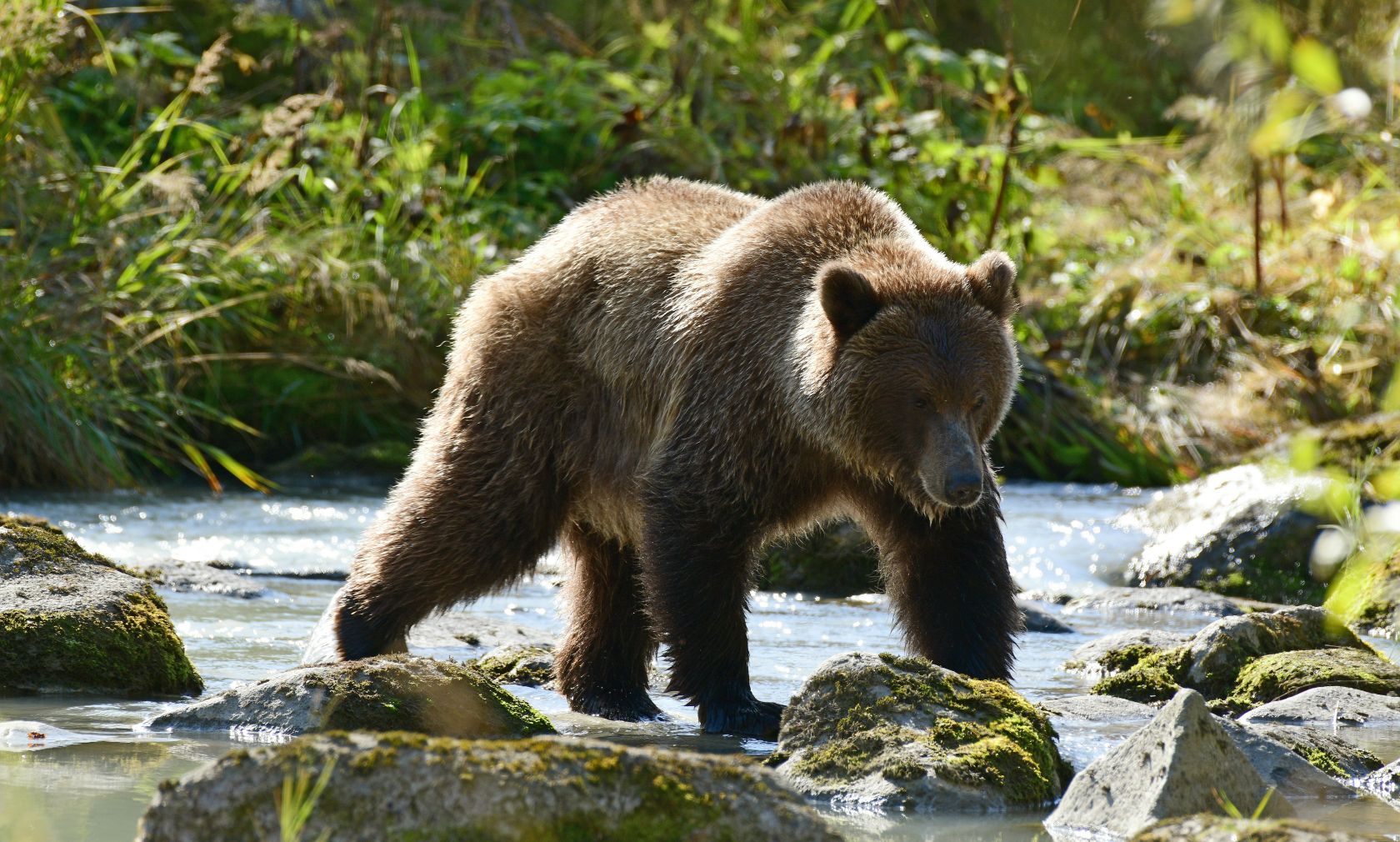
Portugal’s brown bears were once among the largest in Europe, but thousands of years of environmental change and human activity may have reduced them to nearly half their former size according to new research, Phys.org reports.
A study published in Palaeogeography, Palaeoclimatology, Palaeoecology analysed hundreds of fossil bear bones recovered from caves across Portugal, revealing that ancient Iberian brown bears were significantly larger than those living on the peninsula today.
Researchers estimate that one male brown bear roaming Portugal around 22,000 years ago weighed approximately 385 kilograms, making it one of the largest brown bears ever identified in the region. By comparison, modern Iberian males typically weigh around 144 kilograms, while females average about 102 kilograms.
Ancient giants roamed Portugal
While cave bears once occupied much of Europe, no evidence of the species has ever been discovered in Portugal, despite decades of archaeological excavations. Brown bears appear to have been the species which dominated the country’s landscape.
"Nothing in biology makes sense without the light of evolution," said study lead author Darío Estraviz-López, a paleontologist at the NOVA School of Science and Technology in Portugal, quoting evolutionary biologist Theodosius Dobzhansky. Estraviz-López believes cave bears may never have expanded into Portugal because they depended on much larger cave systems for hibernation and repeatedly returned to the same sites over thousands of years.
The human factor
Researchers believe that climate change alone can not explain the dramatic reduction in size, and suggest that prolonged human pressure most likely influenced the evolution of the species, such as early hunters targeting bears during hibernation.
As the human populations expanded, forests were cleared for agriculture, reducing available habitats, and the later introduction of firearms made hunting increasingly efficient.
The research team proposes that these pressures may have gradually favoured smaller bears that were less likely to come into conflict with people. However, they stress that this remains a working hypothesis requiring further evidence.
Scientists also note that ancient and modern Iberian bears may not belong to exactly the same population, while differences in diet could also have influenced body size. Future studies using ancient DNA and chemical analysis of fossil bones may help answer these questions.
Protecting Iberia’s remaining bears
Beyond their impressive stature, ancient brown bears played an important ecological role, which continues today: bears help regulate ecosystems by scavenging carcasses, influencing prey populations and dispersing vast quantities of seeds through their droppings, contributing to forest regeneration.
The researchers say understanding how Portugal’s ancient giants evolved into today’s much smaller bears could provide valuable insight into conserving the remaining Iberian population, as it faces modern environmental pressures.
 Add as a preferred source on Google







 Portugal Handbook
 English
 Nederlands
 Deutsch
 Français
 Español
 Italiano
 Svenska
 Pусский
 中文
中文 Türkçe
 Português
 Czech
Czech Hungarian
 Polski
 عربي
عربي Suomi
Suomi עִברִית
 Português (Brasil)
Follow us on social media