


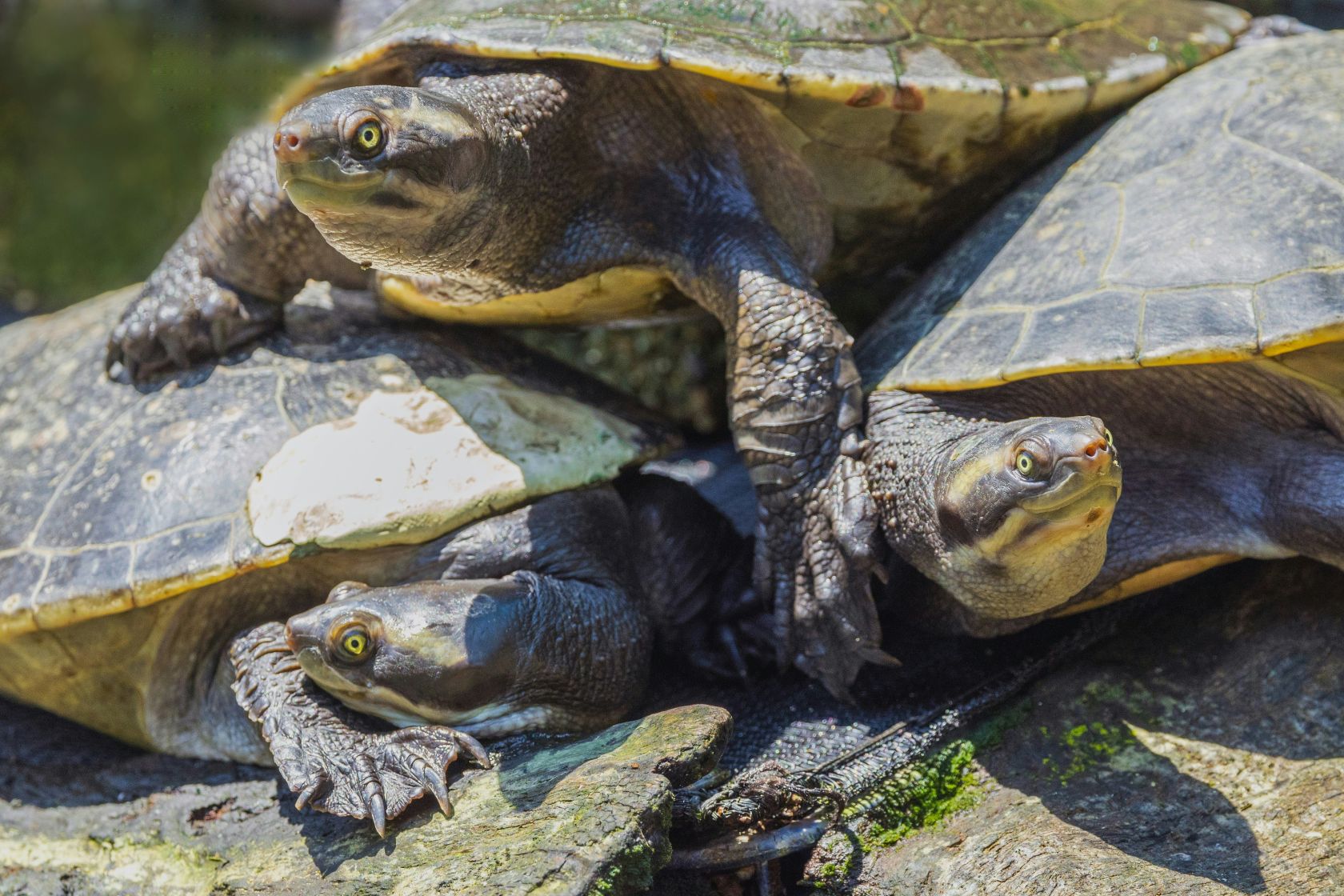
Speaking to the Lusa news agency, biologist Pedro Alves stated that the Field Guide to the Terrapins of Portugal is aimed at anyone wishing to learn about the nine species inhabiting the country, found in rivers, streams, and ponds, among other locations with permanent or temporary water.
“There are nine species of terrapins in Portugal: seven are exotic species introduced into the ecosystems by humans, and two are native,” the biologist noted.
Pedro Alves explained that the exotic or invasive species compete with the two native species found in the country, the European pond turtle (Emys orbicularis) and the Mediterranean pond turtle (Mauremys leprosa), adding that terrapins existed long before humans.
“These exotic terrapins compete with the native species for food and for territory—specifically for thermoregulation sites, as they need the sun to warm up. Because they are more robust, they can drive our native species out of their territories, causing them to suffer as a result,” he pointed out.
The biologist urged that invasive species not be removed from their ecosystems by the public; if removal does occur, it should only be carried out by competent authorities, such as the GNR’s Nature and Environment Protection Service (SEPNA) or the Institute for Nature Conservation and Forests (ICNF).
“We must indeed alert the authorities to collect these animals once they are identified,” the specialist emphasised.
According to biologists from Palombar, “this unprecedented guide is a fundamental, multifaceted tool that will not only guide and inform but also inspire everyone who studies and admires these unique creatures with an ancient history.”
“This guide will allow anyone to identify the nine species of terrapins found in Portugal’s aquatic environments and then assist in their management or determine whether a specimen is a native species or an invasive exotic one that needs to be removed,” specified Pedro Alves.
As these animals are semi-aquatic, they require permanent or temporary water bodies; they are more easily found in the central and southern parts of the country, as is the case with the Mediterranean pond turtle. In contrast, the striped-necked terrapin is found further north, in regions such as Minho, the Northeast Trás-os-Montes, or Peneda-Gerês National Park.
“Nevertheless, they are facing extinction, as sightings have become increasingly rare,” explained the Palombar biologists.
This field guide was produced as part of the “Water Bridges – Striped-necked Terrapin Conservation” project.
“The publication of this guide is the result of an environmental education project that brought us into a very special relationship with the senior community of the Douro International Natural Park, enabling active awareness-raising and the return of native individuals to their natural habitat,” Palombar stated.
The guide also includes a section featuring the first dichotomous key created for identifying terrapins in Portugal, helping to identify, practically, both the species native to the national territory and those that have been introduced.
The Field Guide to the Terrapins of Portugal was prepared by Palombar biologists Pedro Alves, Leonor de Carvalho, and Sandra Fernandes, all of whom have participated in various wildlife conservation projects, including those focused on native terrapins. The work of researching and developing the guide was carried out in 2025/2026 and funded by the European Union’s (EU) Erasmus+ program.
 Add as a preferred source on Google





 Portugal Handbook
 English
 Nederlands
 Deutsch
 Français
 Español
 Italiano
 Svenska
 Pусский
 中文
中文 Türkçe
 Português
 Czech
Czech Hungarian
 Polski
 عربي
عربي Suomi
Suomi עִברִית
 Português (Brasil)
Follow us on social media