


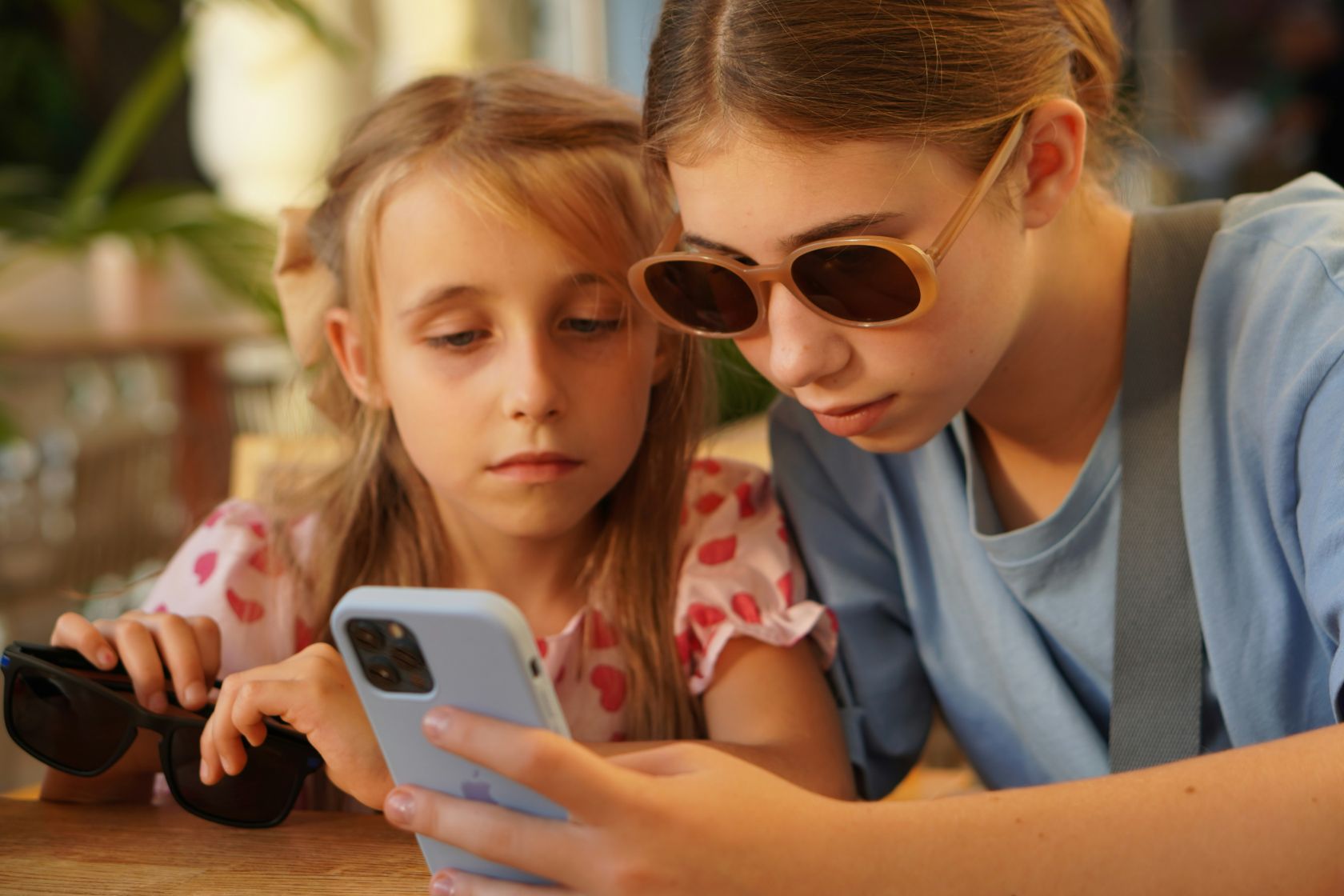
“We are going to introduce a ban on the use of smartphones in lower secondary school,” revealed the Minister for Education, Fernando Alexandre, in comments to Lusa, explaining that schools will have the first term to adapt and make the transition to the new measure, which will come into force on 1 January 2027.
Extension of the ban
The measure, which currently covers pupils between 1st and 5th grade, will thus be extended to apply up to 9th grade, whilst exceptions will remain, such as duly documented health-related circumstances.
Fernando Alexandre explained that the decision was based on international trends and a new survey of headteachers, who reported that in areas where mobile phones are not allowed, there is “more socialisation” and “less misbehaviour”.
In the previous academic year, the ban was mandatory only for pupils in the 1st and 2nd cycles, but 52 per cent of schools in the 3rd cycle also decided to ban ‘smartphones’, whilst 82 per cent imposed some form of restriction.
Increase in social interaction
In schools where mobile phone use is no longer permitted, social interaction increased by 36% compared with schools without restrictions, whilst in those that opted for partial restrictions, the improvement was 16%, according to a study by PLANAPP – Centre for Planning and Evaluation of Public Policies, which revealed that discipline also improved: by 13 per cent in schools without ‘smartphones’ and by 9 per cent in those that adopted restrictions.
The headteachers surveyed in the study also stated that the existence of a legal framework had strengthened the schools’ authority.
The benefits of having no ‘smartphones’ in playgrounds have led more and more headteachers to adopt the measure, even at educational levels where it was not yet banned: the majority of schools (66%) with pupils in the 3rd and 2nd cycles decided last year to implement the ban amongst older pupils, more than double the figure from the previous year.
Fernando Alexandre believes that this ban protects young people: “The harmful effects on the development of children and young people are now more than evident; they have been scientifically proven. With this measure, we are seeking to create the best conditions for the development of children and young people and to ensure the best learning conditions.”
Implementation challenges
The minister acknowledged that schools where lower secondary and upper secondary pupils study together may face “some implementation challenges” and has therefore allowed a transition period until December to ensure that the ban in lower secondary schools “comes into effect on 1 January 2027”.
This whole process began in 2024/2025, with a recommendation that pupils in the 1st and 2nd cycles should stop bringing smartphones to school. An initial study by PLANAPP concluded that the measure promoted greater socialisation and reduced misbehaviour and bullying. In September 2025, the recommendation was extended to a ban up to Year 5.
Fernando Alexandre believes that the decision to extend the ban to Year 9 “will be very well received by families and schools”, arguing that it is also “a matter of public policy responsibility”.
Complementary measures
The Minister acknowledged that the measure must be complemented by other policies.
“We are currently in the process of recruiting 1,406 specialist staff, around half of whom are psychologists,” he said, noting that the previously promised refurbishment of school outdoor areas is also being prepared.
Fernando Alexandre emphasised that the ban in Portugal is in line with “the international trend”, noting that most education systems have already adopted national restrictions on the use of mobile phones in schools and that the European Union has initiatives underway to limit access to social media for under-16s.
“There is no doubt that we need to regulate the use of smartphones and social media because they do indeed lead to addictive behaviour that restricts people’s freedom. Regulating the use of social media is not about restricting freedom; it is about ensuring that addictive behaviour – which limits the freedom of choice of young people and individuals – is curbed,” he argued.
 Add as a preferred source on Google





 Portugal Handbook
 English
 Nederlands
 Deutsch
 Français
 Español
 Italiano
 Svenska
 Pусский
 中文
中文 Türkçe
 Português
 Czech
Czech Hungarian
 Polski
 عربي
عربي Suomi
Suomi עִברִית
 Português (Brasil)
Follow us on social media