


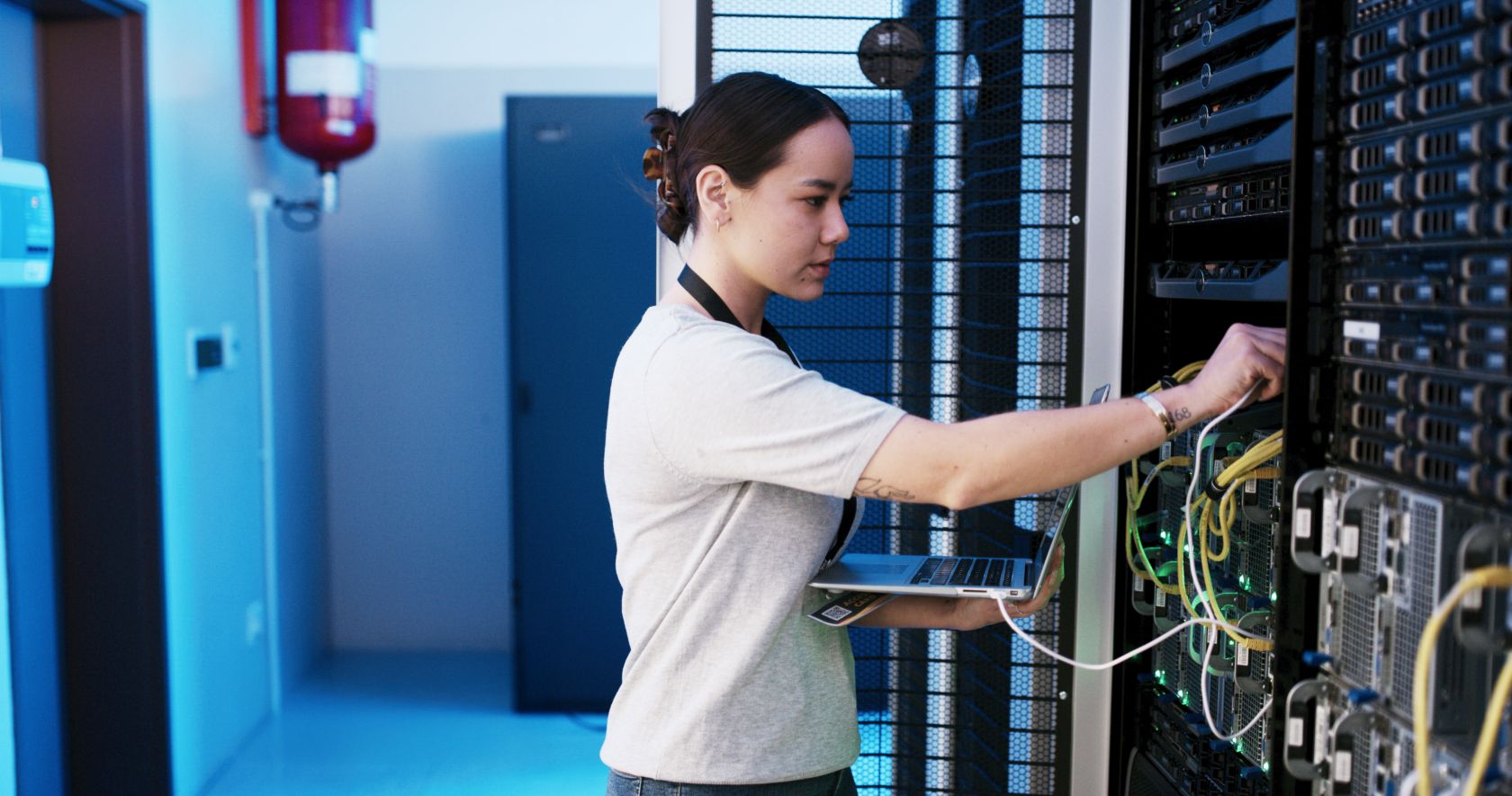
For decades, it was believed that the future of developed economies would pass less and less through industry and more and more through services. Today, that view is changing rapidly. The new industrial revolution has already begun, and Portugal has an opportunity that it may never have had before.
Over the past few months, we have seen the arrival of investments in data centres, artificial intelligence, renewable energies, green hydrogen, digital infrastructure and space technologies. At first glance, they seem to be different sectors, but they are all part of the same transformation: an economy increasingly based on knowledge, engineering and technology. This change is also observed in Portuguese industry, where the digitalisation of production processes, artificial intelligence, collaborative robotics, digital twins, 3D printing and advanced data analysis are redefining the way companies produce and compete. Most importantly, these technologies are no longer just a competitive advantage. In many export sectors, they have become a requirement to remain integrated into international supply chains and respond to new European demands on traceability, sustainability and decarbonization.
The good news is that Portugal does not start from scratch. Today we find national companies developing software for smart factories, industrial automation solutions, digital maintenance platforms, technologies for electric mobility and advanced production systems. These are companies that compete for innovation and specialisation, demonstrating that Portuguese industry is less and less dependent on cost and increasingly dependent on knowledge.
This transformation comes at a particularly favourable time. Europe seeks to reduce external dependencies, strengthen its industrial autonomy and bring production chains closer together through nearshoring. Portugal brings together several characteristics valued in this new context: stability, qualified talent, good infrastructure, strong renewable energy production and a strategic location between Europe, Africa and the Americas. Miguel Gil Mata's own interview underlines that this new phase represents a strategic opportunity for the country, but also a real test of its ability to execute. Challenges remain: digital transformation is not yet happening at the same pace in all companies, and many small and medium-sized enterprises remain at an early stage of adopting these technologies. The acceleration of digitalisation, investment in skills and the ability to respond quickly to new market demands will be decisive in consolidating this evolution.
Perhaps that is why the biggest change in the Portuguese economy is happening away from the headlines. Not only on the beaches, in tourism or real estate, but inside the factories. Portugal is no longer competing to be the cheapest factory in Europe. It is competing to be one of the smartest. And if it manages to maintain this path, the next great success story of the Portuguese economy may be born precisely where few are still looking: in the ability to transform knowledge, technology and engineering into products with high added value for the world.
Set The Portugal News as your preferred source for news on Google
 Add as a preferred source on Google







 Portugal Handbook
 English
 Nederlands
 Deutsch
 Français
 Español
 Italiano
 Svenska
 Pусский
 中文
中文 Türkçe
 Português
 Czech
Czech Hungarian
 Polski
 عربي
عربي Suomi
Suomi עִברִית
 Português (Brasil)
Follow us on social media