


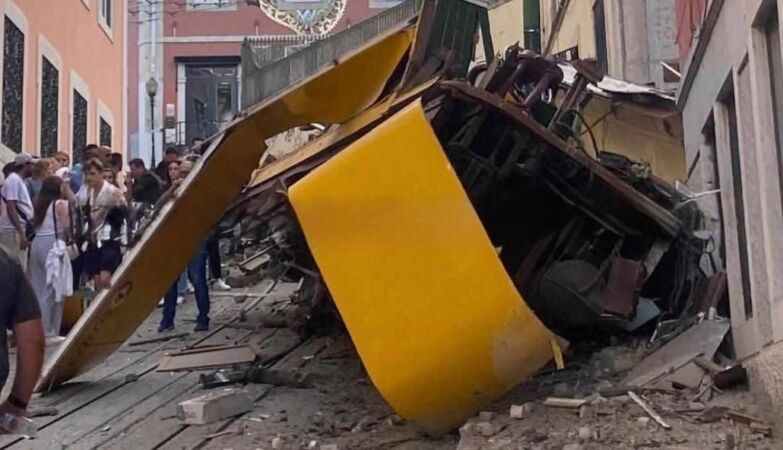
The transport operator will present the main technical concepts behind the project at the Ordem dos Engenheiros at 4pm, outlining how it intends to rebuild or redesign the system that has remained out of service since the tragedy on 3 September 2025.
This presentation comes just days before the first anniversary of the crash, as investigations into what caused the accident and who may be held responsible are still pending.
According to Carris, the new project will have to strike a balance between improved safety and the historic character of the Glória route, taking into consideration safety, engineering, the use of public space, passenger experience and heritage. It seeks to ensure that any new system remains closely connected to the Calçada da Glória and retains the identity that has made the funicular one of Lisbon’s best-known landmarks.
Technical solution
The future of the Glória funicular has been under discussion since the accident, with the Lisbon City Council establishing a specialist mission group to work on a new technological solution.
This group comprises experts from the National Civil Engineering Laboratory (LNEC), Instituto Superior Técnico and the Ordem dos Engenheiros, which aims to find a way to restore the service while meeting stricter safety requirements and protecting the site’s historical value.
Carris has not yet disclosed all the technical details of the proposal, as today’s meeting is expected to provide the clearest indication so far of how the company plans to move forward.
The operator has previously stressed that the response cannot be viewed solely as an engineering project, given the importance of the Glória funicular to the surrounding public space and to Lisbon’s heritage, adding that the work being carried out following the accident is intended to reinforce safety standards across the city’s historic lifts and funiculars.
Crash investigation
On 3 September, the accident happened when the Glória funicular derailed while travelling down the steep Calçada da Glória, killing 16 people and leaving 24 injured.
In order to establish exactly what happened, separate technical and criminal investigations were subsequently launched.
As reported by Público on 28 August, the former maintenance director at Carris and the owner of the company responsible for maintaining the Glória funicular have been made formal suspects in the criminal investigation.
The newspaper also states that prosecutors are expected to bring charges by the end of the year, with several people potentially facing allegations of aggravated violations of safety rules.
Furthermore, investigators believe the brakes may have been deliberately adjusted so they would no longer impede the vehicle’s descent, which is one of the issues being examined in connection with why the driver, André Marques, was unable to stop the vehicle despite activating them.
However, any criminal responsibility will ultimately depend on the conclusions of the ongoing investigation and subsequent judicial proceedings.
Legal rules
This accident also exposed questions about the legal framework governing Lisbon’s historic funiculars and lifts.
The Government has since approved a new legal regime for rail transport, designed in part to address gaps affecting systems such as funiculars and lifts, following concerns over whether existing legislation provided an adequate framework for the regulation and supervision of some of these passenger transport systems.
Carris has previously argued that responsibility for technical and safety regulation should be clearly established, pointing to the role of the national transport authorities in supervising such equipment.
Out of service
For now, the Glória funicular remains closed, with Carris continuing to operate a replacement service for passengers.
The company’s current information lists the 51E bus route between Glória and Largo do Carmo as the alternative service while the funicular is unavailable.
Therefore, today’s presentation marks an important step in deciding what comes next for one of Lisbon’s most recognisable transport landmarks.
Nearly 12 months after the crash, Carris is preparing to put forward a new vision for the Glória, which must satisfy significantly heightened safety expectations without severing the historic link between the funicular, the Calçada da Glória and the capital city.
Set The Portugal News as your preferred source for news on Google
 Add as a preferred source on Google








 Portugal Handbook
 English
 Nederlands
 Deutsch
 Français
 Español
 Italiano
 Svenska
 Pусский
 中文
中文 Türkçe
 Português
 Czech
Czech Hungarian
 Polski
 عربي
عربي Suomi
Suomi עִברִית
 Português (Brasil)
Follow us on social media